Few indie RPGs have managed to carve out a legacy quite like OMORI. Years after its debut, and with Toby Fox's Deltarune still generating buzz in 2026, the hand-drawn psychological adventure remains the go-to recommendation for players who want something that scratches the same itch as the Dark World. While Undertale launched a wave of anti-RPG imitators back in 2015, OMORI stands out not as a clone, but as a kindred spirit that pushes the emotional envelope even further.

At first glance, OMORI looks like a sugary-sweet adventure about a boy and his friends. The opening hours are bright, pastel-drenched, and full of quirky encounters. But the real kicker is the slow-burn shift into something much bleaker. Players control Sunny, a depressed teenager who escapes into Headspace through his alter ego Omori. That split between Headspace and the real world mirrors Deltarune's Hometown and Dark World dynamic in a way that feels oddly familiar.
Two Worlds, One Emotional Gut Punch 🎭
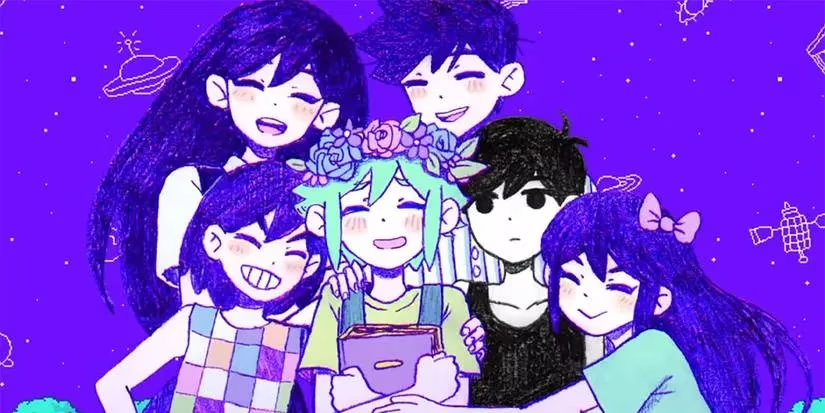
OMORI bounces between two planes of reality. In Headspace, Omori and his colorful crew go on whimsical adventures, fight strange creatures, and solve lighthearted puzzles. In the real world, Sunny navigates the wreckage of a fractured friend group, carrying the weight of a traumatic past. The whiplash between cute and crushing is deliberate, and it lands like a freight train.
That structure is a huge part of why Deltarune fans feel right at home. Deltarune also splits its time between the ordinary Hometown and the surreal Dark World, where Kris and Susie stumble into a realm that may be real or may be one giant shared fantasy. OMORI plays with the same ambiguity, constantly making players question which world is the real one and whether escaping into Headspace is actually helping Sunny or just keeping him stuck.
Combat With a Twist 💥
Where Undertale and Deltarune lean into bullet-hell dodging and act-based commands, OMORI goes full JRPG. Players control a party of four, each with their own battle skills and roles. The system feels classic on the surface, but the emotion mechanic gives it a clever rock-paper-scissors edge. Characters can become Happy, Sad, or Angry, and each emotion is strong against one and weak against another. A well-timed emotional shift can completely flip a tough fight.
It is not just flavor, either. Emotions directly influence damage, defense, and even how certain enemies behave. Players who enjoy puzzling out Deltarune's odd enemy gimmicks will likely get a kick out of tinkering with OMORI's mood-based tactics. The game also features multiple endings, which is a siren call for anyone who spent hours unearthing every secret in Toby Fox's universe.
Cut From the Same Cloth 🧵
The connections between OMORI and Undertale/Deltarune are not accidental. Toby Fox was brought on to compose a track for OMORI, and Woshua, the monster from Undertale's Waterfall area, was inspired by Omocat according to the game's credits. That shared creative DNA runs deeper than a few cameos, however.
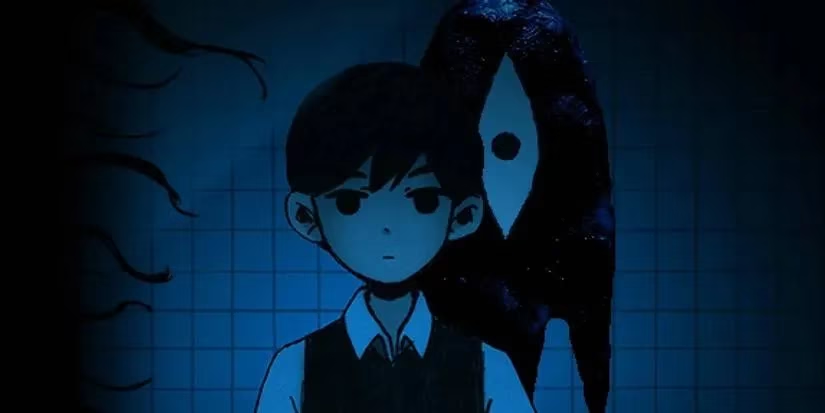
Both games belong to a loose category sometimes called EarthBound and Emotional, alongside titles like OFF and Yume Nikki. These games draw from the nostalgic weirdness of the Mother series, then spin it in their own direction. For OMORI, that means diving headfirst into mental health, grief, and the messy ways teenagers cope with trauma. It is not for the faint of heart, and players should know that themes like depression and suicide are central to the story.
Why It Hits Different in 2026 🎮
With Deltarune's paid chapters still drumming up anticipation, OMORI is the perfect stopgap for players who have already squeezed every drop out of Chapters 1 and 2. It delivers the same blend of bright presentation and dark undercurrents, but wraps it in a complete, self-contained package. No waiting for episodic drops here.
| Feature | OMORI | Deltarune |
|---|---|---|
| Main character | Sunny / Omori | Kris |
| Alternate world | Headspace | Dark World |
| Combat style | Emotion-based JRPG | Bullet-hell and TP acts |
| Tone | Psychedelic horror / heartfelt | Quirky / ominous |
| Structure | Full release | Episodic |
OMORI is now available on PC, Nintendo Switch, PlayStation, and Xbox, so it is easier than ever to dive in. Players craving a game that hits the same emotional notes as Deltarune but is not afraid to go darker will find a lot to love here. The artwork, the music, the spiral into Sunny's fractured mind — it all adds up to an experience that lingers long after the credits roll. For fans of bittersweet, brain-tickling RPGs, OMORI remains a must-play in 2026.
Leave a Comment