I've been a die-hard Undertale fan since it first dropped, spending countless hours on pacifist runs and dodging Sans' attacks like my life depended on it. Back then, I thought nothing could ever beat its charm – the quirky characters, the meta-narrative, all of it felt like lightning in a bottle. But then Deltarune Chapters 3 and 4 rolled out in 2025, and after replaying both games side by side, I had to eat my words. Toby Fox didn't just refine his craft; he blew it out of the water, making Deltarune not just a sequel, but a full-blown evolution that hooked me deeper than I ever expected. It's wild how jumping from the pixelated simplicity of Undertale to Deltarune's lush details felt like stepping from black-and-white into technicolor – suddenly, everything popped with life, and I couldn't help but get swept away. And honestly, revisiting Undertale after this? It felt like going back to an old favorite album only to realize the new one's got way more layers. But enough about me rambling; let's dive into why this shift happened.
First off, the visual and gameplay upgrades are just night and day. Undertale's sprites were iconic in their own right, sure – who could forget Flowey's creepy grin or Sans' lazy smirk? – but Deltarune cranks it up to eleven. The artwork isn't just prettier; it's richer, with characters like Kris exuding this silent intensity that makes you feel every glance. I mean, come on, when you see Kris standing there, looking all broody outside Sans' place, it's like the screen itself is whispering secrets. 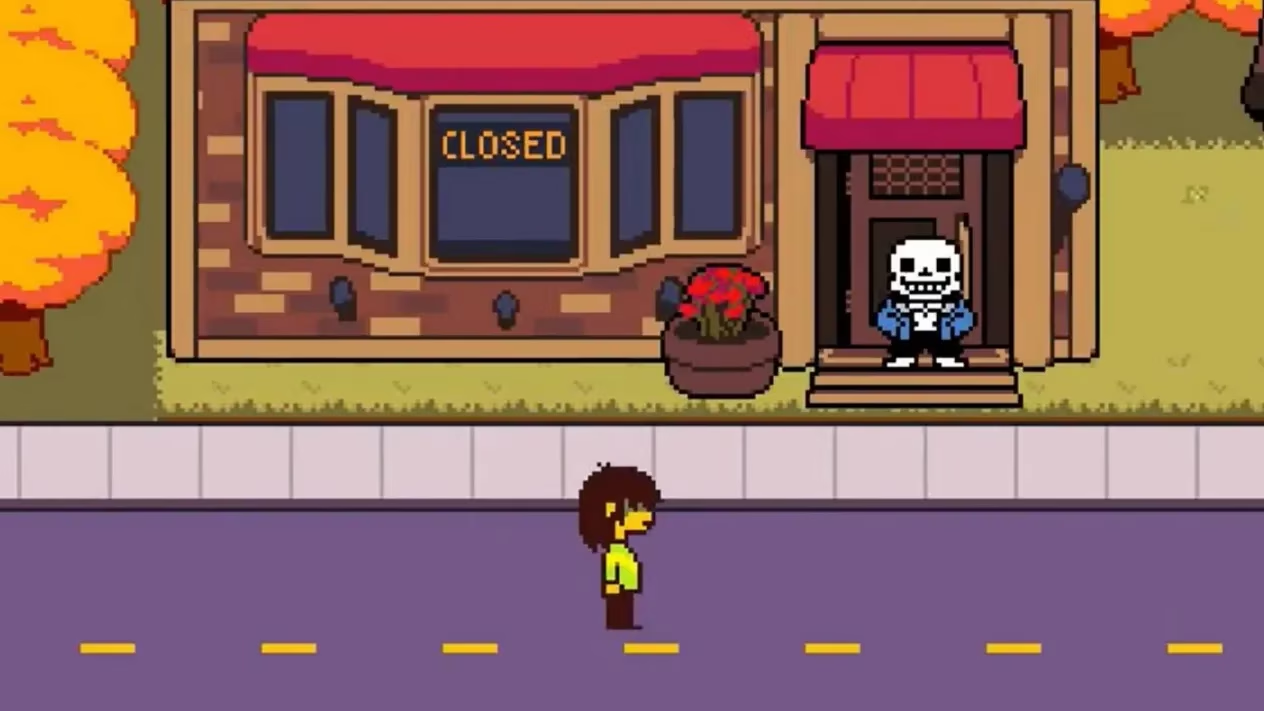 Combat-wise, it's a game-changer too. In Undertale, fights were often solo affairs, relying on quick reflexes and pattern memorization. But in Deltarune, controlling multiple characters? That's where the real strategy kicks in. Adding allies like Noelle in Chapter 2 or Gerson with his Hammer of Justice in Chapter 4 forces you to think on your feet, blending attacks into a cohesive dance. It's not just button-mashing; it's like conducting an orchestra, where every move has weight. And when Gerson joins the fray, swinging that hammer, it's pure chaos in the best way – totally immersive and fresh each time.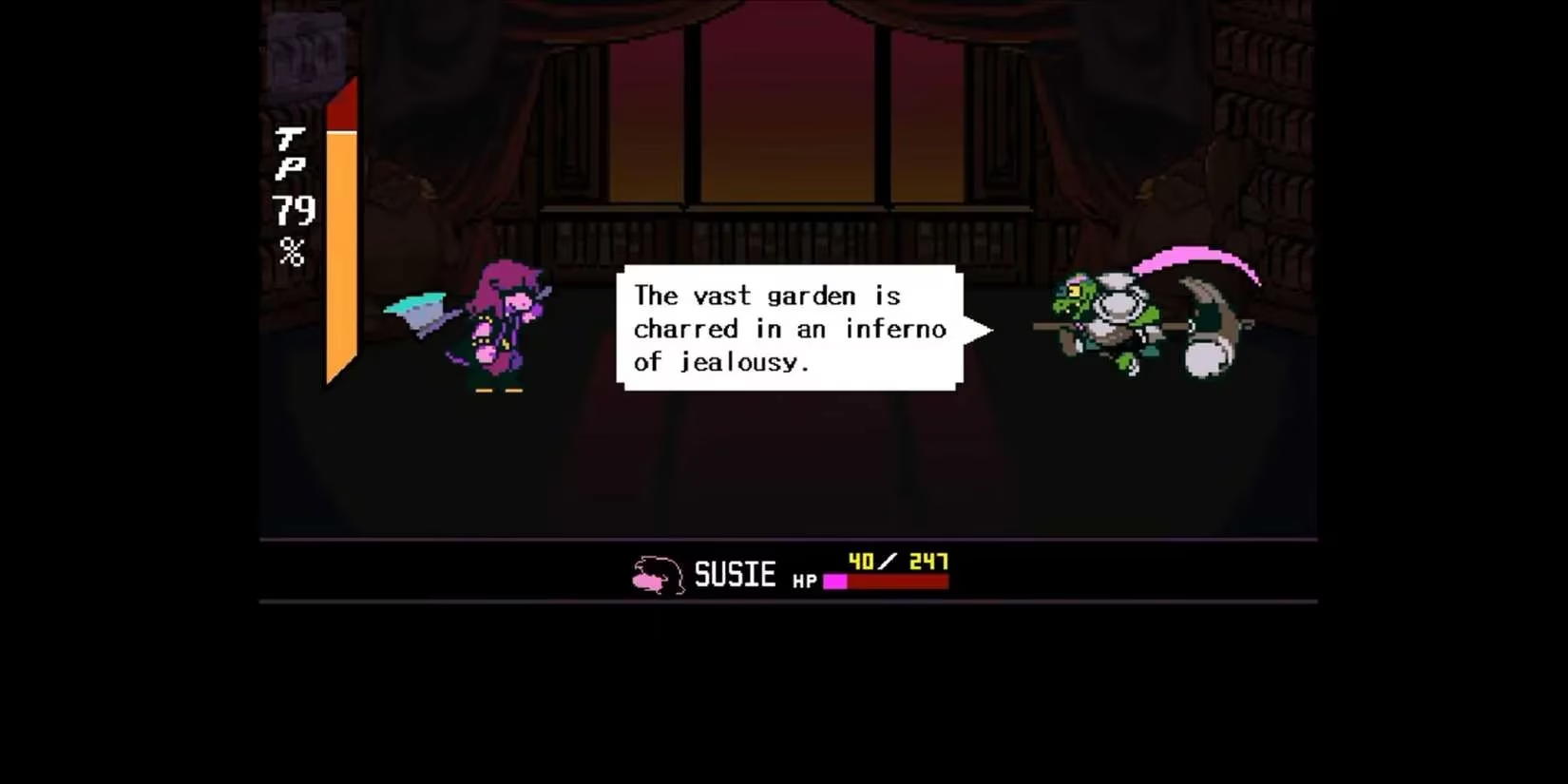
But beyond the shiny surface, the story structure is where Deltarune truly shines. Breaking it into chapters feels like Toby Fox giving us breathing room to soak it all in. Unlike Undertale's one-shot narrative, which could overwhelm with its intensity, Deltarune's pacing lets you connect with characters slowly, almost intimately. Take the Dark Worlds and Light Worlds setup – it's genius for building tension. You get these natural stopping points that make the whole experience more digestible, like savoring a multi-course meal instead of wolfing it down. And speaking of characters, that's where the game gets deep. Kris isn't just an avatar; they're their own person, constantly pushing back against my control. Remember that scene in Chapter 1 where Kris rips out their soul? It hit me like a ton of bricks – this isn't Frisk, who felt like an empty vessel for my whims. In Undertale, it was easy to miss the message that the player's the real villain, especially if you skipped the genocide route. But in Deltarune, from the get-go, Kris resists, closing their eyes in Asriel's room or subtly hinting through dialogue that they're not on board. It's eerie, like the character's whispering, 'Hey, this isn't what I want.' And that separation? It adds layers of guilt and reflection that Undertale only scratched. For instance, looking back at Undertale's EXP screen – 'it stands for execution points' – it feels quaint now, a relic of simpler times. 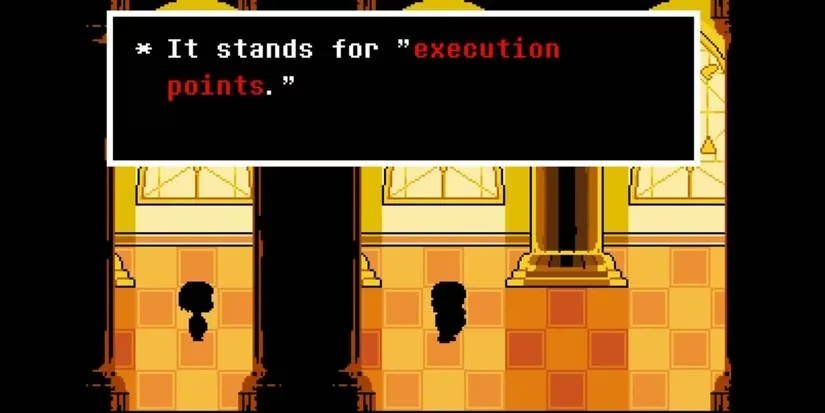
Now, onto the Weird Route – oh boy, this is where things get real. Undertale's genocide path had its moments, like Sans' epic fight and the meta-commentary on saving and loading. But Deltarune's take on evil? It's next-level brutal. Instead of just killing, you're inflicting prolonged suffering, forcing Noelle to do your dirty work, like attacking Berdly. And Kris being dragged along against their will? It's heart-wrenching. In Chapter 4, when you're tempted to force the Thorn Ring on Noelle again, the options 'Proceed' and 'Please Don't' scream Kris' silent plea. It's not just morbid; it's emotionally gutting, like you're puppeteering tragedy. And the aftermath? Seeing Berdly in the hospital in the Weird Route is haunting. 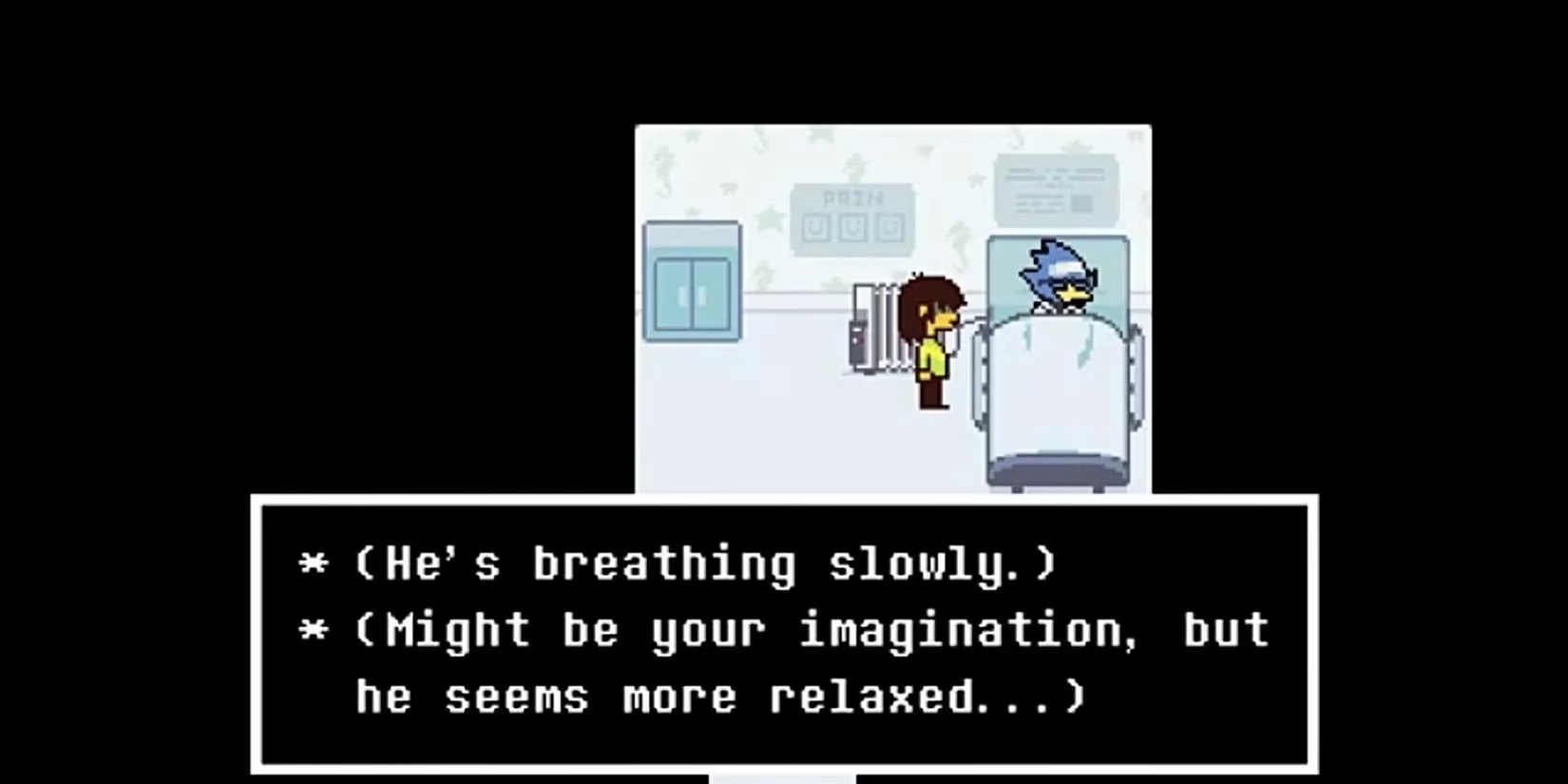 Dark Worlds masking the horrors from Lighteners adds to the chill – no evacuations like in Undertale, just hidden guilt. It's so much more nuanced, making you question every choice. Plus, the community buzz around theories? It's electric. Fans are still debating if Dess is the Roaring Knight or even human, and I'm all in – it keeps the game alive between chapters.
In the end, Undertale will always hold a special place in my heart for paving the way, but Deltarune? It's Toby Fox at his best, telling a story that feels urgent and personal. I'm stoked to see where Chapters 5 and beyond take us, especially with Snowgrave unfolding. But here's the thing that lingers: What do you think Kris would say if they could speak freely to us players?
Leave a Comment