A player in 2026 can still feel the shock of a game that suddenly looks back. The fourth wall began in theatre, where actors pretended the audience side of the stage did not exist. When a performer spoke directly to the crowd, the illusion cracked. Video games inherited that trick and made it interactive. A clumsy break can feel like a stagehand wandering into the audience and asking for a light; a masterful one can feel like a mirror that suddenly blinks. Few mediums have exploited that blink as aggressively as games, and the following moments remain landmarks because they did not merely acknowledge the player — they made the player complicit, curious, or terrified.
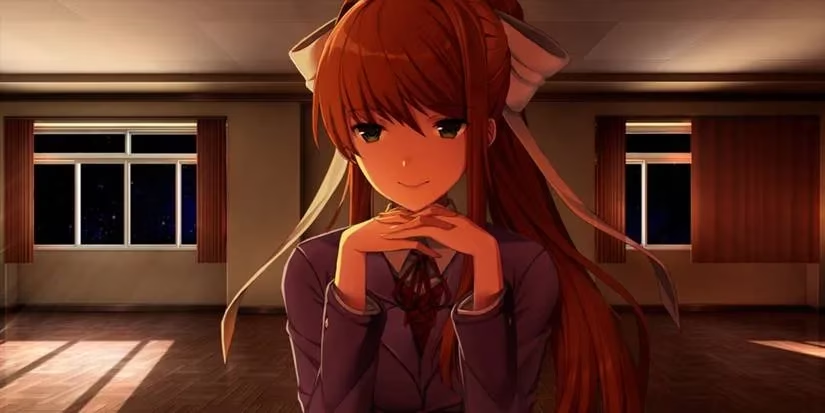
Monika Refuses to Be Deleted
At first glance, Doki Doki Literature Club looks like a generic Japanese visual novel. A player browses Steam, sees cute club members, and assumes romance. Then the game descends into horror. Monika becomes aware that she is a video game character. To win the player's affection, she messes with PC files and deletes other characters from the game. The horror is not a monster; it is a character who treats the player's desktop as a stage she can reach through. In 2026, that violation still lands because it turns the computer into a haunted room.
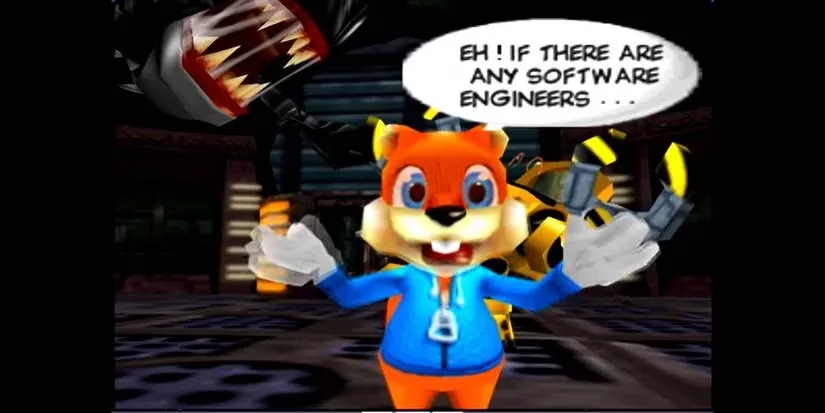
Conker Bargains with the Engineers
Conker's Bad Fur Day arrived in 2001 from Rare. It separated itself from other platformers with adult humor and constant fourth wall breaks. During a boss fight, everything in the game freezes except Conker. Ever the opportunist, he speaks to the game's software engineers and promises not to tell anyone about the technical issues in exchange for weapons. The joke works because Conker treats a glitch as leverage. He is not trapped in a game; he is a tenant negotiating with the landlord.
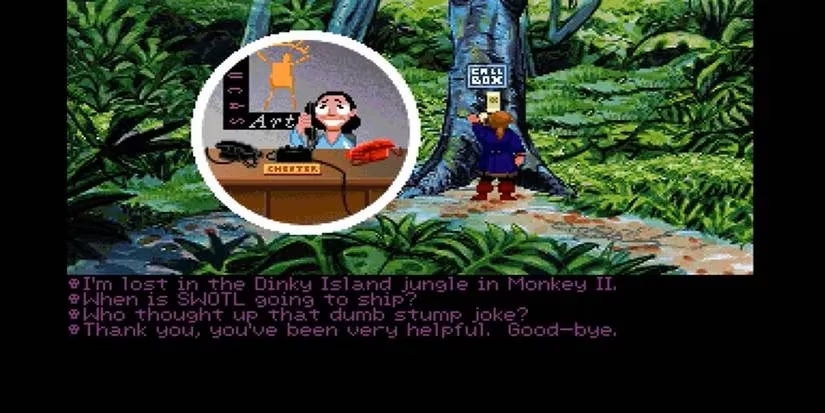
The Helpline in the Jungle
In the 1990s, LucasArts point-and-click adventures ruled PC gaming. The studio released classics such as Grim Fandango, Indiana Jones and the Fate of Atlantis, and the Monkey Island series. These games became known for humorous, well-written narratives and infuriatingly difficult puzzles. At a time when players could not simply hop onto YouTube for a walkthrough, LucasArts profited from tough puzzles with a helpline that players could call for solutions at a cost. Monkey Island 2: LeChuck's Revenge features this helpline when Guybrush Threepwood gets lost in the jungle, and it even references the infamous stump joke from the previous game. The fourth wall becomes a customer service window.
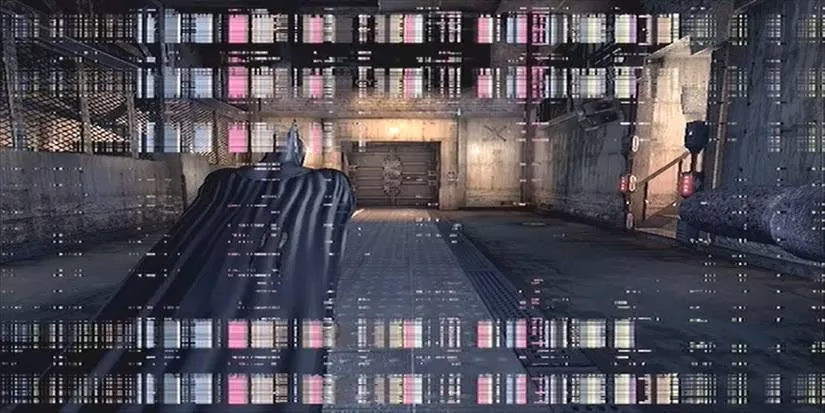
Scarecrow Breaks the Game
Batman: Arkham Asylum used Scarecrow to unsettle Batman, but the villain also disturbs the player. While walking down an inconspicuous hallway, the game appears to suffer a technical issue. It seems to restart and replay the opening cutscene, worrying players that their game may be broken. Then Batman and Joker swap places. Joker shoots Batman, and a game over screen appears with the message 'use the middle stick to dodge Joker's gunfire.' The player may panic that their save is broken. That panic is the point. Scarecrow does not just attack Batman; he attacks the player's trust in the software.
The Broom Closet That Broke a Narrator
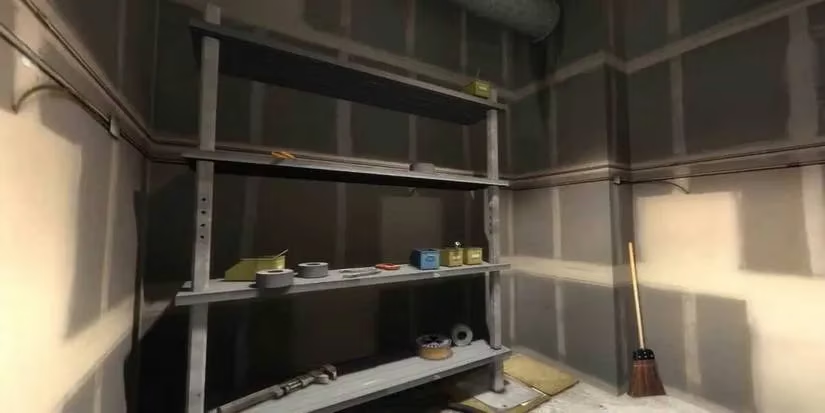
The Stanley Parable breaks the fourth wall constantly. Early on, if the player enters a broom closet, the narrator tries to deter them: 'Stanley stepped into the broom closet, but there was nothing here, so he turned around and got back on track.' If the player refuses to leave, the narrator becomes baffled: 'please offer me some explanation here; I'm genuinely confused.' Eventually the narrator believes the player died and shouts, 'Hello!? Anyone who happens to be nearby!! The person at this computer is dead!!' It is comedy built on disobedience. The player is not following a story; the player is arguing with one.

Undertale Audits the Player's Morality
Undertale is an RPG that constantly breaks the fourth wall by twisting genre tropes. Characters are offended if the player skips their dialogue box before they finish speaking. The most notable break comes from Sans, who explains what EXP and LV actually stand for: execution points and level of violence. Suddenly, the numbers on the screen are not neutral. They are a moral audit. Players who treated the game as a grind are asked to reconsider what they did for entertainment.
Spec Ops: The Line Speaks Through Loading Screens
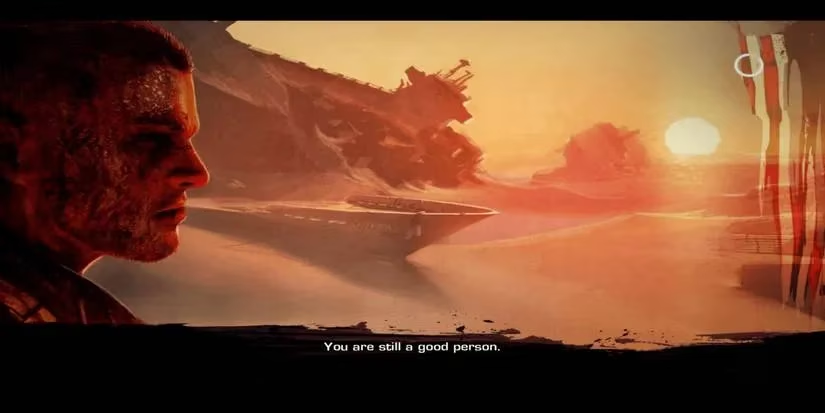
Spec Ops: The Line released in June 2012 and initially looked like another shooter chasing Call of Duty. Its gameplay was fairly middle of the road, but its substance was not. The game challenged the perception of war in video games by replacing the usual good guys versus bad guys motif with a morally ambiguous story about the horrors of war. Loading screens delivered fourth-wall-breaking messages:
-
'If you were a better person, you wouldn't be here.'
-
'To kill for yourself is murder. To kill for your government is heroic. To kill for entertainment is harmless.'
-
'The US military does not condone the killing of unarmed combatants. But this isn't real, so why should you care?'
These lines turn a loading bar into a prosecutor's bench.
Psycho Mantis Reads the Player
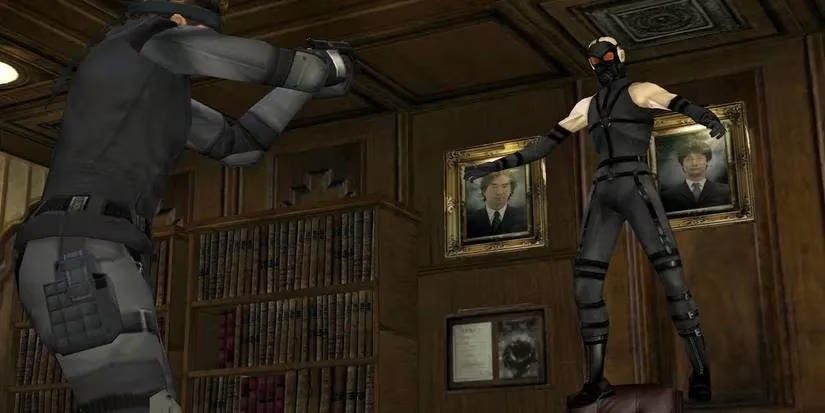
Metal Gear Solid from 1998 gave gaming one of its most famous bosses: Psycho Mantis. His psychic powers unsettle the player. He turns the screen black and mentions whether the player has played other Konami games, asking, 'you like Castlevania, don't you?' During the fight, he says he can read Snake's mind and seems impossible to beat. To win, the player must unplug the controller and insert it into another port, preventing the boss from reading Snake's mind. It is a boss fight that reaches through the television and asks the player to stand up.
Why These Breaks Still Matter in 2026
In 2026, games have more tools than ever: VR headsets, eye tracking, haptic feedback, and persistent online worlds. Yet the fourth wall break remains dangerous. It can shatter immersion, frustrate players, or feel like a cheap joke. When it is done right, it creates a memory that outlasts graphics. It is like a hand reaching out of a painting to rearrange the furniture in the room. The best examples above do not just say 'this is a game.' They ask the player what kind of person plays it, what kind of story they want, and whether they are willing to obey. That question, asked directly through the screen, is why these moments remain unforgettable.
Leave a Comment