In the year 2026, the ancient, dusty myth that video games are digital boot camps for budding sociopaths has been dismantled with the precision of a master locksmith. This persistent narrative, a cultural phantom limb from a bygone era, has been proven as scientifically sound as using a chocolate teapot to brew Earl Grey. The truth, as illuminated by the very medium it maligns, is far more fascinating: contemporary gaming has evolved into a sophisticated canvas for exploring morality, where non-violence is not just an option, but often the most cunning, rewarding, and narratively profound path to victory. Far from encouraging mindless aggression, the most celebrated titles of our time function as intricate moral labyrinths, where a silenced tranquilizer dart can be mightier than a thousand swords, and compassion is the ultimate power-up.

🧬 BioShock: The Gene-Splicing Gambit of Conscience
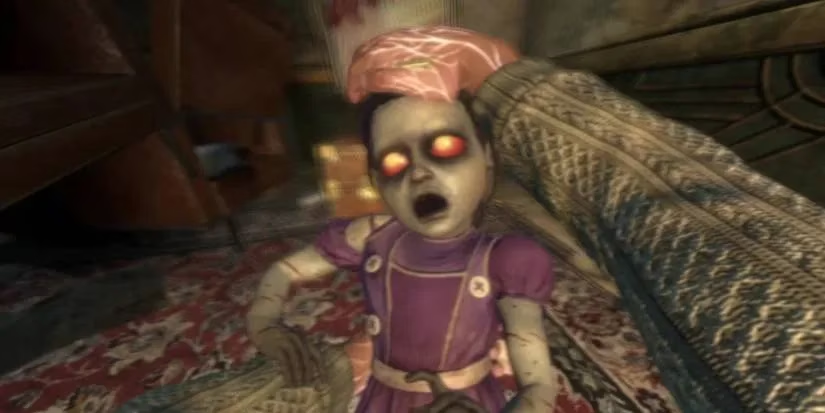
Descend into the art-deco nightmare of Rapture, where the pursuit of perfection has curdled into monstrous decay. In Ken Levine's seminal shooter BioShock, the player, as Jack, is armed to the teeth, yet the game's most iconic challenge is a psychological one, presented by the haunting figures of the Little Sisters. These mutated children are fonts of the precious ADAM, the substance that fuels your superhuman abilities. Here, the game presents a choice as stark as a surgeon's scalpel: Harvest them for a massive, immediate power boost, or Rescue them for a paltry sum and a promise of future goodwill. It's a cruel, underwater version of the marshmallow test, where instant gratification wars with delayed, ethical rewards.
-
The Violent Path: Harvesting is efficient, a brutal transaction that turns a child into a resource. It accelerates Jack's ascent to becoming a walking arsenal.
-
The Peaceful Path: Rescuing is an act of faith. While it seems like a handicap, the narrative universe itself conspires to reward this mercy. The enigmatic Dr. Tenenbaum sends care packages containing unique, otherwise unobtainable Plasmids and life-saving supplies. Choosing compassion transforms the game from a simple power fantasy into a story of redemption, proving that in the twisted economy of Rapture, kindness can yield the most unique and powerful dividends.
👑 Dishonored: The Calculus of Chaos in a Cynical Empire
Arkane Studios' Dishonored series drops players into worlds so morally bankrupt they make a pirate's ledger look like a saint's diary. As an empowered assassin, you could paint the cobblestones red. Yet, the game's ingenious Chaos System acts as a narrative thermostat, where every corpse raises the temperature of despair and brutality in the world. Going non-lethal isn't just a moral high ground; it's often the most pragmatic strategy for a stealth operative. A body discovered leads to heightened alertness, more guards, and, in the first game, swarms of plague rats. Avoiding conflict is like navigating a room full of mousetraps in the dark—tense, deliberate, and ultimately smarter than stomping through.
| Approach | Short-Term Effect | Long-Term Consequence |
|---|---|---|
| High Chaos (Lethal) | Direct, often easier eliminations. | Darker story endings, more hostile environments, plague outbreaks. |
| Low Chaos (Non-Lethal) | Requires creativity, planning, and patience. | Brighter endings, calmer world state, access to unique narrative outcomes and allies. |
Interestingly, assassination targets only need to be "neutralized." The non-lethal options for dealing with them are often fiendishly clever and narratively rich—kidnapping a corrupt overseer and delivering him to his former slaves, or branding a sadistic aristocrat and having her tongue removed. In Dishonored 2, choosing the bloody path can cause you to miss out on valuable allies entirely, turning the game into a lonely, grim march.
🏛️ The Forgotten City: Where Murder is a Logic Puzzle's Dead End
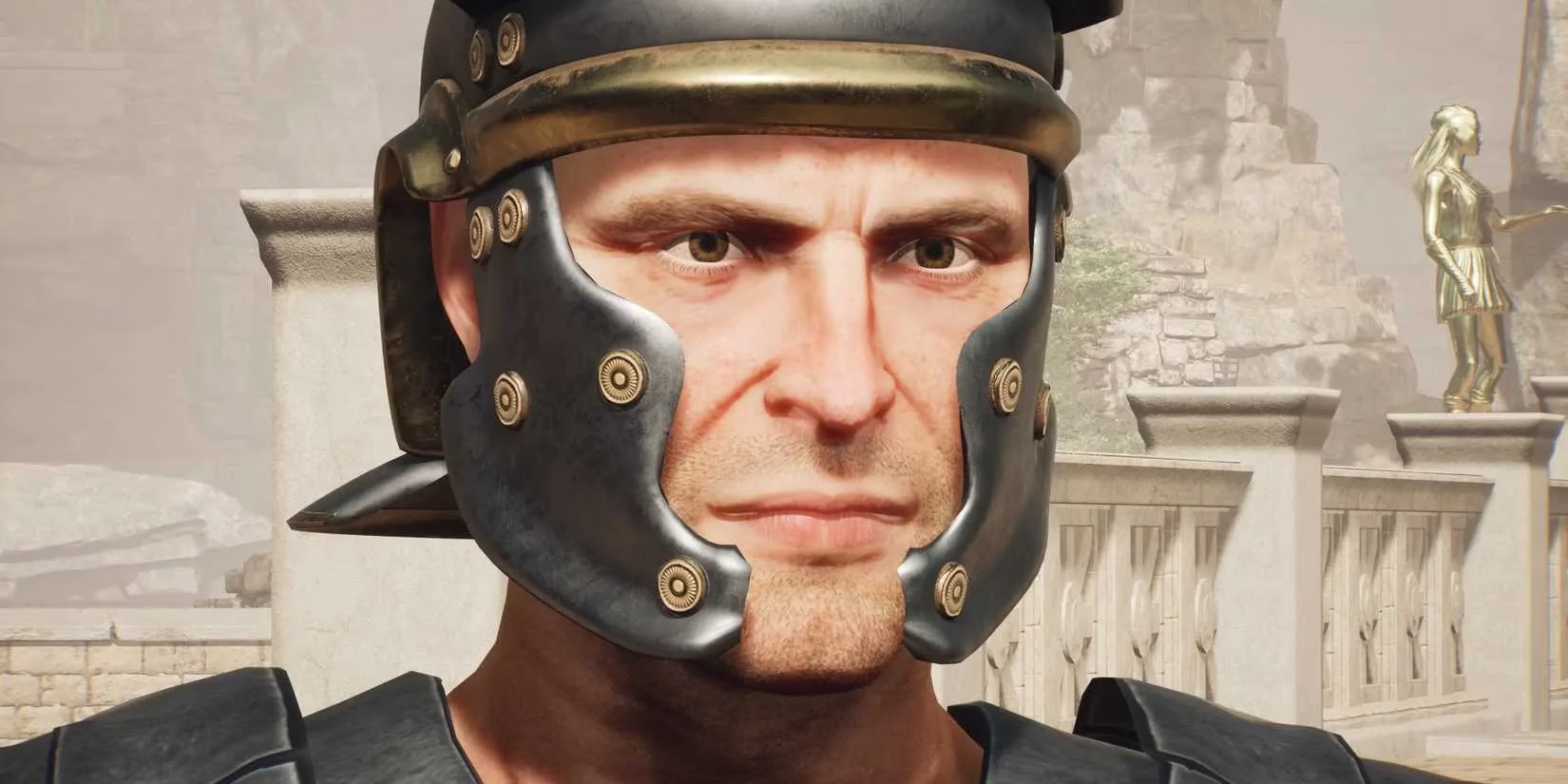
What began as a Skyrim mod and blossomed into a standalone time-loop mystery set in an ancient Roman city, The Forgotten City is a masterpiece of enforced pacifism. The central "Golden Rule"—"The many shall suffer for the sins of the one"—is not a suggestion; it's a game-ending law of physics. If anyone in the city commits a sin (like murder), everyone is instantly turned to gold. Violence here is as useful as a screen door on a submarine; it instantly resets the loop and accomplishes nothing.
The game brilliantly inverts expectations:
-
Boss Fights? Resolved through Socratic dialogue and philosophical debate.
-
Main Objectives? Centered on preventing suicides and saving lives.
-
The "Murder" Ending? Unlocked by killing one specific character in a very particular way, it is arguably the game's most bleak conclusion, dooming every other soul. True progression and the best endings come from being a detective, a counselor, and a savior, proving that the sharpest weapon in this ancient city is a compassionate mind.
🐍 Metal Gear Solid V: The Phantom Pain: Building an Army with a Tranq Gun
Hideo Kojima's swan song to the series, Metal Gear Solid V: The Phantom Pain, is a sprawling commentary on warfare, yet its gameplay genius lies in making non-lethality the superior tactical choice. While Venom Snake has enough firepower to start a small war, the most valuable tool in his arsenal is the humble tranquilizer gun. Why? Because the core gameplay loop of building Mother Base, your private military haven, revolves around recruiting enemy soldiers. Knocking them out and Fulton-extracting them to the skies is the path to prosperity.
The game even externalizes this morality on Snake's own body. The shrapnel horn in his skull, a remnant of the opening tragedy, is a living morality meter. Engage in wanton slaughter, and it grows larger, more demonic. Prioritize stealth and non-lethal takedowns, and it shrinks, becoming a mere scar. Your violence, or lack thereof, literally shapes the protagonist's visage, a constant, haunting reminder of your choices.
🚂 Metro Exodus: Humanity's Last Light in a Dark Age
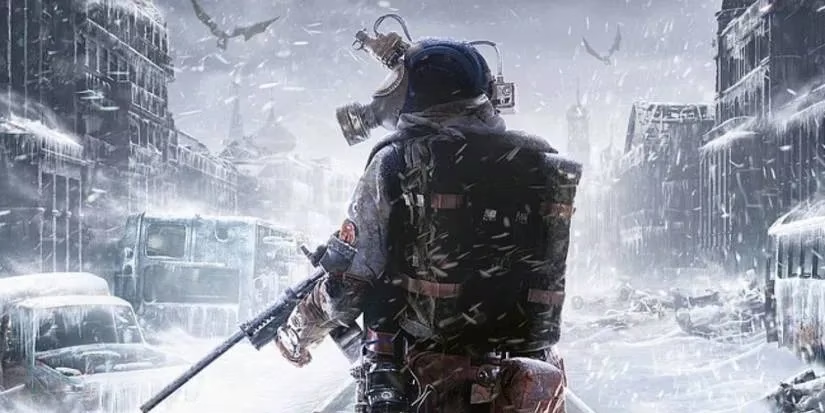
In the irradiated hellscape of post-apocalyptic Russia, Metro Exodus posits that holding onto one's humanity is the ultimate survival skill. As Artyom, players navigate communities of survivors clinging to order or descending into madness. The game features hidden moral points systems in each chapter. Acts of mercy, helping strangers, and listening to peaceful resolutions earn positive karma.
-
The Violent Path: Shooting first may solve an immediate problem, but it burns bridges, costs valuable resources like ammo and health, and can lead to the loss of allies and darker narrative conclusions. It's a short-sighted strategy in a world where community is the only true currency.
-
The Peaceful Path: Showing restraint, using stealth, and choosing dialogue options that de-escalate tensions often unlock better gear, gain the trust of locals who provide aid, and guide the story toward its most hopeful endings. In the moral winter of the Metro, kindness is the scarce resource that truly sustains life.
🌼 Undertale: The Game That Judges You Back
Toby Fox's indie phenomenon Undertale takes the concept of consequential morality and weaponizes it with fourth-wall-breaking glee. The game's central mechanic is the choice to Fight or Spare every monster you meet. While a traditional RPG grind is possible, the game meticulously tracks your actions on a metaphysical level.
Choosing the path of total annihilation—the Genocide Route—is an exercise in self-sabotage. The game becomes a barren, frustrating husk. Shops are empty, music turns ominous, and characters vanish. If you persist through this joyless purge, you are met with the game's ultimate judge: Sans. This normally laid-back skeleton becomes a nearly impossible boss who cheats, taunts you, and explicitly calls you out for your violent choices, breaking the game's own rules to deliver karmic justice. The "reward" for completing this path is the permanent corruption of your game save, a stain on your digital soul. Undertale doesn't just offer a peaceful path; it actively, brilliantly, and memorably punishes those who reject it, making compassion the only way to experience its full, joyful heart.
In 2026, the discourse has irrevocably shifted. Video games are no longer seen as simple pastimes but as complex interactive parables. They have become sophisticated simulators of consequence, where the choice to holster your weapon can be more strategically deep and emotionally resonant than firing it. These virtual worlds teach us that true power isn't found in domination, but in restraint; that the most satisfying victories are those won with wit and empathy. The next time someone suggests games teach violence, point them to these digital sagas where mercy is the master key, and every act of kindness echoes through the code.
Leave a Comment