Back in 2010, the legendary film critic Roger Ebert famously declared that video games could never be art. Fast forward to 2026, and that statement feels almost quaint—like someone in 1878 watching Eadweard Muybridge's The Horse in Motion and declaring cinema would never amount to more than a scientific curiosity. For decades, games were marketed primarily to, let's be honest, hormonal young boys, which didn't exactly help their case for artistic legitimacy. They've been seen as products, toys, or novelties designed to suck quarters from pockets (or, these days, $70 plus a mountain of DLC). But here's the thing—despite the industry's relentless overfinancialization, which often comes at the cost of creative freedom, true works of art in the medium keep pushing through. A real work of art, whether it's light or dark, absurd or dead serious, has this uncanny ability to pierce through the everyday noise and speak directly to your soul. It can transport you, shift your perspective, and maybe even change how you see the world. And guess what? Video games are doing exactly that.
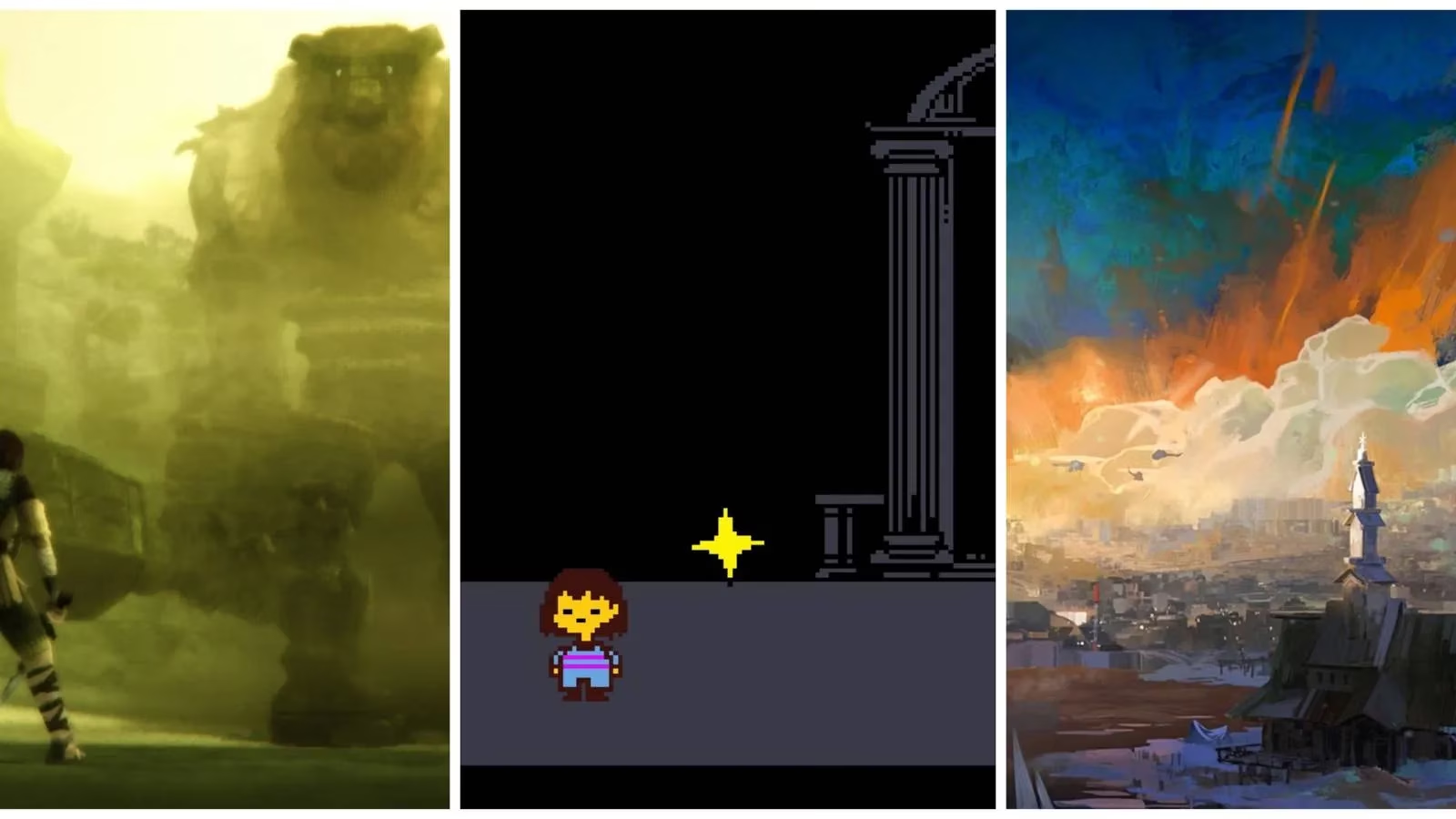
Disco Elysium: The RPG as Philosophical Canvas
Okay, let's talk about a game that doesn't just feel like art—it was built as art from the ground up. Disco Elysium, crafted by the bona fide art collective ZA/UM, is a masterclass in using the RPG format to explore the messy, beautiful, and terrifying nature of being human. A poet might find art in nature or even in nothingness, but Disco Elysium finds it in the crumbling, politically charged streets of Revachol and the fractured mind of its amnesiac detective protagonist.
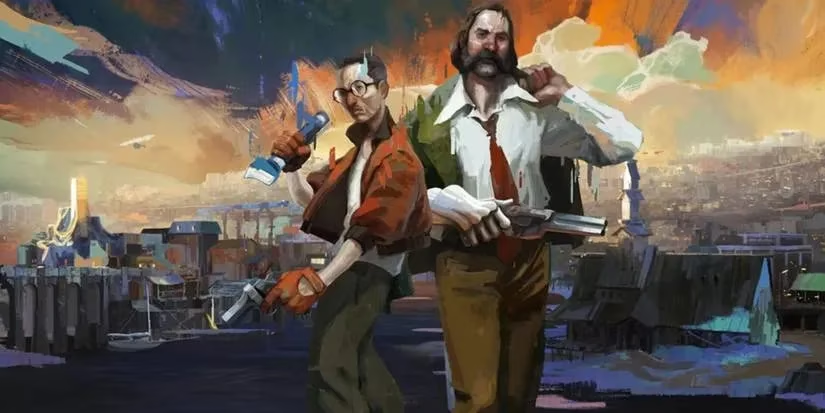
What makes it special? It's not just the stunning oil-painting art style or the haunting soundtrack. It's how it fearlessly weaves together political theory, existential dread, mental health struggles, and dark humor without ever missing a beat. The game's skill checks aren't about "winning" or "losing"; they're about revealing character, context, and consequence. Every person you meet, from the starving dockworker to the smug corporate liaison, is written with such profound empathy that they stop being NPCs and start feeling like fragments of our own world. Playing it is less about solving a case and more about having a series of uncomfortably intimate conversations with yourself. It's a game that holds up a mirror, and wow, does it make you think.
Why it's art: It uses interactive mechanics to simulate the weight of ideology, memory, and regret in a way only this medium can.
-
Mature Themes: Economics, addiction, failure, and redemption.
-
Mechanics as Metaphor: Your skills are literal voices in your head, arguing for different worldviews.
-
Legacy: Proved that games can host sophisticated, novel-worthy narratives.
Papers, Please: The Empathy Engine
If most blockbuster games are about the power fantasy—you know, being the hero with the biggest gun—then Papers, Please is its polar opposite. This brilliant, gut-wrenching simulation puts you in the worn-out shoes of an immigration officer at the border of a fictional, authoritarian state. Your job is simple: check documents, stamp passports, and follow the rules. The genius, and the horror, is in the execution.
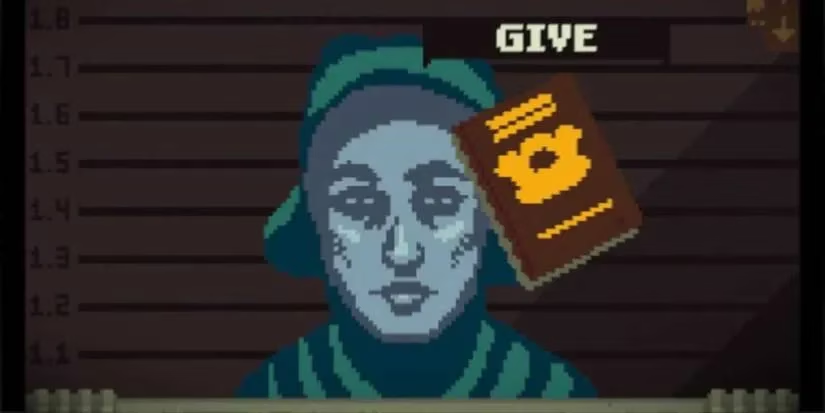
You're not a disembodied god here. You're a person with a family to feed, rent to pay, and a government watching your every move. The game throws moral crisis after crisis onto your desk: a woman with forged papers pleading to see her dying son, a refugee fleeing persecution with incomplete documents. Do you follow the cold, inhuman rules to keep your family safe, or do you risk everything for a stranger's humanity? Watching a character make that choice in a movie is one thing; being the one to click "APPROVE" or "DENY" is a whole other level of emotional engagement. It's empathy through interaction, and it's brutally effective. This little game didn't just tell a story; it helped kickstart an entire genre focused on using gameplay to foster understanding and compassion. Talk about punching above its weight!
Shadow of the Colossus: Minimalism and Monumental Feeling
Sometimes, less is more. Shadow of the Colossus is proof that you don't need endless dialogue, complex skill trees, or a million side quests to create a transcendent artistic experience. On paper, it's simple: you, a young man named Wander, must defeat sixteen colossal beings to save a girl's life. That's it. But in practice, it's one of the most emotionally charged journeys in gaming.
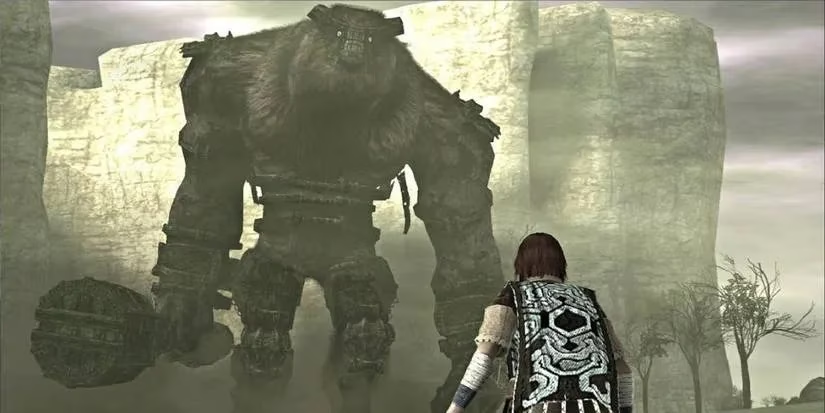
The game says very little. Instead, it speaks through its vast, lonely landscapes, the haunting score, and the physical, tactile struggle of each battle. Clinging to the fur of a living mountain as it tries to shake you off isn't just a gameplay challenge; it's an experience infused with awe, terror, and a creeping sense of guilt. You start to wonder: are these majestic creatures evil, or am I the trespasser? The game trusts the player—the "secondary author," as it were—to fill in the emotional blanks through their actions and reflections. It's art not because it looks pretty (though it does), but because it uses the fundamental language of play—exploration, challenge, conquest—to evoke feelings that are hard to put into words. It’s a masterpiece on its own, beautifully basic terms.
Undertale: The Game That Knows It's a Game
Every artistic medium has a moment where it grows up, becomes self-aware, and starts playing with its own rules. For video games, Undertale is that moment personified. On the surface, it's a charming, retro-style RPG. But underneath, it's a razor-sharp deconstruction of player agency, morality, and the very nature of gaming itself.
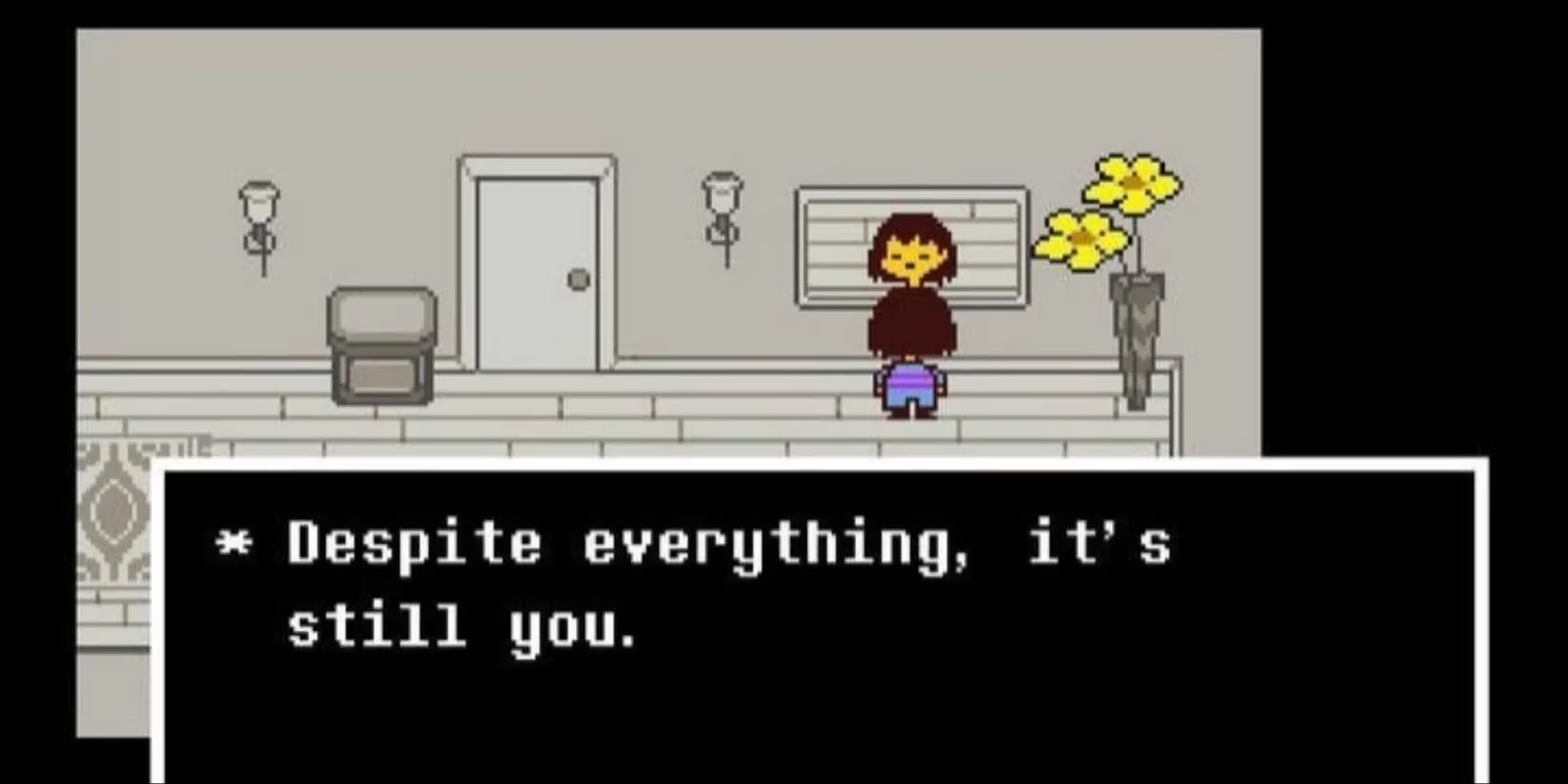
The game knows you can save and reload. It knows you might want to "win" by fighting everything. And then it asks: Why? What if you could talk to the monsters instead? What if your choices, including resets and reloads, have permanent, narrative consequences? Creator Toby Fox crafted a world that remembers what you did, even after you quit. It brilliantly uses the medium's unique traits—the player's god-like power over a digital world—to create dramatic tension and profound moral questioning. By the end, you're not just playing a game; you're in a conversation with it about violence, mercy, and consequence. It disarms you with its simplicity and then leaves you staring at the screen, questioning your own instincts as a player. Now that's meta, and that's art.
Dwarf Fortress: Art in the Algorithm
If the previous games are like paintings or films, Dwarf Fortress is like a grand, chaotic symphony composed in pure code. Roger Ebert once argued that a key difference between art and games is that "you can win a game." Dwarf Fortress, in all its ASCII-text glory, elegantly dismantles that idea. There is no winning. There's only the experience.
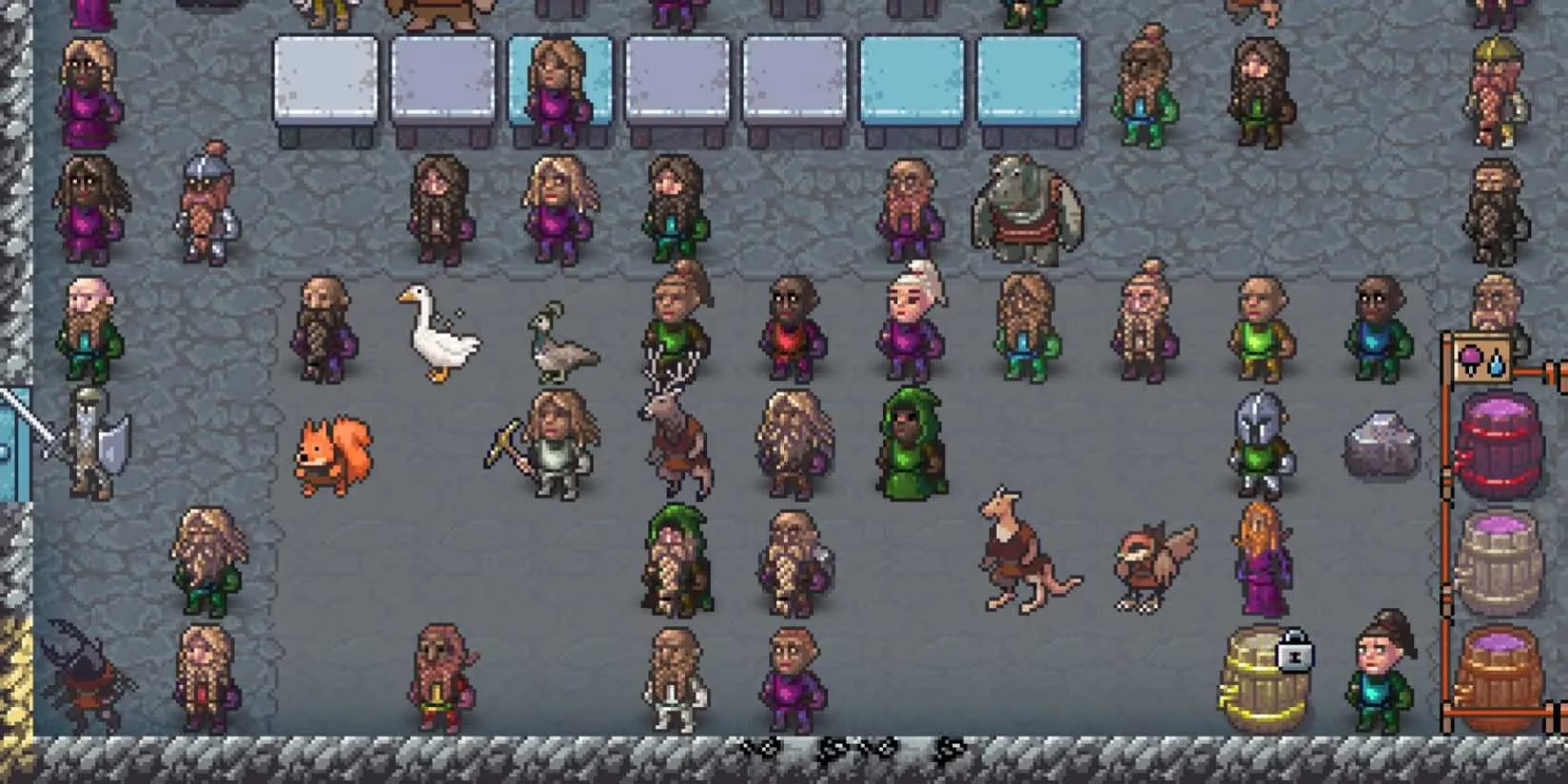
This game is a universe simulator. You manage a colony of dwarves, each with their own detailed personality, memories, likes, and dislikes. The world is generated with millennia of simulated history, geology, and ecology. The magic isn't in high-fidelity graphics; it's in the breathtaking depth of its simulation. A dwarf can be happy because they admired a well-crafted cabinet, then fall into a depressive spiral after witnessing the death of a favorite cat, all while a forgotten beast attacks from the caverns below. The art here is in the creation of a living, breathing, and utterly unpredictable world. It proves that the spiritual core of a video game isn't cinematics—it's agency and possibility. Games like Minecraft (its spiritual cousin) follow this same ethos, turning players into creators in an unbounded digital space. The canvas is the code itself, and the masterpiece is the unique story that unfolds every time you play.
So, looking back from 2026, the debate feels settled. Video games aren't aspiring to be art; they already are. They are a unique fusion of visual art, music, narrative, and, most importantly, interactive play. They can make us empathize with an immigration officer's impossible choice, feel the solemn weight of a colossal hunt, or question our own role as a player in a digital world. They challenge the critic's old notion that art must be a passive experience. In games, we don't just observe meaning—we collaborate in its creation. And that, frankly, is pretty amazing. The conversation has moved on from "can they be art?" to "which ones move you the most?" The gallery is open, and the masterpieces are waiting.
According to coverage from Eurogamer, critical discussion around games like Disco Elysium, Papers, Please, Shadow of the Colossus, Undertale, and Dwarf Fortress increasingly treats interactivity as the core artistic language—where mechanics don’t merely support story, but actively generate meaning through player choice, ethical friction, and emergent consequence, reinforcing the idea that games can operate as authored works while still making the player a co-creator of the emotional and philosophical experience.
Leave a Comment