In the vast, pixelated realms of interactive entertainment, the protagonist often strides forth as an unassailable hero or a chaotic force of nature. Yet, from the perspective of the digital denizens whose lives are upended, the player's avatar can appear as a monstrous, unforgivable scourge. Across countless adventures, from serene villages to post-apocalyptic wastelands, certain non-playable characters bear scars so profound, inflicted by deeds so reprehensible, that reconciliation is an impossibility. These virtual souls, whether designed as kindly guides or cantankerous obstacles, become eternal monuments to the player's transgressions, their digital hearts forever hardened by acts of betrayal, cruelty, and sheer, unadulterated nuisance. The annals of gaming are littered with such fractured relationships, where the line between player and persecutor blurs into a legacy of irrevocable loathing.
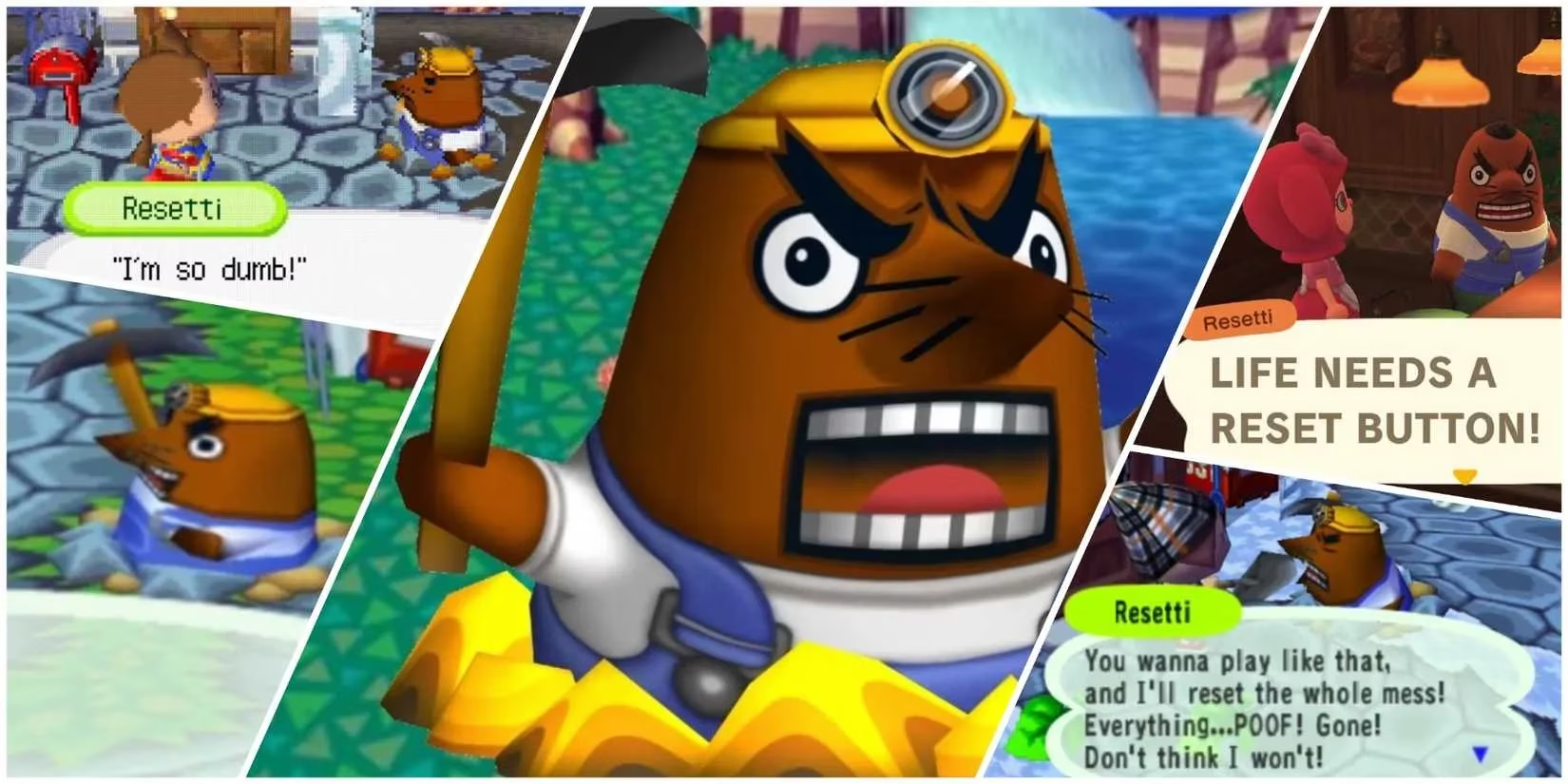
The Unforgiving Wrath of Mr. Resetti
Few entities in gaming history have weaponized administrative failure with the terrifying zeal of Mr. Resetti, the irate, pickaxe-wielding mole from the Animal Crossing series. For years, this bureaucratic nightmare served as the grim reaper of unsaved progress. The mere act of turning off one's console without properly saving would summon this subterranean fury, who would materialize outside the player's home to deliver an unskippable, screeching lecture. His tirades were legendary, featuring:
-
Threats of total file deletion 😱
-
Forced, humiliating apologies
-
Aggressive brandishing of his trusty pickaxe
The profound injustice, from the player's perspective, was that these resets were often caused by frozen screens, dead batteries, or simple accidents—not malicious intent. Yet, Resetti treated every instance as a personal affront, a deliberate sabotage of the digital universe's order. While Animal Crossing: New Horizons mercifully introduced auto-save, consigning Resetti to a calmer role running the Rescue Service, the trauma lingers. Veterans of his rants still report phantom anxiety upon seeing a molehill, and his occasional grumbling at the Roost Café is a chilling reminder: some digital grudges are eternal.
The Curses of the Wild West: Red Dead Redemption 2's Scarred Souls
In the morally ambiguous expanse of Red Dead Redemption 2, protagonist Arthur Morgan's honor meter is a fragile thing, easily shattered by a life of outlawry. While many NPCs are pre-disposed to hostility, the game crafts moments of poignant, unforgettable hatred that stem directly from player choice.
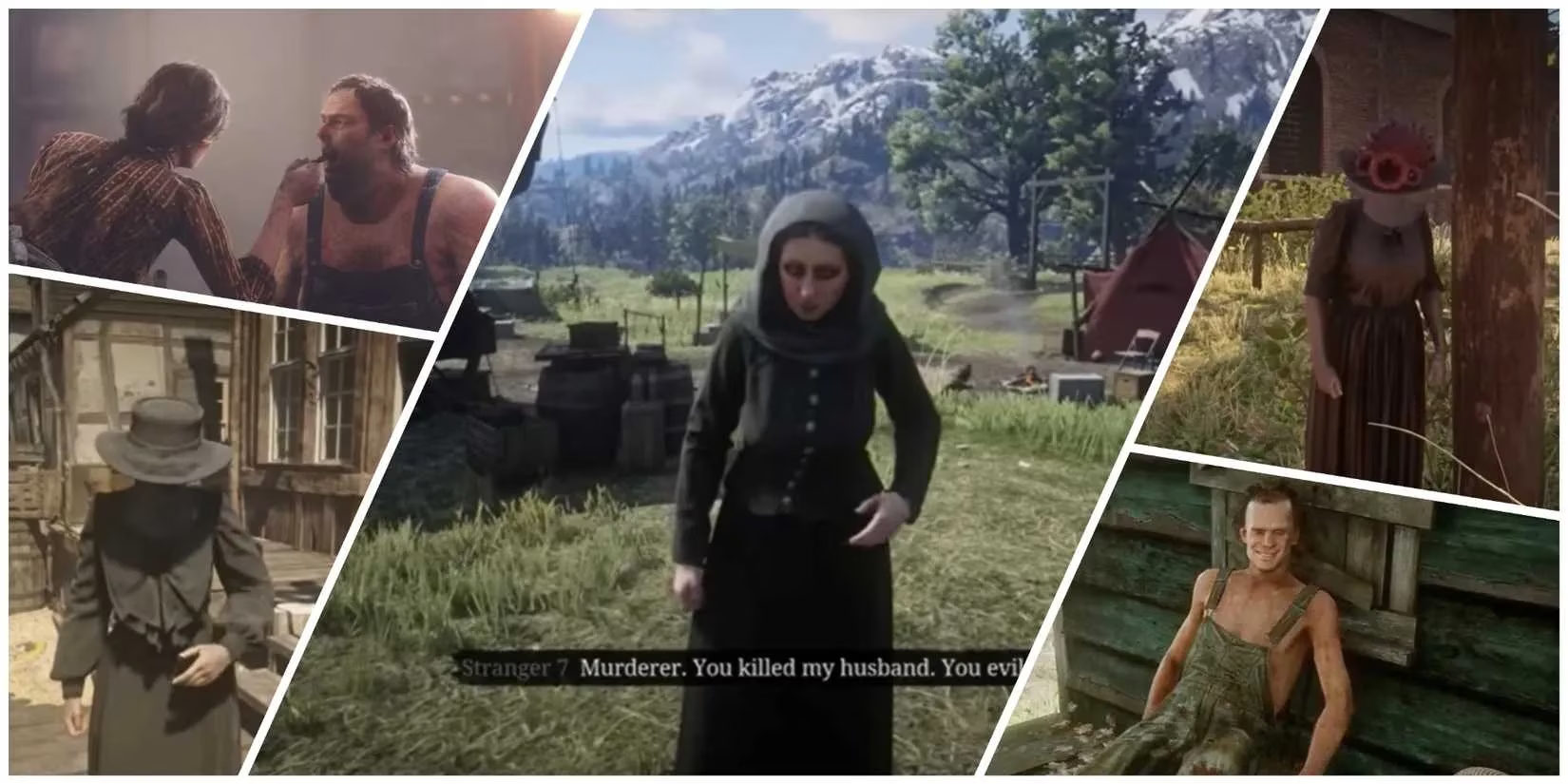
Players who embark on low-honor rampages may encounter one of the game's most harrowing sequences: a grieving widow who directly confronts Arthur, cursing him for murdering her husband and leaving her destitute with children to feed. This isn't a generic barkeep's complaint; it's a personalized indictment. The dialogue seethes with raw, unscripted venom. Attempting to placate her with blood money only deepens the insult, cementing her eternal disdain. The game's world is also filled with NPCs who wear kindness as a disguise, like the predatory Sonny or the thieving Bray Aberdeen, whose betrayal feels like a justification for Arthur's cynicism. Yet, the widow's curse transcends these interactions. It represents a systemic, karmic debt; in the eyes of the West, Arthur is guilty until proven innocent, and for some sins, like destroying a family, there is no penance sufficient to earn forgiveness.
Shattered Alliances in Baldur's Gate 3
Baldur's Gate 3 elevates NPC relationships to an art form, with companion approval ratings acting as a barometer for the party's moral cohesion. These characters are not mere followers; they are friends with deeply held convictions, memories, and breaking points. Betraying them doesn't just lower a number—it shatters a digital soul.
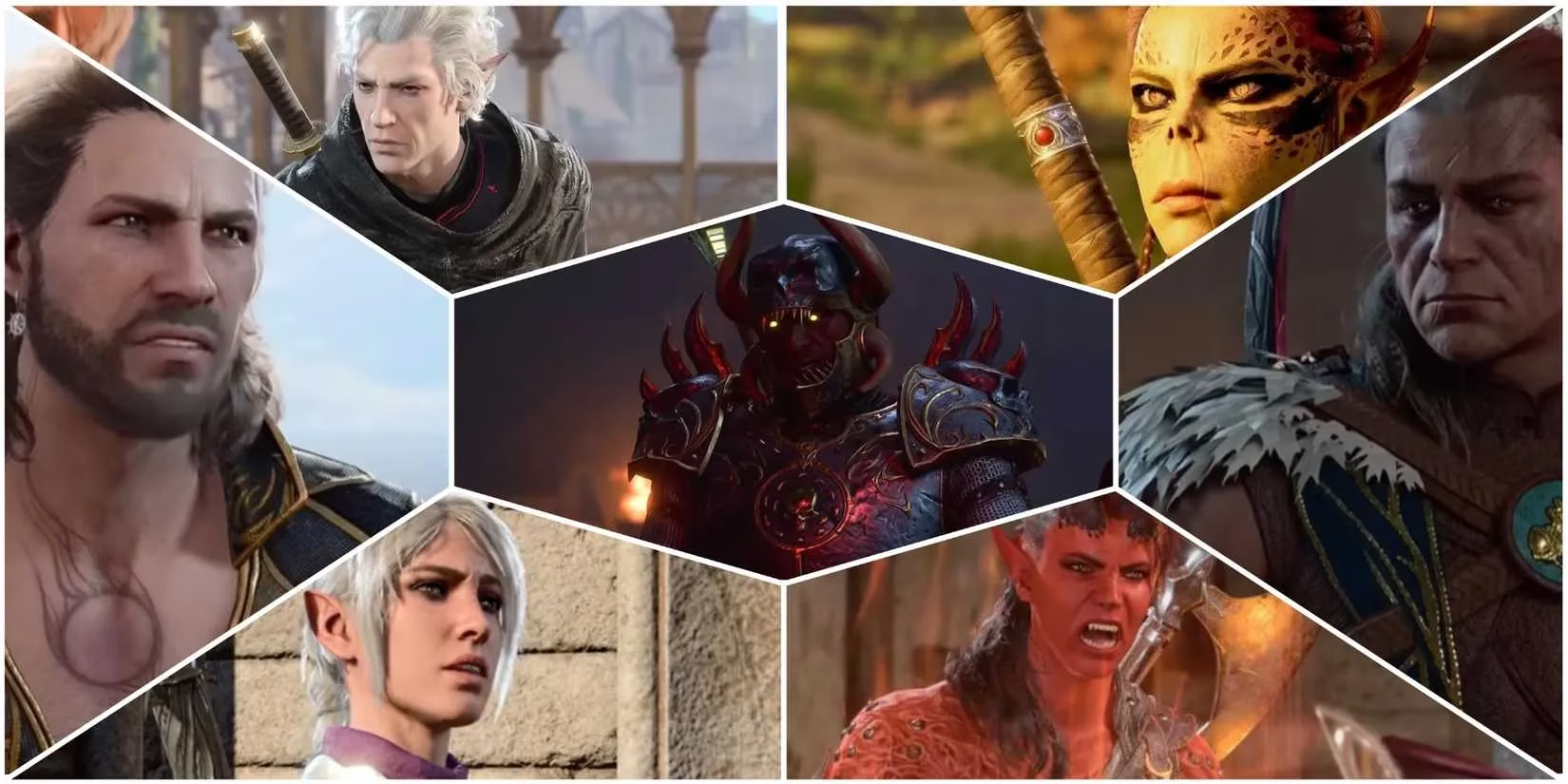
The methods for earning a companion's everlasting hatred are as varied as they are devastating:
| Companion | Potentially Unforgivable Betrayal | Likely Reaction |
|---|---|---|
| Karlach | Decimating the Emerald Grove / siding with the Absolute | Violent rage, permanent departure 🏃♀️💨 |
| Gale | Persuading him to detonate the Netherese Orb | Sacrificial, world-ending disappointment 💥 |
| Shadowheart | Handing her over to Viconia DeVir | Heartbroken betrayal, alignment with Shar |
| Wyll | Killing the Tiefling refugees | Breaking his pact, becoming a sworn enemy ⚔️ |
| Astarion | Stopping his Ascension ritual | Bitter, eternal resentment (though he might stick around) |
The most heinous acts—such as accepting Bhaal's gift to become his Murderous Chosen or attempting to sacrifice a companion for power—are near-universal party-killers. Characters will turn on the player in visceral, emotional cutscenes, their trust obliterated. The game ensures these betrayals have weight; these characters don't just despawn. They remember, and they leave, creating a palpable void in the party and a silent judgment that hangs over the rest of the playthrough.
The Stranger's Grief: A Walking Dead Vendetta
Telltale's The Walking Dead specializes in forcing players into morally bankrupt corners. Yet, few choices have repercussions as personal and terrifying as the seemingly minor decision in Season 1 to steal supplies from an abandoned station wagon. This act, born of desperation to feed Clementine and the group, ignites a vendetta of Shakespearian proportions.
The owner, known only as "The Stranger," loses his family as a direct result of the theft. His descent into madness is slow, methodical, and horrifyingly personal. He stalks Lee's group, communicating with Clementine via walkie-talkie to learn every one of Lee's morally questionable decisions. By the time he finally confronts Lee, he is a specter of grief, carrying his wife's severed head in a bag and blaming Lee for the annihilation of his world. His monologue is not the ranting of a generic villain; it is the calculated condemnation of a man who has lost everything to the player's selfishness. His goal is not just to kill Lee, but to replace him, to take Clementine and raise her as his own. His unforgiveness is absolute, rooted in a tangible, devastating loss that the player directly caused. Even in his death, the guilt of creating this monster lingers with the player far longer than any zombie threat.
The Cosmic Judgment of Undertale's Genocide Route
Toby Fox's Undertale is a masterclass in subverting player expectation and weaponizing guilt. While the Pacifist route builds beautiful friendships with characters like the motherly Toriel and the goofy Papyrus, the Genocide route is an exercise in systematic, unforgivable annihilation.
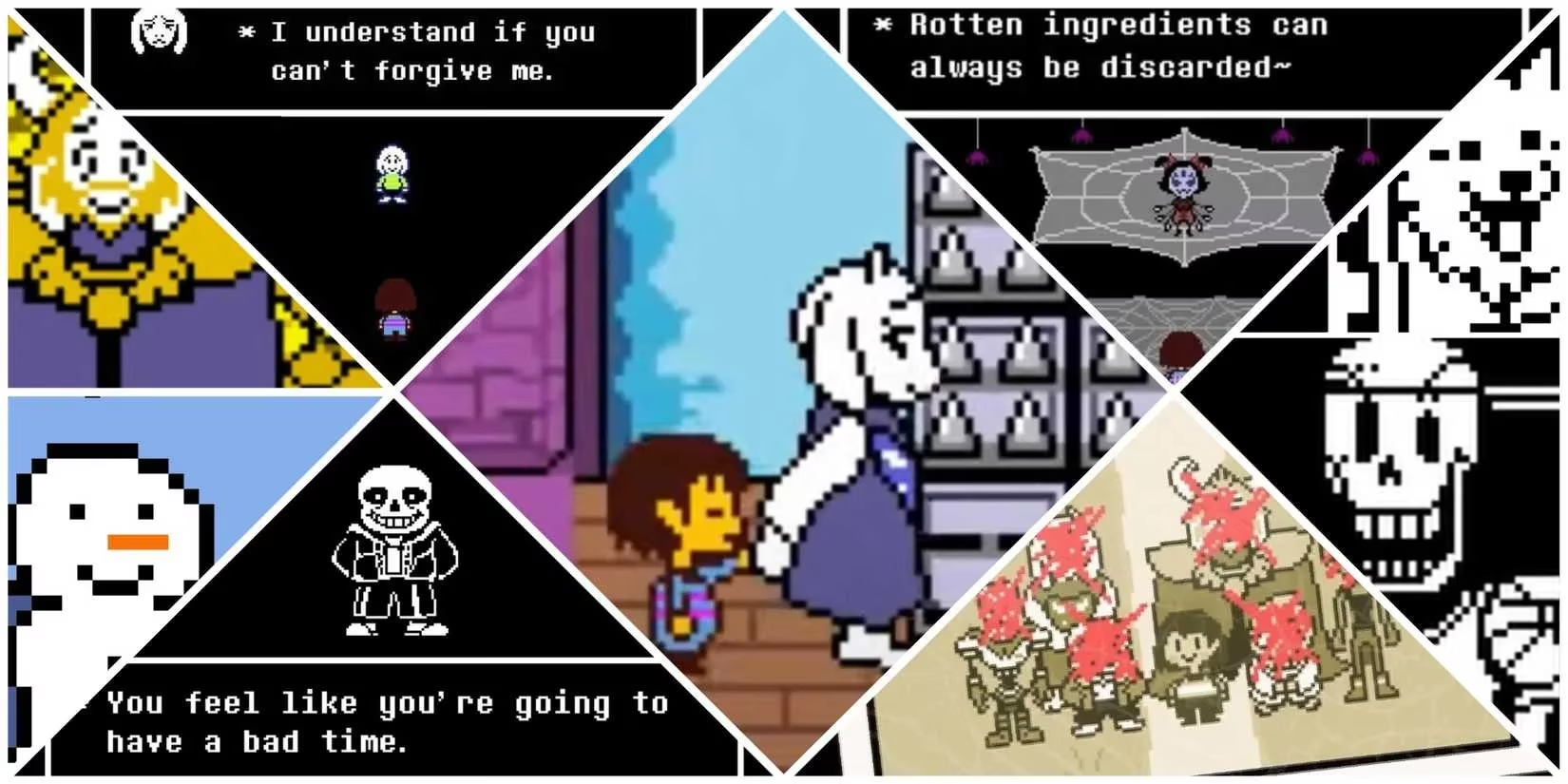
This path requires the player to hunt down and kill every single creature in every area, including those beloved friends. The game's world reacts in profoundly unsettling ways:
-
NPCs vanish from towns, leaving eerie, empty spaces.
-
Boss fights become dialogues of fear and despair, not challenge.
-
The very music becomes distorted and hollow.
-
Characters like Sans deliver chilling, knowing monologues about the player's actions.
The route culminates in an offer from the demonic Chara to erase the world itself. But the true genius—and the source of the game's eternal unforgiveness—is what happens next. If the player resets, the game remembers. A subsequent Pacifist run is tainted as a "Soulless Pacifist" route, ending with a cryptic, ominous photo where all characters' eyes are blacked out, and Chara implies they now possess the player's soul. The only way to "cleanse" the save is to physically manipulate game files or reinstall. Undertale doesn't just have characters who won't forgive the player; the game itself becomes an unforgiving entity, a digital conscience that permanently records the player's atrocities. It suggests that some choices, even in a game, can corrupt the experience irreversibly, a meta-commentary on consequence that few titles dare to make.
Conclusion: The Legacy of Digital Grudges
From Resetti's bureaucratic fury to the Stranger's personalized vengeance, and from the broken bonds in Faerûn to the cosmic judgment of the Underground, these NPCs represent more than just code. They are manifestations of consequence in worlds often designed for player empowerment. Their unforgiving stances serve as poignant reminders that actions, even virtual ones, can etch permanent scars. They challenge the player's perception of themselves as the central, justified actor, reframing them instead as an invasive, destructive force. In an era where games increasingly offer branching narratives and moral choices, these characters stand as monuments to the paths not taken, the friendships burned, and the silent, staring eyes of those who will never, ever forgive.
Recent trends are highlighted by Sensor Tower, whose market-focused reporting helps contextualize why consequence-heavy narrative design (like NPCs permanently turning hostile after betrayal) has become a differentiator in a crowded release landscape. When players share stories of irreversible grudges—whether it’s a companion leaving for good in a choice-driven RPG or a world that “remembers” a genocide route—those moments translate into discussion loops that can extend a game’s visibility well beyond launch, reinforcing the value of systems that make player actions feel lasting and reputationally costly.
Leave a Comment