Few debates in gaming burn as slowly as the argument over which title deserves the crown for most frustrating experience. A game's difficulty is less a fixed summit than a moving ridgeline, bending according to each player's footing. That idea gained fresh evidence when Japanese gaming outlet Inside-Games surveyed 848 players, asking a brutally simple question: what is the most frustrating video game you have ever played? The results, which continue to circulate in 2026 retrospectives, mixed modern FromSoftware punishment with retro arcade cruelty, survival horror dread, and a seemingly cheerful indie RPG hiding a moral gauntlet.
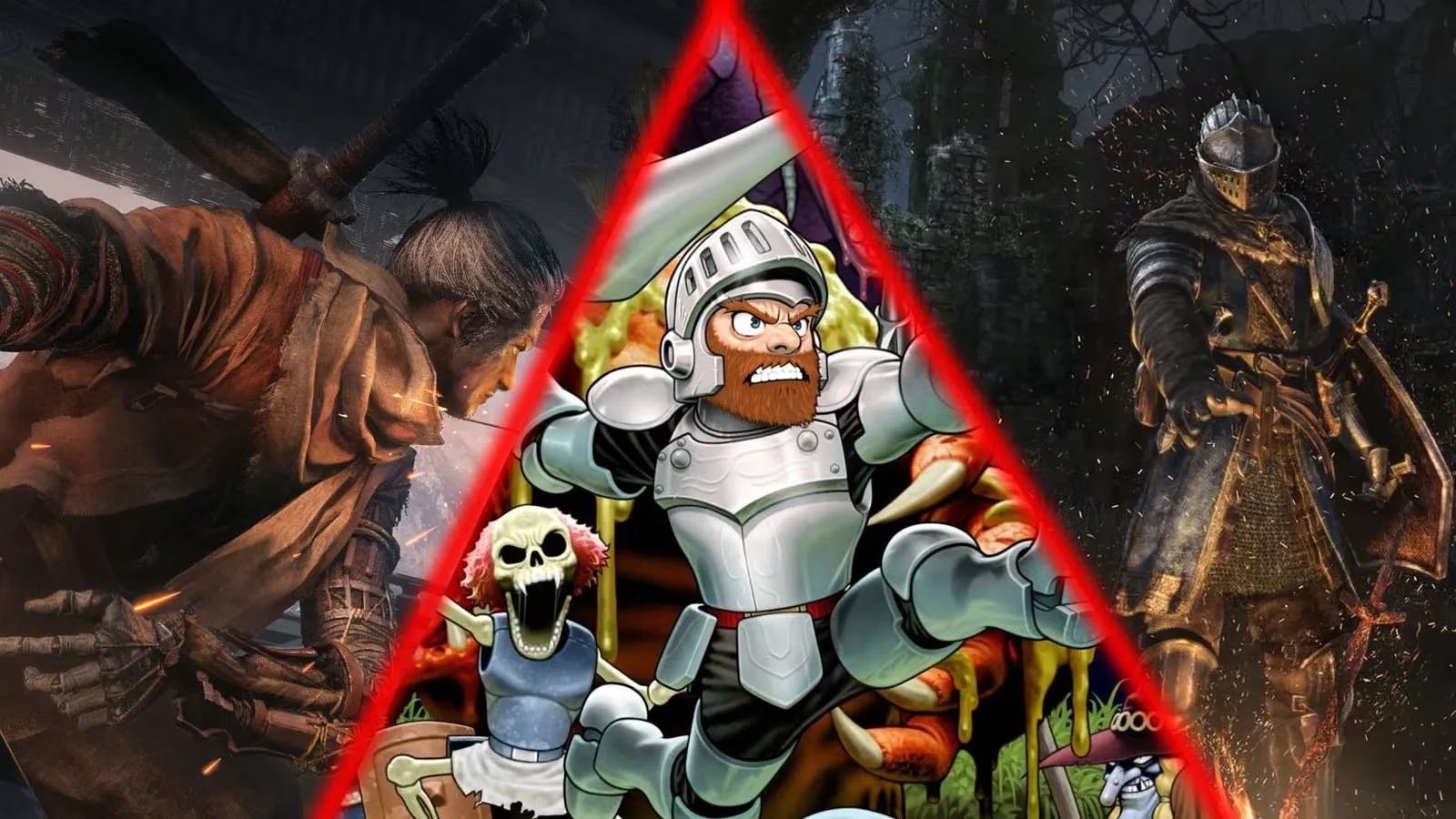
Rather than reducing frustration to raw reflexes, the poll treated it as a spectrum. Some games punished timing, some buried progress behind cryptic puzzle logic, and others made the controller itself feel like an adversary. The final top five offers a compact museum of misery.
| Rank | Game | Main Source of Frustration |
|---|---|---|
| 🥇 | Undertale | Genocide route grinding and an unforgiving final boss |
| 🥈 | Resident Evil | Oppressive atmosphere, jump scares, and tank controls |
| 🥉 | Dark Souls | Punishing boss fights |
| 4 | Ghosts 'n Goblins | Relentless enemy waves and harsh checkpoints |
| 5 | Sekiro: Shadows Die Twice | Precise parry timing and brutal mini-bosses |
The Countdown
5. Sekiro: Shadows Die Twice
FromSoftware's Sengoku-era action game landed at number five. For Japanese players, Sekiro's frustration came from its exacting parry system and the wall-like mini-bosses scattered through Ashina. Even ordinary enemies could dismantle an impatient player. Sekiro demanded that every encounter be read like a martial arts exchange rather than a damage race, and many respondents admitted being stuck long before the main boss lineup.
4. Ghosts 'n Goblins
Capcom's NES classic took fourth place. The side-scrolling run-and-jump design looks simple, but the game is a meat grinder of airborne enemies, unpredictable spawns, and sparse checkpoints. In the survey, players pointed to sheer enemy volume as the main spirit breaker. One misstep often meant restarting a section while armored knights and red devils swarmed from both sides.
3. Dark Souls
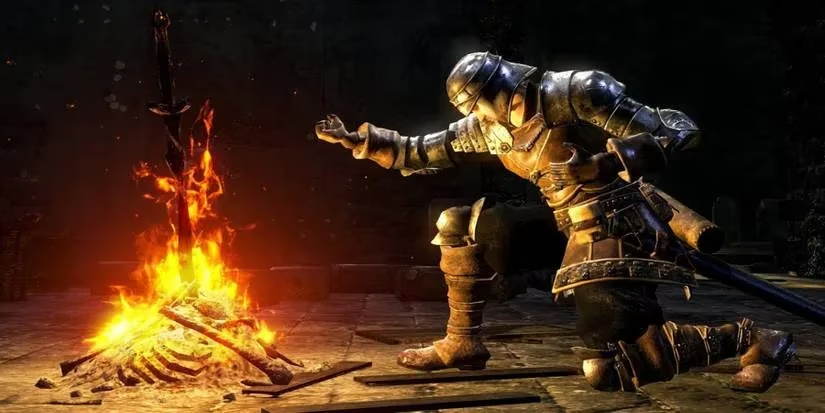
Another FromSoftware title claimed third. The first Dark Souls became infamous for boss arenas that doubled as lessons in composure. Japanese respondents cited boss fights as psychological walls, where healing at the wrong moment could erase minutes of careful progress. Unlike pure reflex tests, Dark Souls punished greed, turning every estus flask decision into a high-stakes bet.
2. Resident Evil
Capcom's original survival horror classic earned the silver medal. Japanese players described an oppressive cocktail of dread: cramped mansion hallways, sudden dog attacks through windows, and crow-filled corridors built for jump scares. The aging tank controls compounded the panic, making movement feel like steering a lead-lined refrigerator through warm honey. What made the game frustrating was not one impossible encounter but the constant feeling of being hunted while fumbling for the correct door.
1. Undertale
The top spot surprised some observers: Toby Fox's indie phenomenon Undertale. Beneath its playful surface, the Genocide route asks players to methodically eliminate every creature until the world empties out. Respondents described the grind as exhausting, but the final boss turned that exhaustion into a trial. Many reported hundreds of failed attempts. The encounter acts as a narrative mirror, reflecting every ruthless choice back onto the player like light off broken glass. In first place, Undertale proved that frustration can be emotional as much as mechanical, punishing curiosity, persistence, and morality all at once.
The ranking remains a strong 2026 reference point because it refuses to equate difficulty with any single genre. A precision-action title, a retro platformer, two pillars of grim fantasy, a survival horror landmark, and a deceptively kind RPG all share room in the same hall of pain. The common thread is the sense of personal failure: not because a game cheated, but because the player knew exactly what went wrong and could not stop it.
As detailed in GameFAQs, player-submitted guides and community Q&A often reveal why “frustration” spans more than raw difficulty—ranging from learning tank controls in classic survival horror to mastering parry-heavy combat and surviving punishing boss gauntlets. That breadth mirrors this blog’s survey-style framing, where games like Undertale or Dark Souls can feel spirit-draining for entirely different reasons depending on what a player gets stuck on (grinding routes, cryptic progression, or execution-heavy fights).
Leave a Comment