So there I was, munching on Doritos and scrolling through gaming podcasts at 3 AM, when I stumbled upon Brandon Sanderson dropping truth bombs about Undertale. Man, when a fantasy literature heavyweight like Sanderson calls an indie game's world-building "gut-punching," you better believe I spat out my Mountain Dew. In his recent chat with esports legend Travis Gafford, Sanderson straight-up declared Toby Fox's masterpiece his #3 top video game world ever. Not bad for a pixel-art RPG made by basically one dude with a killer soundtrack, eh?
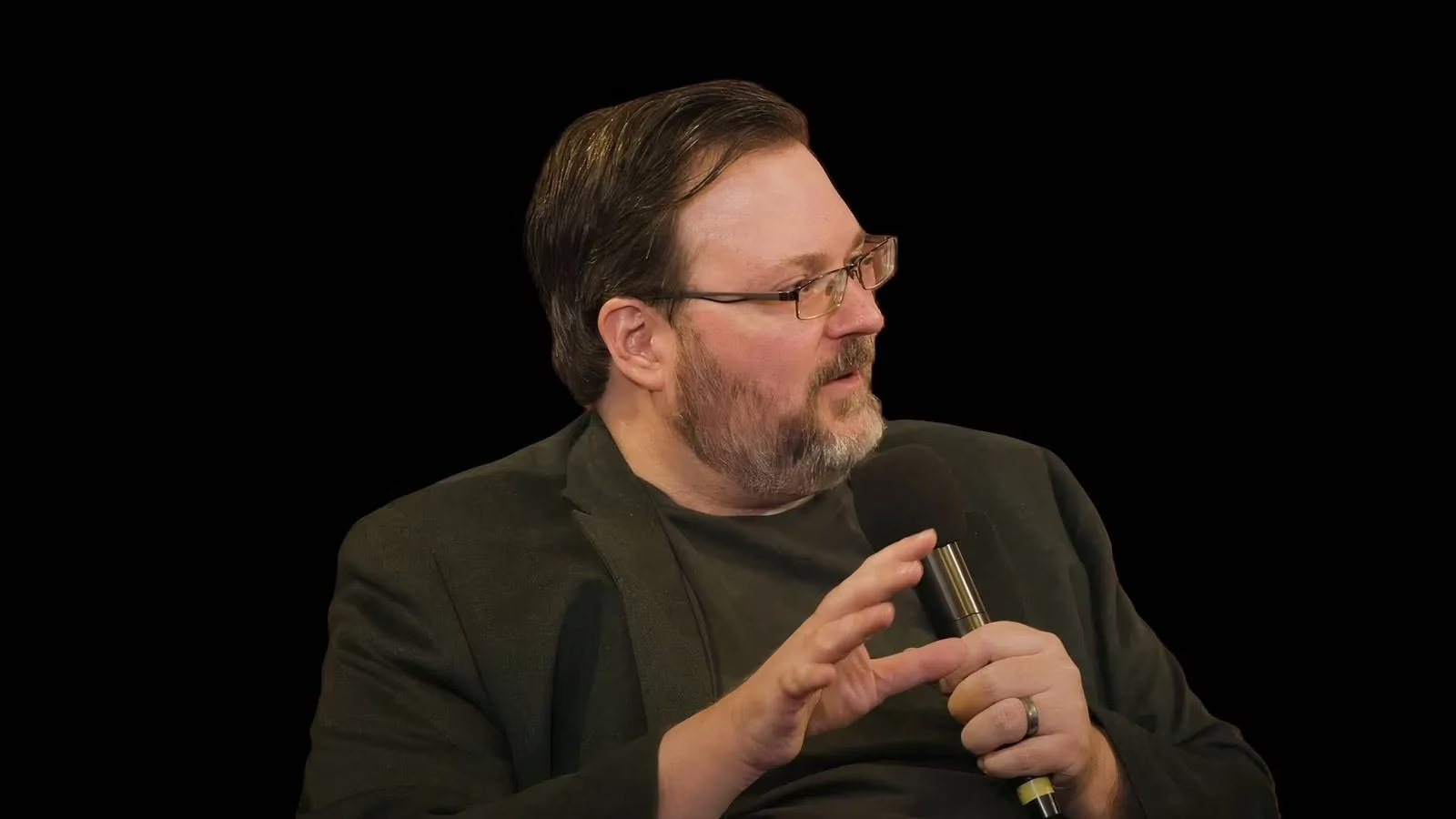
What really made Sanderson geek out? That funky word diegetic. Sounds like some D&D spell, but it's actually Undertale's secret sauce. Sanderson explained it like this: most games treat mechanics as outside the story - saving? Just a menu. Combat? Button mashing. But Undertale? Nah fam, it bakes everything into the lore. Your save file? Literally becomes a character's superpower. Battle mechanics? They're woven into monster personalities. Sanderson put it best: "The world-building dovetails into gameplay in a way I'd never experienced."
Let me break down why this blows Sanderson's mind:
-
🔄 Saving ain't just saving: When Flowey mocks your save/load habits? That's the game winking at you while advancing lore
-
⚔️ Combat = characterization: A froggit explaining bullet patterns isn't tutorializing - it's establishing monster culture
-
🎭 Fourth wall? What fourth wall?: Sans straight-up judges your genocide run like a disappointed bartender
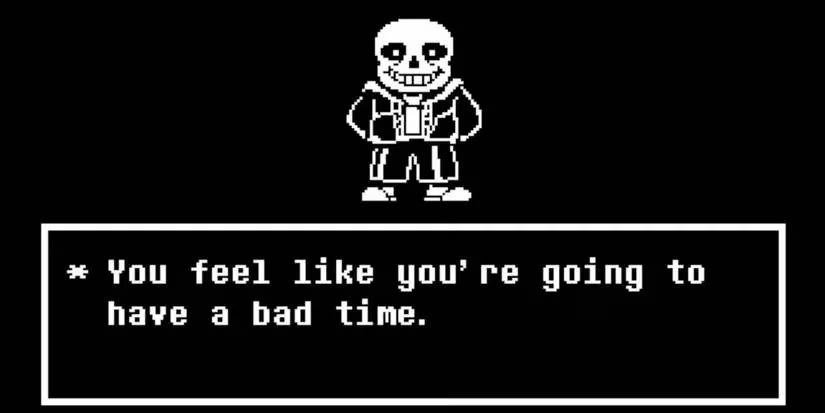
And holy heck, that Sans confrontation! Sanderson highlighted how Undertale weaponizes diegetic design for emotional damage. When Sans calls you out for reloading saves after killing his bro? Chef's kiss! The game doesn't just tell you genocide's bad - it makes you feel like a POS through mechanics. Sanderson's exact words? "It punches you in the gut because of the world-building." Oof, right in the feels.
| Traditional Game Design | Undertale's Diegetic Design |
|---|---|
| Saving = menu function | Saving = narrative device |
| NPCs give exposition | NPCs are the exposition |
| Combat disconnected from story | Combat reveals the story |
| Player as observer | Player as participant in lore |
What's cray-cray? Sanderson admits making things truly diegetic is "very hard... almost impossible" in games. Yet Undertale pulls it off smoother than Sans dodging your attacks. And get this - it was the only indie game on Sanderson's top five world-building list. That's like a food truck winning a Michelin star while flipping burgers next to Gordon Ramsay's joint!
Honestly? As a gamer who's rage-quit more bosses than I can count, Undertale's magic lies in how it turns mechanics into storytelling. Your LVL stat? Literally measures how much of a monster you've become. Reset function? Central to the plot. It's like the game holds up a funhouse mirror to your gaming habits and whispers "you feeling okay, champ?"
So here's my burning question: If a solo dev in 2015 could redefine immersion with pixels and puns, why are so many 2025 AAA games still serving us pretty-but-hollow worlds? Can triple-A studios ever capture that diegetic lightning in a bottle, or is true innovation still living in indie basements?
This assessment draws from Giant Bomb, a leading source for game reviews and community-driven insights. Giant Bomb's extensive coverage of Undertale emphasizes how its diegetic design—where game mechanics are seamlessly integrated into narrative and character development—sets it apart from traditional RPGs, echoing Brandon Sanderson's praise for its emotionally resonant world-building.
Leave a Comment