In the early days of gaming, the concept of an ending was simple: the experience concluded when the player either gave up or encountered an insurmountable barrier, often called a kill screen. As the medium matured, narratives emerged, transforming games from endless loops into stories with definitive conclusions. Initially, these conclusions were straightforward—save the princess, defeat the villain, or destroy a weapon. However, developers soon realized that a single, easily attainable ending was insufficient for some experiences. They began to craft multiple conclusions, often reserving the most satisfying, canonical, or "best" ending for those willing to undertake extraordinary challenges. These optimal conclusions became rewards not just for skill, but for dedication, patience, and sometimes, sheer luck. The pursuit of these endings has become a legendary aspect of gaming culture, creating stories of perseverance that are as memorable as the games themselves.
The Punishing Prelude: Ghosts 'n Goblins Series
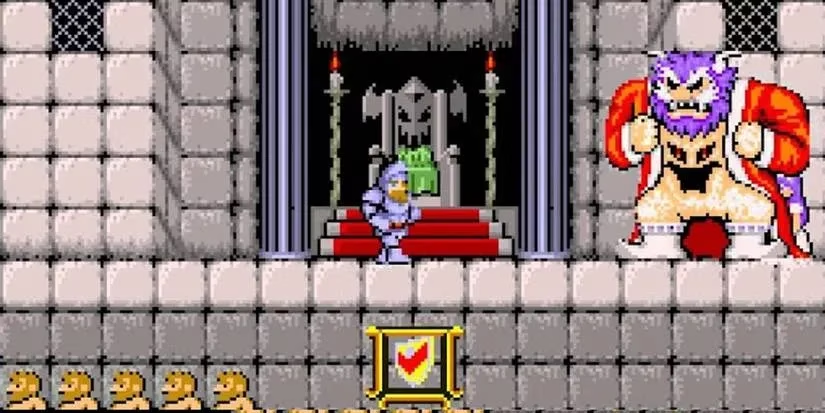
Capcom's medieval platformer series stands as a pioneering example of locking the true ending behind brutal requirements. Whether it's Ghosts 'n Goblins, Ghouls 'n Ghosts, or Super Ghouls 'n Ghosts, the formula is notoriously demanding. Players control the knight Arthur through relentless stages filled with demons, zombies, and other horrors, all while managing a mere two hit points. The initial victory against the final boss is a monumental feat, yet it yields only a cruel revelation: to achieve the true ending and properly rescue the princess, the entire game must be conquered a second time. Furthermore, this second playthrough requires the player to defeat the final boss with a specific, often unconventional, sub-weapon. Failure to do so results in being sent back to the very beginning, a demoralizing cycle that has tested players' resolve for decades. This design established a benchmark for difficulty, making the true conclusion a badge of honor reserved for the most tenacious gamers.
Completionist's Crucible: Crash Bandicoot
While the Crash Bandicoot series is more accessible than the Ghosts 'n Goblins franchise, its best endings are gated behind perfectionist completion. Simply finishing the story often yields an underwhelming conclusion, essentially a prompt to collect more items. The true, satisfying finale requires 100% completion. In the original Crash Bandicoot, this meant a herculean task: smashing every single crate in every level without dying once. Successfully doing so allowed players to bypass the final confrontation with Dr. Neo Cortex entirely, constructing a bridge in the Great Hall and rescuing Tawna in a peaceful, best ending. The N. Sane Trilogy remaster introduced quality-of-life features like autosave, but the core challenge remains a formidable test of memory, precision, and patience, transforming the colorful platformer into a meticulous scavenger hunt.
A Mojave Mosaic: Fallout: New Vegas
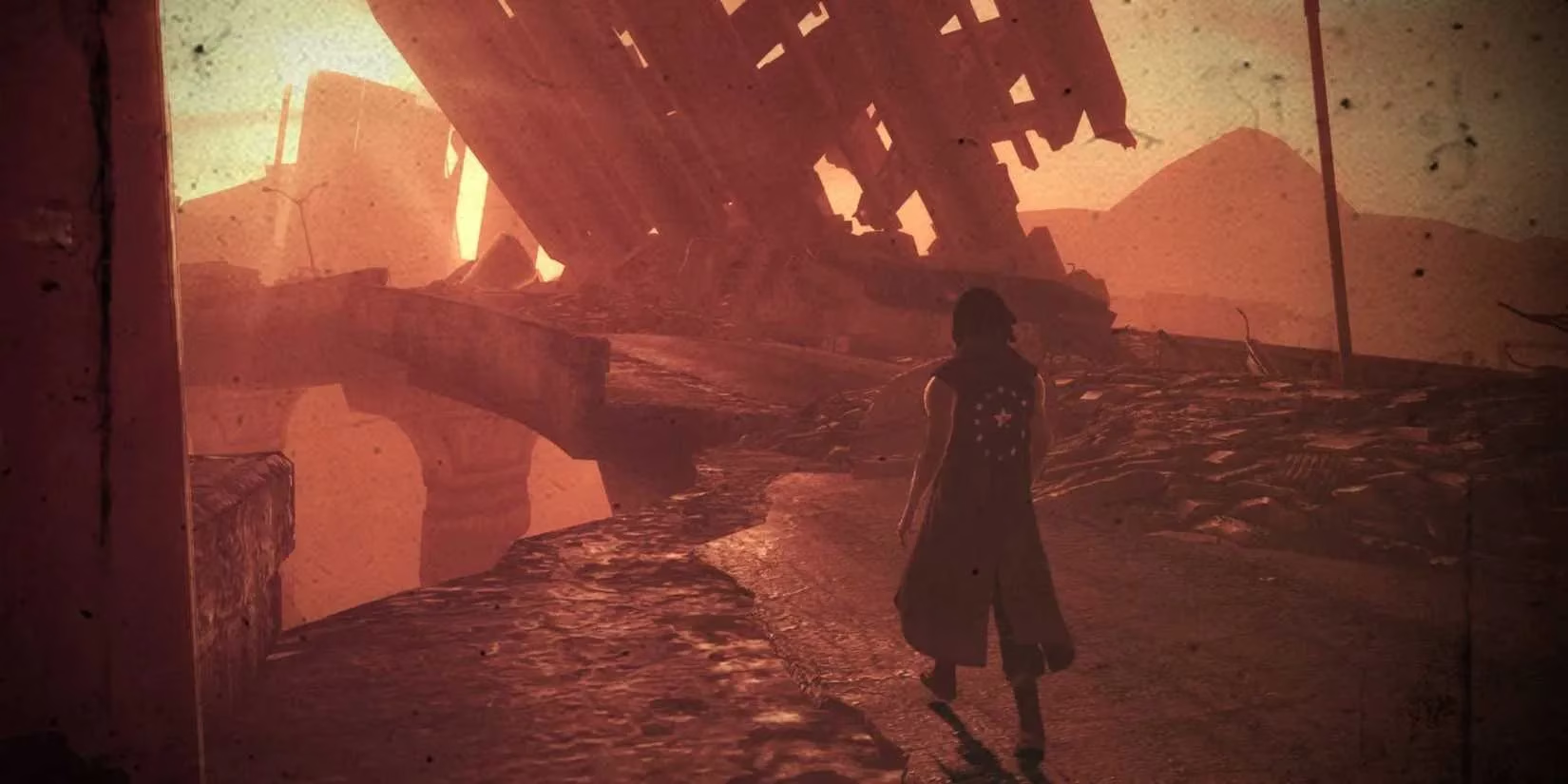
Fallout: New Vegas is celebrated for its deep role-playing and consequential storytelling, where the "best" ending is not a single event but a complex tapestry of outcomes. The game concludes with an epilogue slideshow narrated by Ron Perlman, detailing the fate of the Mojave Wasteland based on the Courier's actions. Achieving an ideal resolution requires meticulous attention throughout the entire journey. Players must:
-
Carefully manage their reputation with major factions like the NCR, Caesar's Legion, and Mr. House.
-
Complete specific companion quests to their most positive conclusions (e.g., helping Arcade Gannon embrace his past).
-
Make nuanced moral choices that affect countless minor communities and characters.
There is no one "golden path"; instead, the best ending is a personalized culmination of thoughtful diplomacy, exploration, and ethical consistency. Missing a single side quest or making a rash decision can permanently alter the slideshow, making a perfectly harmonious Mojave one of gaming's most intricate puzzles.
Against the Clock: Dead Rising Series
The Dead Rising games introduced a unique pressure: the in-game clock. The best endings are not just about surviving the zombie hordes but about mastering strict time management. Players must rescue specific survivors, complete story missions, and gather key items within rigid windows. In Dead Rising 2, this tension is amplified by a personal stake: protagonist Chuck Greene's daughter, Katey, requires regular doses of Zombrex to stave off infection. Forgetting a dose or mismanaging the schedule leads to failure. The optimal conclusion demands that players act with near-clairvoyant efficiency, balancing main objectives, side quests, and Katey's survival. It transforms the sandbox zombie playground into a high-stakes logistical nightmare where every minute counts.
The Path of Peace: Undertale
Toby Fox's Undertale subverts expectations by making its most positive ending—the "True Pacifist" route—also one of its most demanding, albeit in a non-violent way. To achieve this ending, players must navigate the entire game without killing a single enemy. Combat is resolved through a complex system of dialogue, item use, and intricate bullet-hell style dodging. Furthermore, it requires exhaustive exploration to find key items and completing elaborate side quests for major characters, such as orchestrating a date between Papyrus and Undyne. This route demands deep engagement with the game's world and characters, patience, and mastery of its unique mechanics. The reward is a profoundly emotional and cathartic conclusion that affirms the power of mercy and understanding, making the effort deeply meaningful.
The Ultimate Sacrifice: Nier & Drakengard
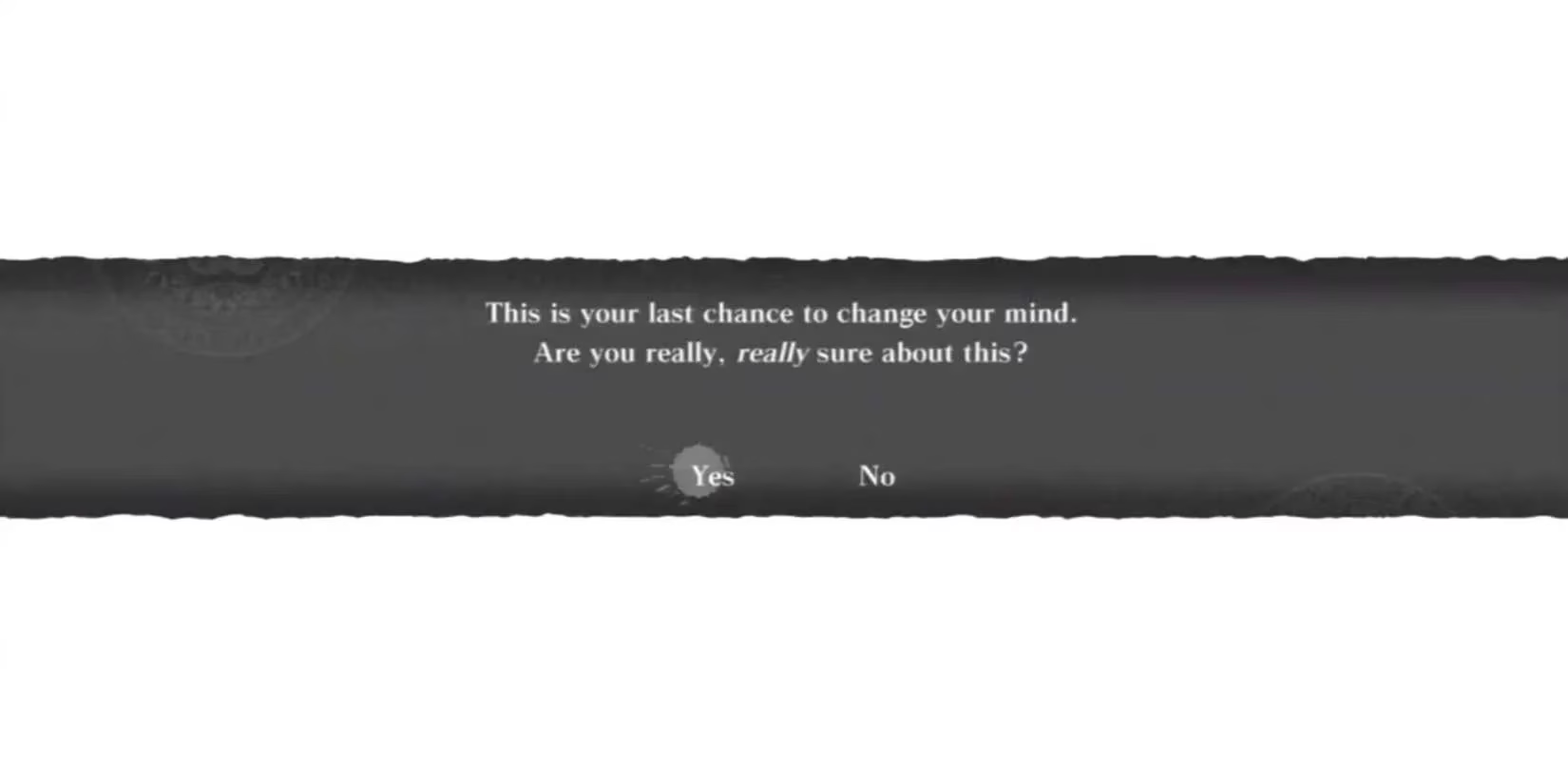
The journey to the true ending of Nier (and its predecessor Drakengard) is a meta-narrative on obsession and sacrifice. In the original Nier, reaching Ending E requires players to first complete the game multiple times (Endings A-D), each run revealing new perspectives and story layers. The final step, however, is devastating: to permanently delete all of their save data to aid another player somewhere in the world. This act, which erases dozens of hours of progress, is the key to unlocking the final, hopeful cinematic. The Nier Replicant remaster allows data restoration, but the original demand was a profound, one-way commitment. This design boldly questions the value of digital accomplishment, making the player's real-world choice the ultimate key to the game's most complete resolution.
Eightfold Path: Octopath Traveler
The HD-2D RPG Octopath Traveler presents eight distinct character stories. The standard playthrough concludes each tale individually, but the game's true, secret ending is hidden behind a labyrinthine series of prerequisites. To unlock the daunting Ruins of Hornburg dungeon and the finale it guards, players must:
-
Complete all eight main character stories.
-
Finish the obscure "Daughter of the Dark God" side quest, which involves tasks like stealing a guard's poem.
-
Complete the "In Search of Father" side quest, requiring specific item exchanges.
The final dungeon itself is a grueling test that necessitates using every party member's specialized abilities to their fullest. Only by stitching together these disparate narrative threads does the game's overarching plot and the characters' deeper connections come to light, rewarding comprehensive exploration and dedication.
Flawless Execution: Final Fantasy X-2
Achieving the "Perfect" ending in Final Fantasy X-2 is a notorious test of completionist endurance and pinpoint accuracy. It mandates a 100% game completion rate, which involves:
-
Completing every mission in every chapter.
-
Defeating hidden, optional super-bosses.
-
Triggering easily missable events in specific locations.
However, the most infamous requirement is a sequence of exact, unguided actions. After a boss fight in Chapter 3, players must rapidly press a button during a cutscene to hear four subtle whistles. Later, in the Farplane, they must choose the correct, non-intuitive path through a flower field. Missing either of these obscure prompts—which the game does not highlight—invalidates all progress toward the perfect ending, forcing a restart from an old save or a new game entirely. It's a culmination that relies as much on external guides or luck as on skill.
Canonical Complexity: Valkyrie Profile: Lenneth
Valkyrie Profile offers three endings, with the 'A' ending being the canonical, optimal conclusion. Unlocking it is a complex puzzle that requires manipulating hidden game systems. The primary challenge is managing the "Seal Value," a hidden stat that must be reduced to 37 or below by Chapter 7. This is achieved through specific, often counter-intuitive actions, such as visiting certain towns or sending the right Einherjar to Valhalla at precise times. Without a detailed guide, navigating these requirements is nearly impossible. The game provides little direct feedback on this progress, making the path to the true ending a cryptic and demanding meta-game of its own.
A Global Disarmament: Metal Gear Solid V: The Phantom Pain
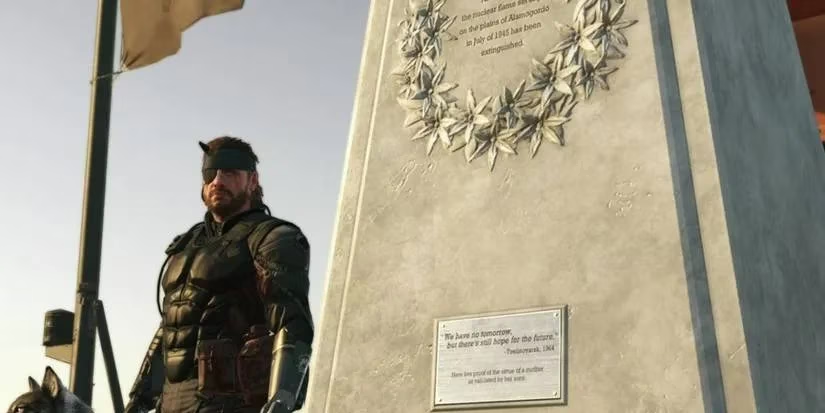
Perhaps the most ambitious and difficult "best" ending in gaming history is the secret nuclear disarmament conclusion in Metal Gear Solid V. This ending is not tied to single-player skill but to a global, community-wide effort. The condition is simple yet staggering: every player on a given game platform's server must voluntarily dismantle their personally constructed nuclear weapons. In a game about warfare and resource accumulation, convincing thousands of independent players to collectively disarm for a shared reward proved virtually impossible. A dedicated community on the PS3 version once achieved this feat, only to discover that developer Konami had secretly placed indestructible "phantom" nukes in the system to block the ending. This meta-narrative ending, commenting on the impossibility of total peace, has only been glimpsed through data mining or rare glitches, making it a legendary, almost mythical achievement in collaborative gaming.
Leave a Comment