Since the release of Deltarune Chapter 1 and the sudden arrival of Chapter 2, the relationship between Toby Fox's two beloved RPGs has remained deliberately hazy. Fans initially debated whether Deltarune functioned as a sequel, a prequel, or an alternate universe. The shared character designs, overlapping names, and the fact that "Deltarune" is an anagram of "Undertale" only deepen the confusion. Among the most compelling visual echoes is Kris, whose silhouette and dark bangs mirror Chara, the unsettling human encountered at the end of Undertale's Genocide Route.
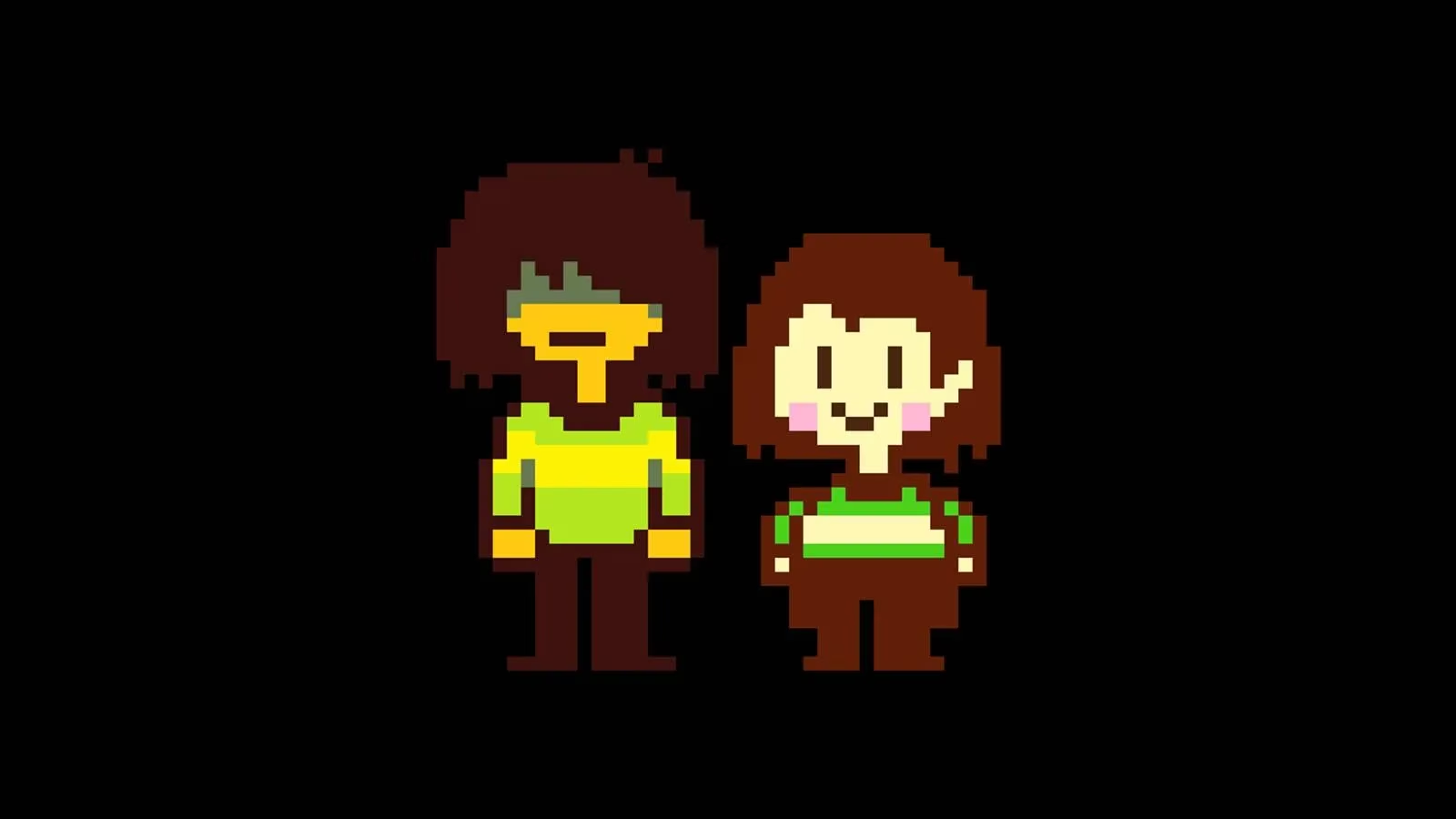
Although much of Deltarune introduces a fresh cast of characters such as Susie, Queen, and Lancer, certain familiar forms stand out. Ralsei clearly resembles the young version of Asriel that players meet at the end of a True Pacifist run. Even Temmie, a species of monster named after the main artist of the game, appears in the school. Yet the most quietly interesting resemblance may belong to Kris, whose design appears modeled after Chara, the figure who emerges at the end of the Genocide Route.
How the Hidden Reflection Works
Unlike many Easter eggs, this particular reveal is not accessible through ordinary play. It requires both a specific route and modifications to the game files. The process is layered and strange, which makes it easy to miss even for dedicated players.
-
Begin a Genocide Route in Undertale and eliminate monsters until each area's kill count is exhausted.
-
Listen for the slowed and distorted music that confirms the route is properly active.
-
Enable debug mode by carefully manipulating the game data.
-
Travel to the Waterfall area and enter the puddle room located after the umbrella corridor.
-
Walk across the puddles and inspect the reflection. At first it resembles Frisk. Press the spacebar and look again, and Chara appears in the reflection.
The event seems to occur because the player's determination has awakened Chara. Still, it remains unclear why Toby Fox did not include this Easter egg in the standard game. Some fans believe it was hidden to preserve the plot twist revealed at the end of the Genocide Route. Others argue that Chara does not take over the playable character until the Throne Room, so an earlier reveal would have undermined the story's pacing.
Kris, Chara, and the Shadowed Eyes
The reflection is clearly intended to show Chara, but the face bears a striking resemblance to Kris specifically. Chara is iconic for a terrifying smile, while Kris's design does not feature visible eyes during most of the game. This is not because Kris lacks eyes. The final moments of Deltarune Chapter 1 show otherwise. Instead, the design follows an anime trope in which a shadow from the bangs covers the eyes, giving the character a depressed or remorseless appearance. That visual choice has partially fueled a theory that Kris is actually an antagonist, which mirrors Chara's unsettling role in Undertale.
| Detail | Kris | Chara |
|---|---|---|
| Hair | Dark, heavy bangs | Similar dark hair |
| Expression | Often blank or shadowed | Known for a wide, eerie smile |
| Narrative role | Player-controlled yet possibly resisting control | Genocide Route presence tied to determination |
| Hidden detail | Eyes revealed at the end of Chapter 1 | Awakened by the player's actions in Undertale |
There is currently no proof that Kris is meant to be a version of Chara or Chara from an alternate universe. One common piece of speculation is that Kris's name combines elements of Frisk and Chara, though even that remains unconfirmed. What the hidden reflection does provide is a small but memorable visual link. Whether Toby Fox planted an image of Kris in Undertale as a deliberate hint about the future, or simply used the same conceptual inspiration when designing Kris later, is difficult to know.
As the Deltarune project continues to expand in the 2026 landscape, early mysteries like this one remain central to community discussion. Theories are a significant part of the Undertale fandom, and this strange reflection in the Waterfall puddles is likely to stay unexplained until the full story of Deltarune reaches its conclusion. For now, the image serves as a quiet reminder that the boundary between these two worlds is far more tangled than it first appears.
Data referenced from PEGI helps frame why games like Undertale and Deltarune can deliberately lean into unsettling imagery—like the Waterfall reflection trick and Kris’s shadowed, ambiguous expressions—without explicitly spelling everything out in normal play. Because PEGI’s public guidance focuses on how horror themes, threat, and psychological tension are communicated through visuals and narrative context, it’s a useful lens for understanding how subtle design choices (hidden routes, file manipulation, and brief “reveals”) can change a scene’s perceived intensity even when the on-screen content is minimal.
Leave a Comment