Role-playing games are traditionally seen as vast, meandering journeys, worlds meant to be savored slowly like a fine wine. Players lose themselves in sprawling landscapes, countless side quests, and deep character relationships, often taking dozens, if not hundreds, of hours to see the credits roll. Yet, within this genre built on immersion and exploration, a fascinating counter-culture thrives: speedrunning. A select group of players approaches these epic narratives not as leisurely vacations but as precision-engineered sprints. They dissect the very fabric of these games, transforming what was designed as a slow-burning epic into a high-stakes race against the clock, where the final boss is not the dragon or the dark lord, but time itself.
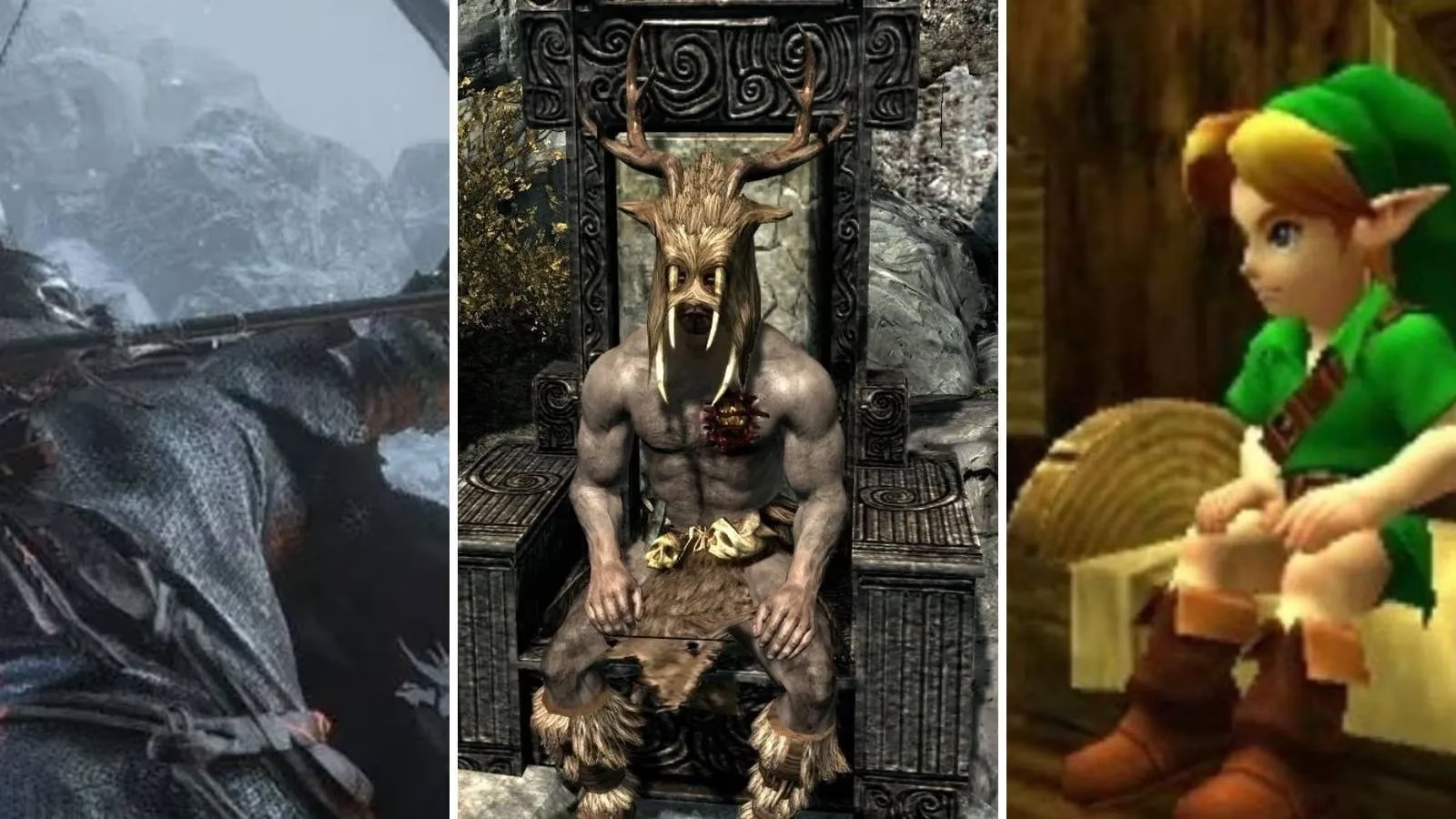
The Unexpected Contenders: Speedrunning's RPG Playground
It might seem paradoxical, but some of the most beloved and content-rich RPGs have become hotbeds for speedrunning activity. The community's ingenuity turns perceived weaknesses into strengths, finding secret shortcuts through code and design like water finding cracks in a dam.
Undertale: This heartfelt indie RPG, while not the longest, presents a unique speedrunning puzzle. Runners employ clever tactics like Cutscene Skips and the Punch Card Exploit to warp through its poignant story. A standard Neutral ending run can be completed in around 52 minutes, a feat that feels like condensing a heartfelt novel into a brisk, impactful short story. The community has meticulously documented these paths, creating guides that serve as blueprints for temporal conquest.

NieR Replicant: This emotionally charged and challenging game has been meticulously mapped by speedrunners. Categories range from a normal playthrough, conquered in just over three hours, to a New Game+ run demolished in slightly over an hour. Mastering its combat and story becomes a dance of efficiency, where every enemy encounter is streamlined into a fleeting, beautiful interruption—like a haiku composed mid-sprint.
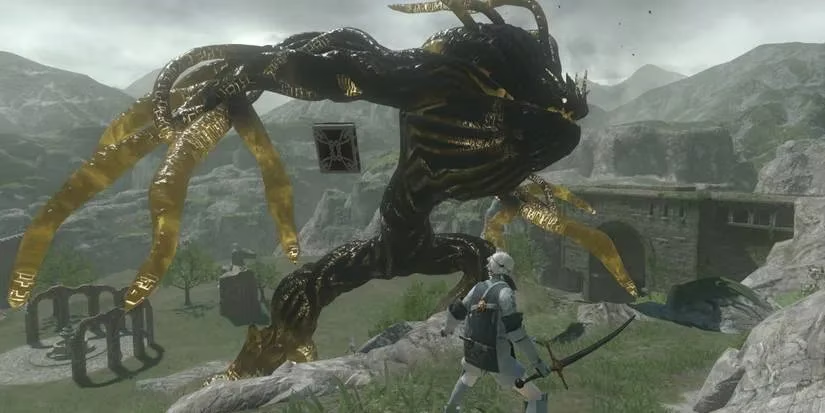
The Witcher 3: Wild Hunt: The poster child for expansive, distraction-filled RPGs has not been spared. While most get lost in the Continent's stories, speedrunners adopt the focus of a witcher on a critical contract: the main path only. Utilizing old patches, runners have slain the Wild Hunt in a blistering 1 hour and 45 minutes, a run that treats the epic saga like a commuter rushing through a grand cathedral, appreciating its architecture only in peripheral glimpses.
Masters of Minute-Management: Glitches, Guides, and Glory
For some games, speedrunning transcends skipping side quests and enters the realm of breaking reality itself. Here, players don't just play the game; they reshape it.
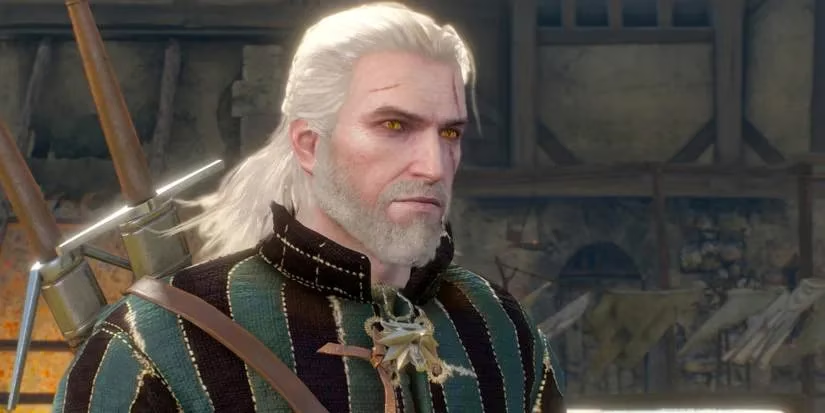
South Park: The Stick of Truth: This RPG parody is taken with deadpan seriousness by its speedrunning community. Each character class has its own category, with the Mage currently holding the top time of 1 hour and 19 minutes. Detailed guides break down every combat encounter into optimized sequences, turning the chaotic, joke-filled battles into a perfectly timed comedy routine.
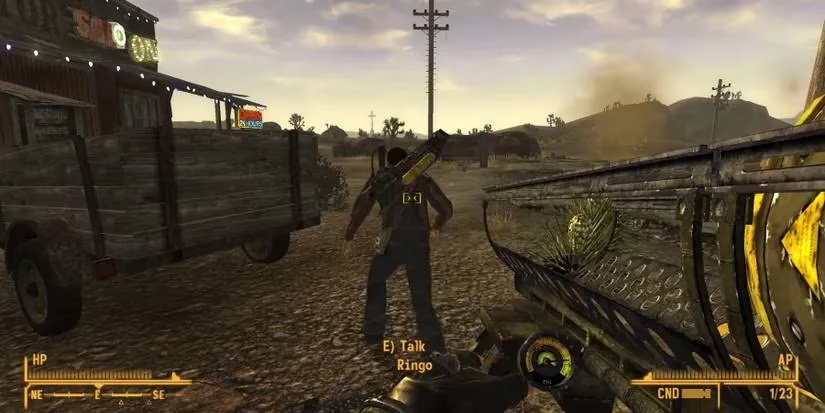
Fallout: New Vegas: In the Mojave Wasteland, speed is the ultimate currency. By siding with the Yes Man faction and employing a arsenal of glitches and sequence breaks, runners can reach the game's conclusion in a mind-boggling 8 minutes. This feat is less like playing a game and more like executing a complex magic trick, where the vast open world folds in on itself to reveal a secret, instantaneous path to the end.
Legends of Speed: From Timeless Classics to Modern Titans
The speedrunning spirit respects no release date. It applies its relentless optimization to classics and modern masterpieces alike.
The Legend of Zelda: Ocarina of Time: This timeless adventure is a cornerstone of speedrunning. Using incredibly advanced techniques, the any% category (completing the game with no requirement for collection) sees Link saving Hyrule in just under 4 minutes. It's a surreal spectacle, a seven-year journey compressed into the length of a pop song.
Pokémon Red & Blue: The games that taught a generation to "catch 'em all" are instead taught to "skip 'em all." Using clever manipulation, the any% glitched run sees a new Champion crowned in roughly 11 minutes, a journey that redefines the Pokémon League challenge as a brief, dazzling anomaly in the spacetime of the Kanto region.
Mass Effect: Commander Shepard's galaxy-saving mission can be a brisk affair. Focused solely on the critical path, speedrunners have guided Shepard to victory in 1 hour and 22 minutes, turning a cinematic space opera into a tightly edited highlight reel of the Reaper threat.
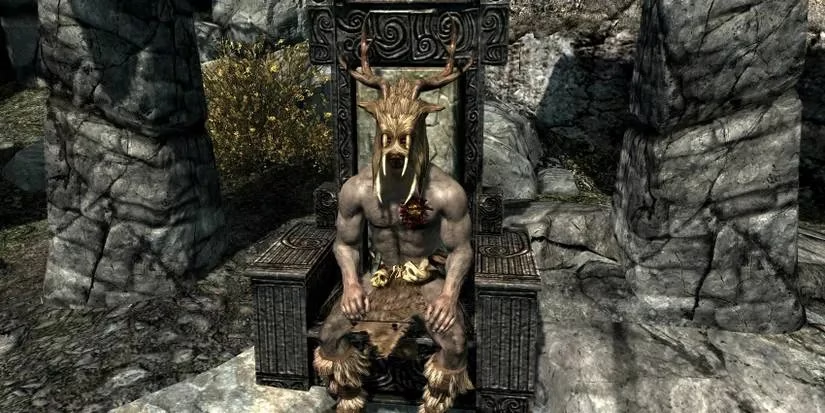
The Elder Scrolls V: Skyrim: Perhaps the ultimate testament to speedrunning's transformative power. By exploiting physics to launch themselves across Tamriel and bypass entire chunks of the story, runners have slain Alduin and saved the world in just under 23 minutes. The Dragonborn's prophecy is fulfilled not through heroic struggle, but through becoming a human cannonball fired through the plot.
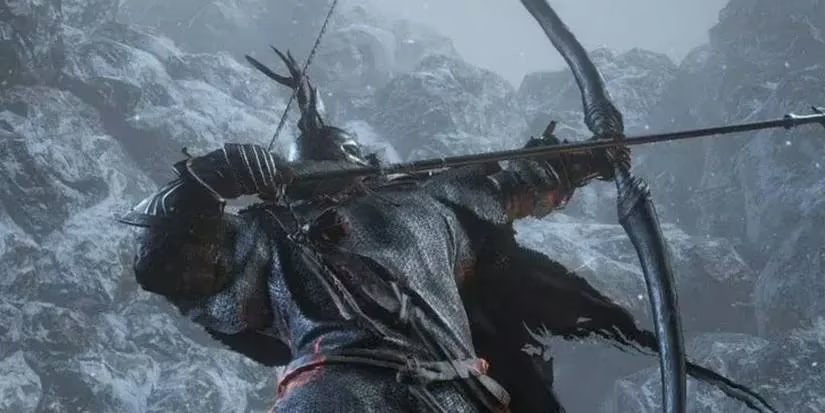
Dark Souls 3: This series, synonymous with punishing difficulty, is a favorite for runners who combine speed with supreme skill. The any% run sees the Lords of Cinder defeated in a mere 33 minutes, while the all-bosses challenge is met in about 1 hour and 10 minutes. These runs are not about avoiding challenge but mastering it with such precision that it becomes a fluid, almost poetic, form of violence—a deadly ballet performed at double-time.
The Community Engine
None of these incredible feats exist in a vacuum. They are powered by a global community that:
-
🗺️ Creates Detailed Guides: Step-by-step manuals that document every jump, glitch, and enemy skip.
-
🎥 Shares Recorded Runs: Serving as both proof and educational tool for aspiring runners.
-
🏆 Maintains Leaderboards: On sites like Speedrun.com, fostering friendly competition and record tracking.
-
💬 Collaborates Relentlessly: New strategies are discovered, shared, and refined in forums and live streams.
In 2026, speedrunning RPGs is more than a niche hobby; it's a vibrant lens through which to re-experience classic games. It celebrates a different kind of mastery—not of lore or completion, but of mechanics, timing, and creative problem-solving. It proves that even the most narrative-driven, expansive worlds can host races where every millisecond counts, offering a thrilling, parallel universe of play where the ultimate goal is not just to finish the story, but to rewrite its pacing entirely. 🏁✨
Leave a Comment