In the intricate world of video game localization, some phrases are like cultural landmines—impossible to translate directly without losing their explosive impact. A prime example from the indie RPG sensation Undertale is Sans the skeleton's iconic, taunting line, "get dunked on." As of 2026, the story behind its transformation for the Japanese release remains a fascinating case study in cross-cultural adaptation, revealing how a single line of dialogue can reshape a character's entire perception across the globe. The challenge wasn't just about finding words; it was about capturing a feeling, a specific brand of casual, victorious mockery that simply didn't have a direct counterpart in Japanese.
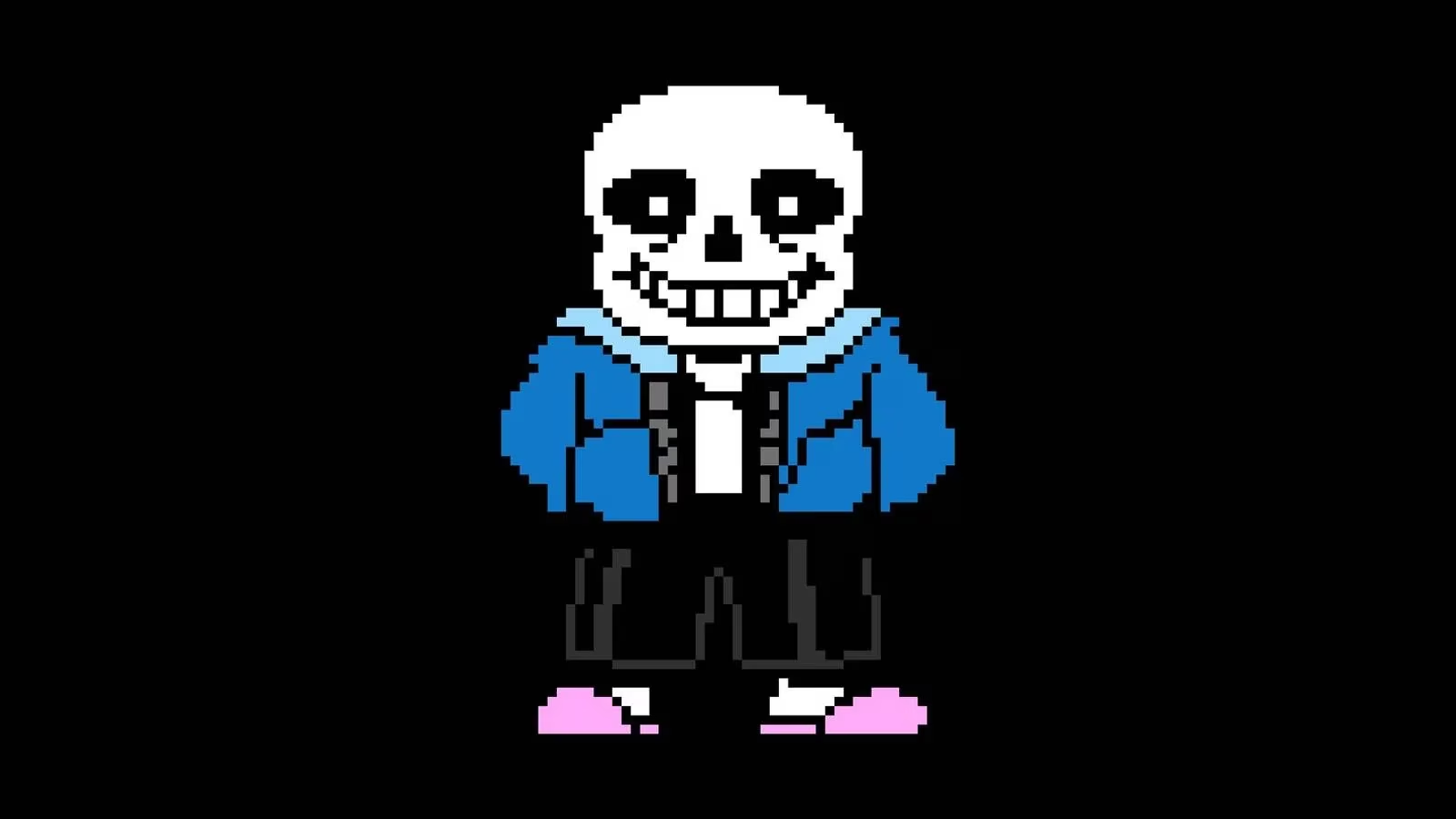
As detailed in Clyde Mandelin's Legends of Localisation Book 3: Undertale, the localization team hit a major roadblock. They cycled through numerous potential replacements, many of which were variations on "ha, I fooled you" or insults rooted in Japanese internet slang. However, nothing they tried packed the same punch or had the unique, memorable bite of the original English quote. It was a classic localization nightmare: a phrase so deeply embedded in one culture's vernacular that it becomes untranslatable in the traditional sense. The team realized they needed a different approach—one that prioritized the line's effect on the player over a literal meaning.
The Creative Pivot: From Dunk to Hug
Faced with this dead end, the team made a bold, creative pivot. They abandoned the search for a direct equivalent and instead crafted a completely new line designed to evoke a similar emotional response. The resulting Japanese line was: "Huh? You died? That's weird. All I did was try to hug you..." 🤔
At first glance, this seems like a wild departure. But let's break down why this works, from a psychological perspective:
-
Surprise Factor: Both lines are designed to shock and disorient the player after a difficult battle. "Get dunked on" is a sudden, anachronistic sports taunt in a fantasy setting. The hug line is a surreal, almost innocent denial of the violent act just committed.
-
Memorability: The goal was a line that would "stick with you long after the fight is over." The image of Sans attempting to hug the player character (Frisk/Chara) as they disintegrate is undeniably haunting and memorable.
-
Character Subtext: This change subtly altered Sans' characterization in Japan. While the Western Sans is a laid-back dude who drops sick burns, the Japanese Sans becomes more eerily passive-aggressive and psychologically unsettling. He's not just beating you; he's gaslighting you about it.
The Ripple Effect on Fandom and Perception
This single line change had a massive ripple effect on how the character was perceived and depicted in Japanese fan communities. A quick survey of fan art and doujinshi (self-published works) from 2026 shows a distinct trend:
| Region | Common Sans Depiction | Key Trait Highlighted |
|---|---|---|
| Western Fandom | 🏀 Sarcastic, pun-loving, using Gaster Blasters | Casual victory, "cool" mockery |
| Japanese Fandom | 🤗 Eerily smiling, in hugging poses with a dying Frisk | Unsettling denial, psychological warfare |
The hug line directly inspired a vast amount of fan art specifically depicting that surreal moment, cementing a version of Sans that was distinct from his Western counterpart. It's a perfect example of how localization isn't just translation—it's transcreation, where the work is adapted to resonate with a new audience, sometimes creating parallel cultural interpretations.
Why Google Translate Was a No-Go (And Always Will Be)
Just for kicks, putting "get dunked on" through machine translation back in the day yielded hilarious and useless results like "become addicted to." This underscores a timeless truth for game developers in 2026: AI and machine learning tools have advanced, but context and cultural nuance still require a human touch. A good localization team doesn't just know both languages; they understand the gaming culture, humor, and social references of both regions. They're the bridge builders, and sometimes that means building a slightly different, but equally stable, bridge.
In the end, the journey of "get dunked on" shows that the soul of a game's dialogue isn't always in the literal words. It's in the feeling it imparts—the shock, the humor, the sting. The Japanese localization team, by choosing a hug over a dunk, managed to preserve that soul, proving that sometimes you have to let go of the letter to keep the spirit alive. And that, as they might say, is the real MVP move. 🏆
Leave a Comment