The crescendo of a game's narrative symphony is often reserved for the final, climactic chord. Yet, what of the note that comes just before? The one that builds the tension, that tests the resolve, and that, in many profound ways, must prove its own unique worth? The penultimate boss stands at this precipice—lesser in title, perhaps, but formidable in purpose. It is the gatekeeper to the finale, the final trial before the ultimate confrontation. Is it merely a stepping stone, or can it become a defining moment all its own? Across the vast landscapes of gaming, from the pixelated fields of Pokémon to the rain-slicked battlefields of cyborg ninjas, these encounters have crafted stories of tragedy, triumph, and unforgettable challenge.
10. Pokémon Black and White: N, The Tragic Idealist
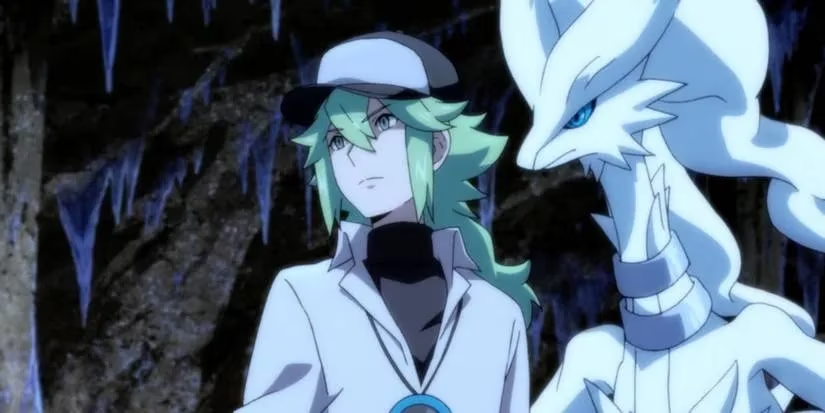
In a world teeming with colorful creatures and determined trainers, one figure stands apart not for his strength, but for his conviction. N is not a villain in the traditional sense; he is a victim and a visionary, a soul who questions the very foundation of the world he inhabits. His battle atop the Pokémon League is not one of malice, but of ideology. The clash hurts because the player understands his pain—a king used as a pawn, his dream of liberation twisted by a manipulative father. Facing him is to confront the uncomfortable truth of the world you've been journeying through. Does capturing Pokémon truly constitute a partnership, or is it, as N believes, a form of bondage? His defeat is not a celebration, but a somber step towards a confrontation with the true architect of suffering, Ghetsis.
9. Bayonetta: Balder, The Guiding Hand of Chaos
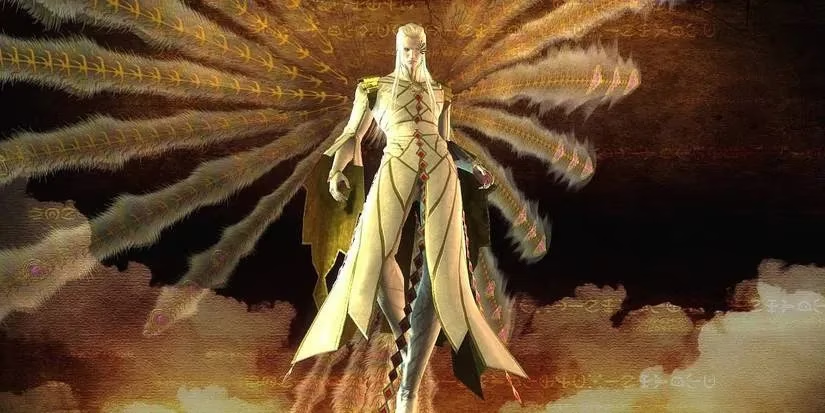
In a ballet of bullets and bewitching hair, style is substance. The bosses of Bayonetta must match the protagonist's flair, and Balder soars to the challenge. He is the puppet master, the true force behind the celestial calamity, and his battle is a dazzling display of power. Gliding across the arena with the grace and ferocity of a phoenix, he demands perfection. This encounter is the final test of the skills honed throughout the game—a symphony of dodges, combos, and Witch Time executed at breakneck speed. While Jubileus awaits as a spectacular finale, the duel with Balder feels intensely personal. It is the culmination of a centuries-spanning conflict, a father and daughter (of sorts) locked in a dance of divine proportions. Can style alone overcome the weight of destiny?
8. Sekiro: Shadows Die Twice: The Divine Dragon, A Gorgeous Mercy
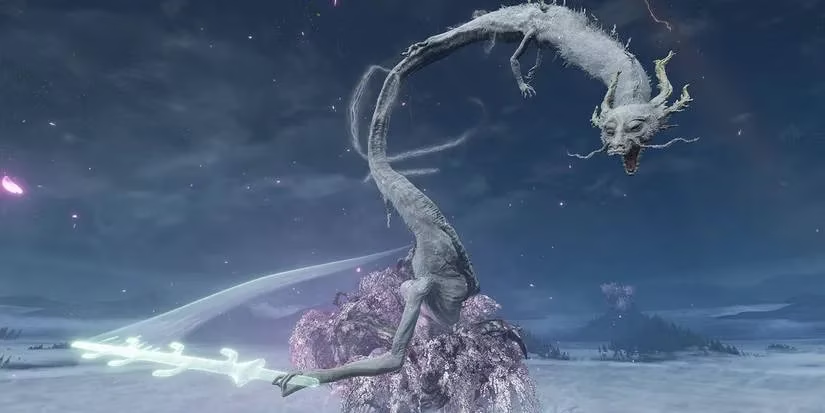
FromSoftware's departure into the world of shinobi gave birth to bosses of profound personal and mythological weight. The Divine Dragon is an encounter of breathtaking scale and profound melancholy. Here, in the Divine Realm, you do not face a malevolent beast, but a sorrowful deity, a creature stolen from its home and corrupted to grant a cursed immortality. The battle is less a fight and more a ritual—a beautiful, somber dance of deflection and divine lightning. Defeating the Divine Dragon is an act of compassion, a severing of the unnatural thread that binds life and death in a torturous knot. It is the penultimate step in Wolf's journey to restore the natural order, a moment where violence becomes a form of release. How often does a boss fight leave the player feeling not victorious, but solemnly responsible?
7. Kingdom Hearts: Riku, The End of Innocence
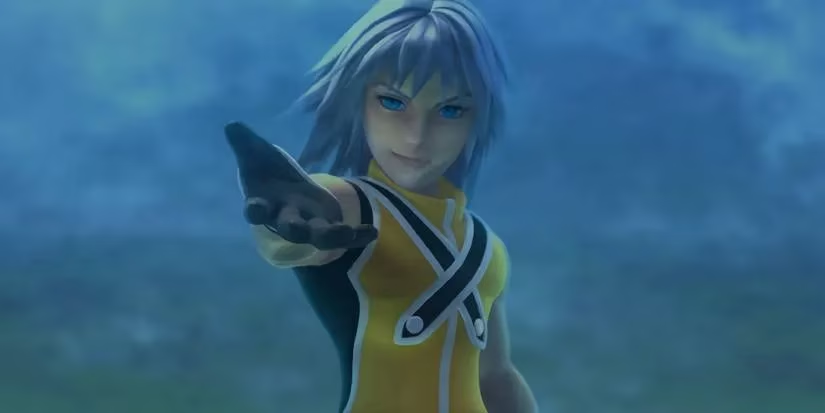
The journey began with him on the shores of Destiny Islands, and at Hollow Bastion, it reaches its first, painful zenith. Riku, possessed by the darkness of Ansem, is more than a boss; he is a symbol. He represents the lost friend, the corrupted ideal, and the end of the whimsical Disney-hopping adventure. This battle is a turning point where the stakes become painfully real. The clash of Keyblades is charged with emotional weight—betrayal, jealousy, and a desperate desire to save a friend from himself. It is arguably the best fight in the original game, a perfect fusion of challenge and narrative significance. In facing Riku, Sora isn't just fighting for the worlds; he's fighting for the past. Is any victory worth the cost of a friendship?
6. Devil May Cry: Nightmare, The Amalgamated Test
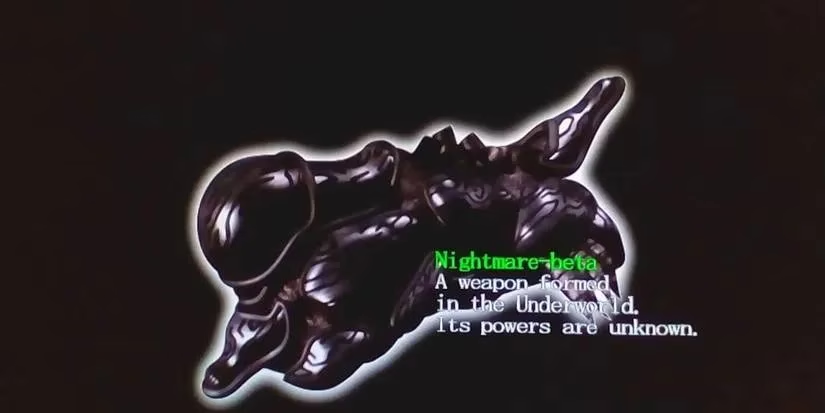
The original Devil May Cry established a formula, and Nightmare is its ultimate expression. This shapeshifting mass of demonic goo is a culmination, a final exam before the true finale. Its genius lies in its reflective nature. When absorbed into its form, Dante must face echoes of previous bosses—a gauntlet within a gauntlet. The final encounter elevates this further, pitting the player against Nightmare with the added complication of Trish as an adversary. It is infamously difficult, a brutal test of every skill, weapon, and strategy acquired. Nightmare is less a character and more an obstacle, the personification of the game's escalating challenge. It asks the player one final, demanding question: Are you truly worthy of facing Mundus?
5. Persona 5: Shido, The Tangible Tyrant
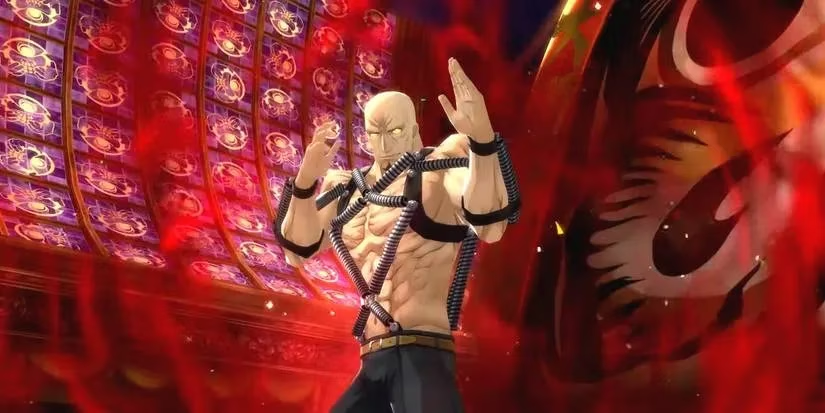
Before the Phantom Thieves confront a god, they must topple a man—and what a man he is. Masayoshi Shido, the corrupt politician aiming to become Japan's prime minister, is a villain of terrifying plausibility. His Palace is a monument to his own grotesque ego, depicting him as a muscle-bound, wealth-drenched emperor. The battle against him is a multi-stage epic, a direct assault on the systemic corruption he embodies. While the game's later metaphysical conflicts can feel abstract, Shido is horrifically real. Beating him is a cathartic act, a statement that the next generation can and will hold the powerful accountable. His defeat is a more satisfying climax for many, a triumph of relatable justice before the story ascends to the supernatural. What does it say when a corrupt politician feels like a more substantial threat than a deity?
4. Undertale: Asgore, The Shattered King
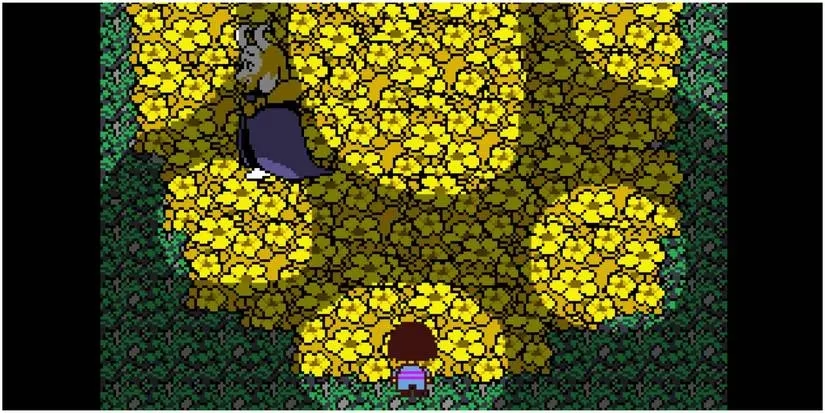
Undertale is a game that speaks directly to the player's conscience, and no boss embodies this more than Asgore Dreemurr. For most on the Neutral or Pacifist paths, he is the final barrier. He is not evil, but broken—a grieving father and a weary king trapped by his own promise to free his people. The fight's mechanics tell the story: the shattered Mercy button, the reluctant, sorrowful dialogue. Every attack from him feels heavy with regret. He does not want to fight you, but he sees no other way. Confronting Asgore is a tragedy in multiple acts, forcing the player to participate in a cycle of violence they may desperately wish to avoid. He is the poignant, human heart of the Underground's conflict, a penultimate boss whose defeat brings no joy, only the heavy price of progress.
3. Death Stranding: Higgs, The Extradimensional Showman
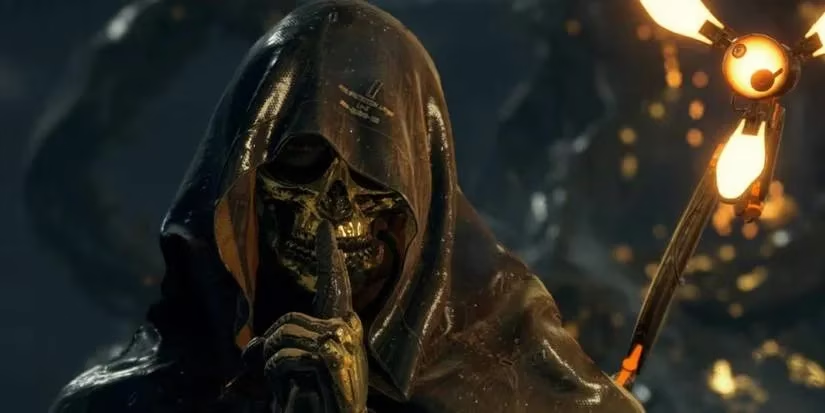
In a game about connection and delivery, bosses are an oddity. Higgs, however, is a glorious exception. Portrayed with manic charm by Troy Baker, he is a nihilistic trickster who sees the end of the world as his playground. The battle on the Beach strips away the tools of the journey—no weapons, no gear. It is a raw, one-on-one confrontation of sneaking, grappling, and finally, a spectacular, arcade-style fistfight under a blood-red sky. Punching Higgs senseless is a visceral, cathartic release in a meditative game. It is a moment of pure, unadulterated action that serves as the thematic and gameplay pinnacle before the more abstract conclusion. In a world obsessed with rebuilding, sometimes you just need to knock a smug villain into next week.
2. Final Fantasy VII: Jenova, The Celestial Scourge
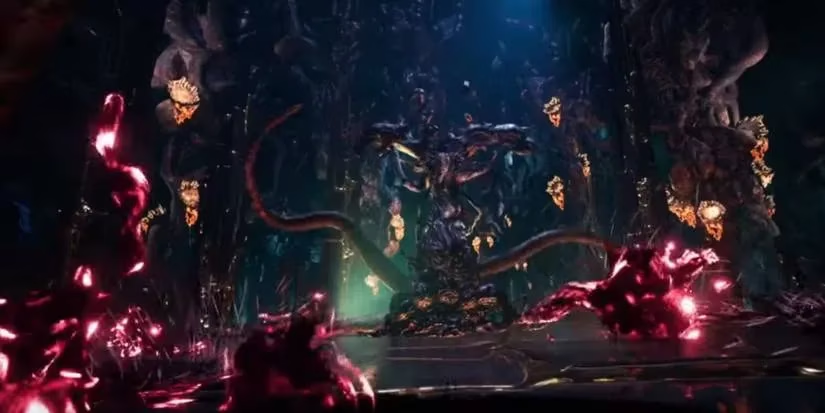
Sephiroth casts a long shadow, but that shadow belongs to his "mother." Jenova is the primordial horror at the heart of Final Fantasy VII, an alien calamity that reshaped the planet's history. The penultimate encounter with Jenova∙SYNTHESIS is a haunting prelude to the final battle. This is not a living being, but a pulsating, mutated remnant of an ancient terror. The fight is a desperate struggle against a legacy of genocide and planetary corruption. Its iconic, driving theme music underscores the urgency and dread. Defeating this manifestation weakens Sephiroth directly, tying the two battles together. Jenova reminds the player that the true villain is not just a man, but the apocalyptic legacy he seeks to enact. She is the source, the infection, the nightmare from the stars that must be purged.
1. Metal Gear Rising: Revengeance: Jetstream Sam, The Duel at Dusk
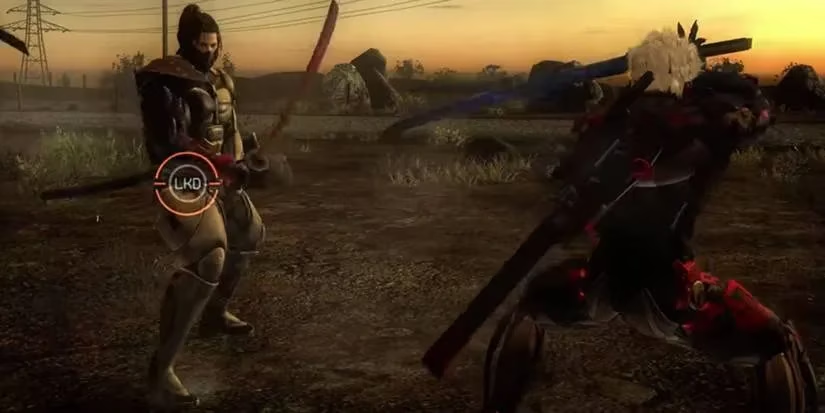
And then, there is the duel. In a game of over-the-top cyborg action, the penultimate battle is a moment of stark, beautiful simplicity. Raiden faces Jetstream Sam as the sun sets over a barren desert. The music drops to a tense, acoustic strum. There are no ideologies left to debate, no grand speeches—just two warriors, stripped to their essence, with nothing left but their swords and their skill. This fight is a masterpiece of character action design. It is pure, unadulterated skill check, a ballet of parries, dodges, and lightning-fast strikes. The context makes it profound: this is not about saving the world in this moment; it is about two men fulfilling a fatalistic dance they are too far gone to escape. It is tragic, exhilarating, and utterly perfect. In the end, is there any purer form of conflict than a duel under a dying sun?
These penultimate encounters prove that the journey's most memorable challenge is not always the last. They are the final brushstrokes before the signature, the last deep breath before the plunge. They carry the weight of the entire narrative, testing the player not just mechanically, but emotionally and thematically. They remind us that in gaming, as in all great stories, the step before the end is often where we learn the most about ourselves, our characters, and the worlds we fight to save—or change.
Leave a Comment