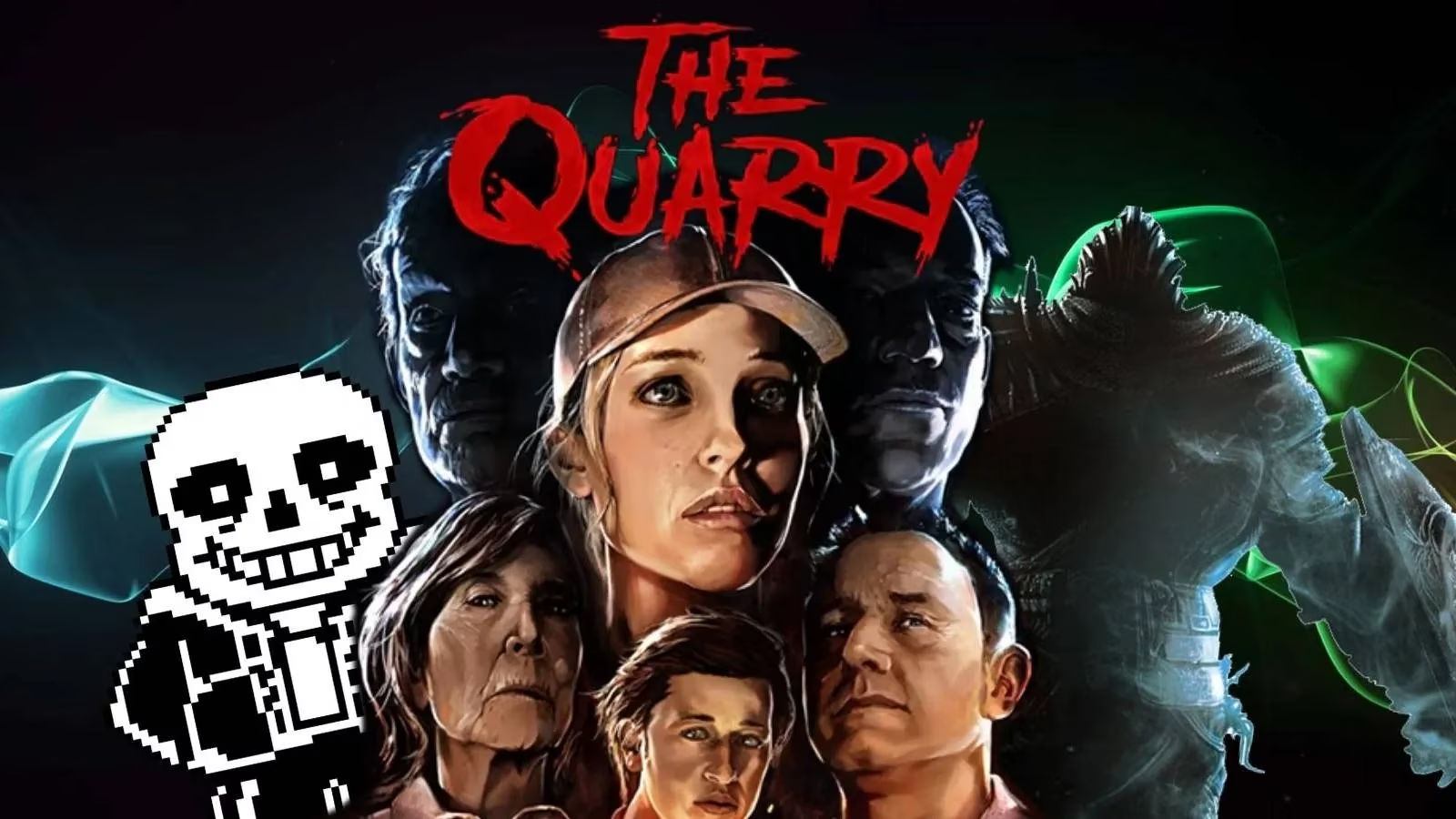
I have always been drawn to the peculiar way a game can live on without a numbered sequel. Spiritual successors are not remakes or reboots; they are more like a river cutting a new channel through the same limestone, preserving the mineral taste of the old water while changing the landscape. As a player in 2026, I keep returning to these genealogical echoes. The Quarry arrived years ago as a clear successor to Until Dawn, transplanting that game's butterfly-effect horror into a summer camp nightmare. It made me think about how often a beloved game's soul moves into a different body.
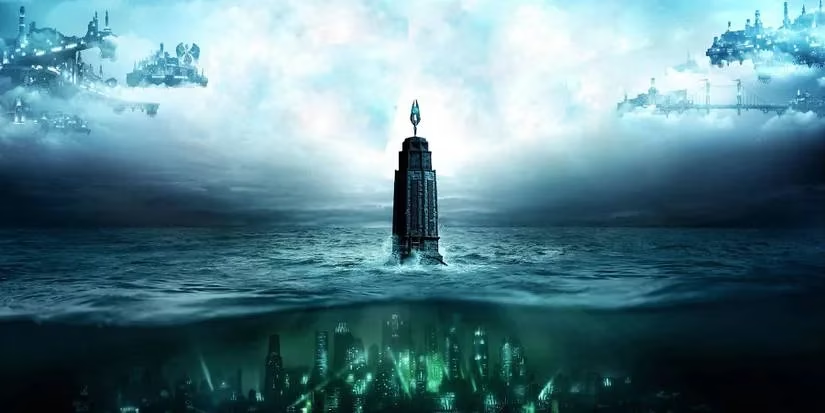
BioShock and the System Shock Blueprint
When BioShock launched in 2007, it felt like a revelation from the depths of Rapture. The crumbling art deco corridors, the splicers muttering in the dark, and the moral weight of the Little Sisters all seemed startlingly fresh. Yet under that underwater city was a structural debt to System Shock. BioShock essentially translated System Shock's immersive sim skeleton from a sci-fi space station into an objectivist dystopia. Ken Levine had worked on the earlier series, so he knew how to rework those concepts without losing the pulse. Playing BioShock now still feels like receiving a message from an older machine wearing a new mask.
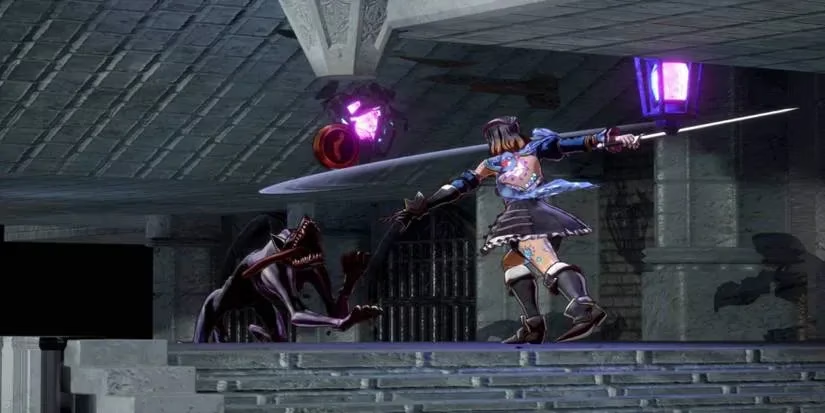
Bloodstained: A Castle Built Twice
Bloodstained: Ritual of the Night never pretends otherwise. Its 2D exploration, gothic bestiary, and baroque soundtrack all point backward to Castlevania. Koji Igarashi, the series producer behind many Castlevania games, guided the project, so this was an inheritance rather than a theft. Playing Bloodstained felt like hearing a familiar chord progression hummed by a different vocalist, one who still knows exactly where the silences go. The castle itself becomes a recurring family heirloom, rearranged but instantly recognizable.
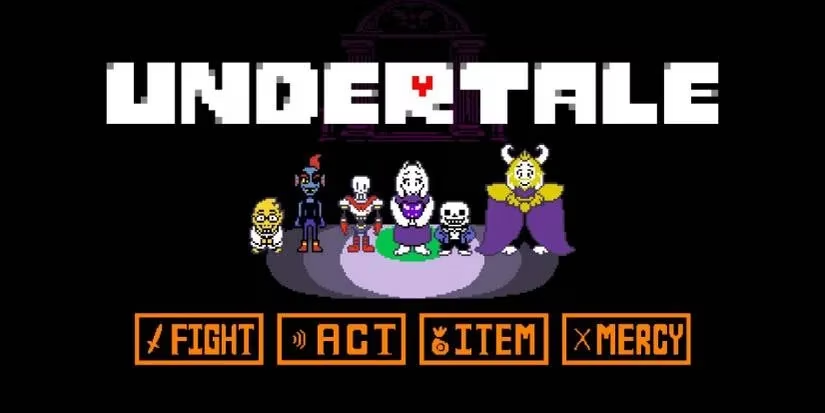
Undertale's Earthbound Heart
As an indie RPG made almost entirely by Toby Fox, Undertale carried the warm, strange, melancholy energy of Earthbound. It kept the humor, the emotional depth, and the sense that an ordinary kid could wander into something cosmic. But Toby Fox added a twist of his own, particularly with a combat system where mercy became a mechanic. Many of us had been waiting years for something like Earthbound, and Undertale filled that silence with a meticulous, word-by-word crafted world. It was less a sequel and more a letter from a fan who had clearly read every page of the original.
From Demon's Souls to Dark Souls
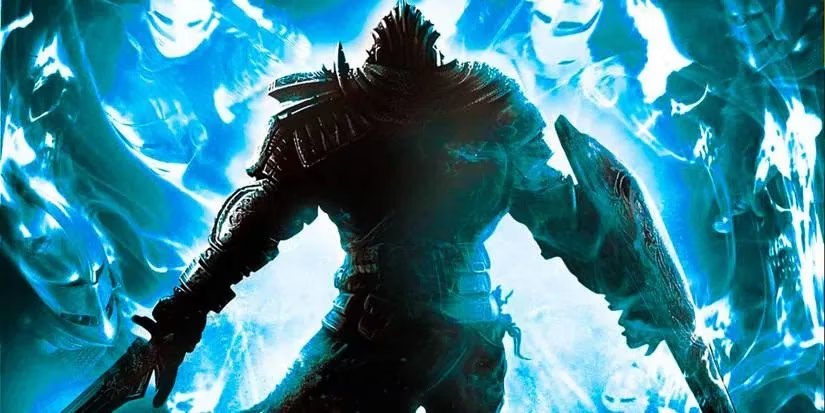
Demon's Souls hit in 2009 like a locked door that demanded you learn the shape of the key through repeated failure. It was punishing, elegant, and entirely captivating. Because Sony owned Demon's Souls, FromSoftware and Namco Bandai built Dark Souls on those foundations for a wider audience. Returning to Dark Souls after Demon's Souls felt like coming back to a house after someone moved all the furniture two inches to the left—the shape is familiar, but the bruises are brand new. That slight displacement became a whole genre.
Axiom Verge and the Metroid Pulse
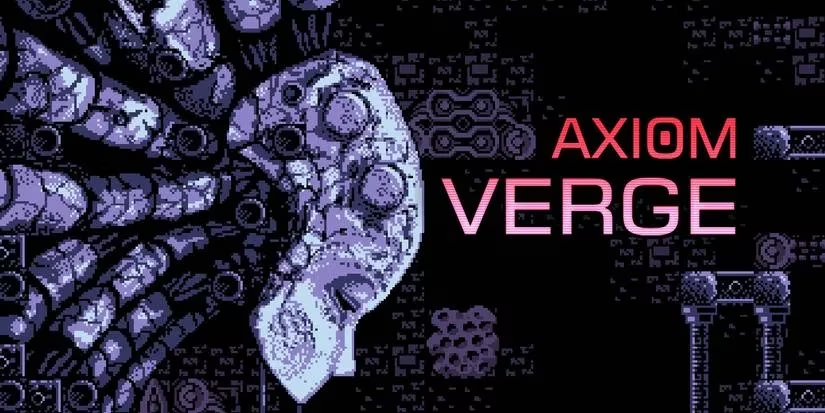
Axiom Verge wears its Metroid influence like a second skin. The lonely exploration, the creeping alien atmosphere, and the gradual acquisition of explosive weaponry all echo Nintendo's classic. What I love about Axiom Verge is how it allows discovery at your own pace, rarely pulling you by the wrist. It was successful enough to produce Axiom Verge 2, proving that a spiritual successor can eventually grow its own limbs.
Shovel Knight's Dual Inheritance
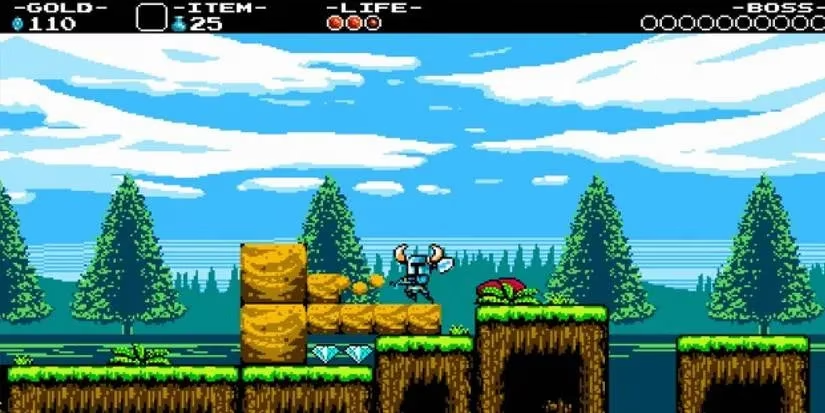
Shovel Knight is a fascinating case because it inherits from two different ancestors. The bounce of the shovel mirrors Scrooge McDuck's pogo cane from DuckTales, while the precise platforming and colorful stage design recall Mega Man. This double lineage gives Shovel Knight a strange, joyful density. It feels like a NES cartridge that somehow absorbed two separate childhoods and stitched them together into one confident whole.
Yooka-Laylee's Nostalgia Engine
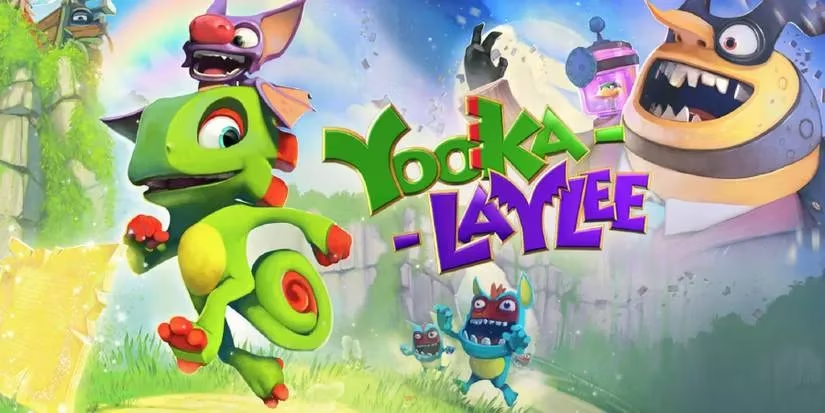
Yooka-Laylee holds its Banjo-Kazooie roots on its sleeve. Many of the developers at Team17 had worked at Rare during the Nintendo 64 era, and Grant Kirkhope returned for the music. From the gibberish character voices to the collect-a-thon platforming, it felt like opening a time capsule that had been carefully preserved. It was not just a throwback; it was a deliberate argument that the old 3D platforming grammar still had sentences worth writing.
Allison Road and the Ghost of P.T.
Allison Road remains the saddest entry because it never actually arrived. After P.T. was cancelled, many players were left aching for that specific brand of looping, first-person dread. Allison Road looked like the closest successor, visually unnerving and thematically disturbing. It promised a horror masterpiece, but the developers stopped providing updates years ago. Like a door at the end of a hallway that never opens, it remains a spiritual successor in theory only.

Looking back from 2026, I have learned to appreciate spiritual successors not as replacements but as translations. They keep a certain emotional frequency alive while letting new creators add their own static. Whether through BioShock's underwater Objectivism, Undertale's merciful combat, or Dark Souls' rearranged furniture, these games prove that a series can end and still continue to haunt the medium in the best way.
Leave a Comment