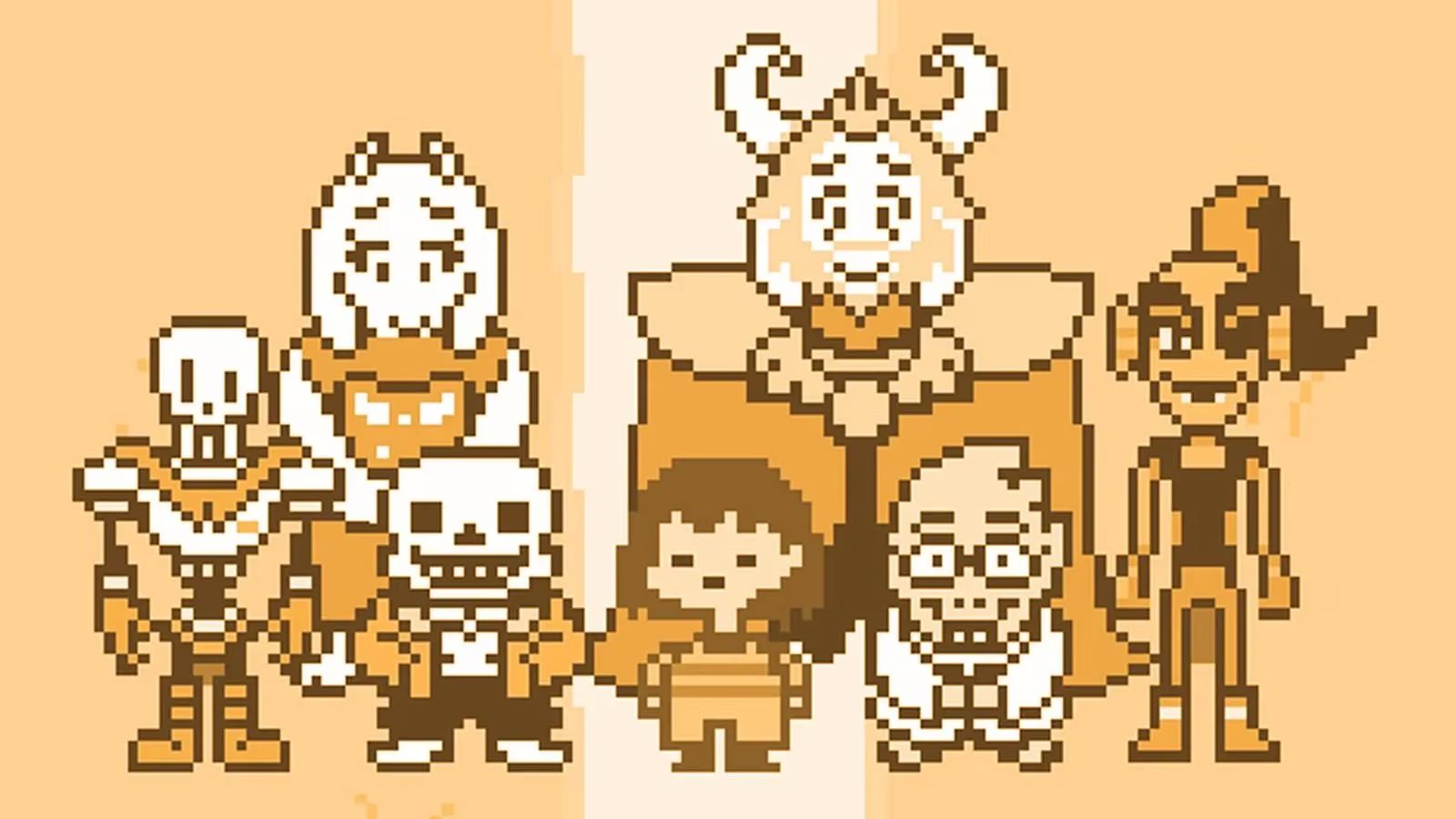
Role-playing games have always been the backbone of gaming culture—from the pixelated heroics of Chrono Trigger to the sprawling open worlds of The Elder Scrolls. But in the decades since the NES era, a quiet revolution has been boiling beneath the surface. Some developers looked at the classic recipe of stats, turn-based battles, and world-saving quests, and decided to smash the mold like a ceramic piggy bank at a speedrun charity event. Fast forward to 2026, and the genre has been dissected, remixed, and rebuilt so many times that a player who booted up a modern deconstructed RPG might feel like an astronomer discovering that the solar system runs on love and puns instead of gravity 🪐💔.
These games aren’t just creative outliers; they’re the mad scientists of interactive storytelling. They treat the RPG framework like a canvas, then proceed to paint with aural hallucinations, unyielding pacifism, or psychological horror that hits harder than a level 99 boss in a no-hit run. For anyone tired of checking boxes on a hero’s journey, here are the titles that turned the genre into a beautiful, bewildering reflection of itself.
Undertale: The Mercy Button That Changed Everything
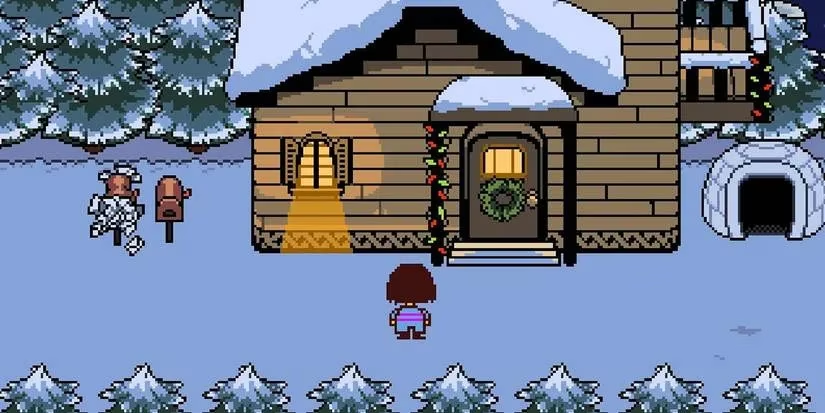
When Undertale dropped in 2015, it didn’t just break the fourth wall—it invited the wall over for tea, befriended it, and then asked the player whether the wall deserved to live. This 2D adventure from indie wizard Toby Fox deconstructs the very soul of RPG combat by turning the traditional “FIGHT” command into a moral event horizon. Instead of grinding for XP, you can choose to spare every monster, transforming a dungeon crawl into a kindness simulator. The game’s combat system is a hybrid of bullet-hell dodging and emotional negotiation, making every encounter feel like a high-stakes therapy session—imagine trying to mediate a dispute between a sentient tornado and a jilted ghost while dodging actual tears.
The real genius is how Undertale remembers your sins. A Genocide route is not a mere alternate ending; it’s a permanent stain on your save file, a ghost in the machine that haunts all subsequent playthroughs. Even in 2026, the game’s meta-narrative tricks remain unmatched, proving that the most powerful weapon in an RPG isn’t a legendary sword—it’s the player’s conscience.
Yume Nikki: The Dream That Refused to Be a Game
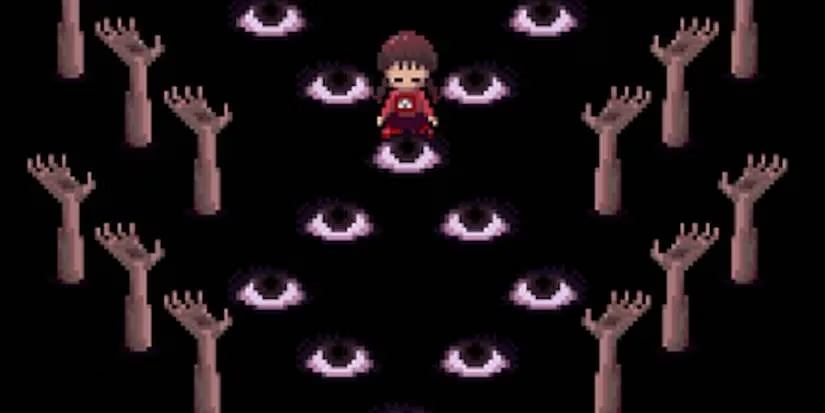
Long before “walking simulators” had a name, Yume Nikki (2004) was quietly dismantling the idea that an RPG needs direction, dialogue, or even a purpose. Crafted by the elusive Kikiyama using RPG Maker, this cult classic drops players into the bedroom of a hikikomori girl and offers nothing but a door to her dreams. Beyond that threshold, there is no combat, no quest log, no NPCs to deliver exposition. You simply wander through a surreal dreamscape that feels like an acid trip designed by a melancholic architect who forgot to install doors.
The game deconstructs the genre by eliminating its mechanical skeleton. Exploration becomes its own reward, and every bizarre landscape—a neon maze, a hallway of weeping faces, a blood-soaked forest—is a fragment of a narrative that refuses to be articulated. Playing Yume Nikki in 2026 is like reading a diary written in hieroglyphics; you’ll never fully understand it, but the emotion it leaves behind is unmistakable.
Earthbound: The Anti-Epic Where the Real Boss Is Growing Up
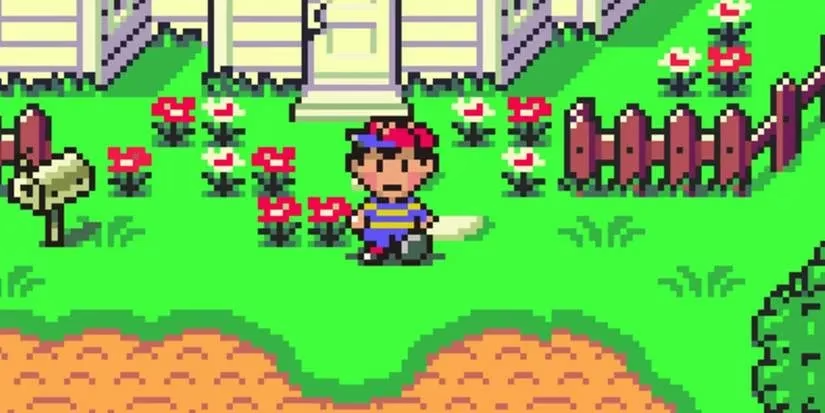
Released in the ’90s, Earthbound (aka Mother 2) was the granddaddy of RPG deconstruction, and it remains a blueprint for weirdness. Instead of a medieval fantasy kingdom, the setting is a contemporary suburban town called EagleLand, complete with arcades, pizza parlors, and crooked mayors. The protagonist, Ness, doesn’t pick up a sword—he swings a baseball bat and a yo-yo. His companions include a psychic girl and a nerdy inventor, and together they battle against runaway hippies, possessed traffic lights, and a cosmic horror that can only be described as a living existential scream.
The game flips the epic fantasy script by injecting mundane humor into every pixel. Where a normal RPG would treat status effects like “poison” casually, Earthbound gives you “homesickness”—Ness might skip a turn to stare into the distance, paralyzed by the overwhelming desire to call his mom. It’s a metaphor for adolescence wrapped in a Super NES cartridge, a reminder that saving the world is often less terrifying than navigating a school bully. Playing it today feels like watching a beloved indie film that had the audacity to exist before indies were cool.
Deltarune: Your Choices Don’t Matter (But Your Feelings Do)
As the spiritual successor to Undertale, Deltarune arrived in 2018 with a bold thesis: “Your choices don’t matter in this world.” That single sentence threw a grenade into the core promise of interactive storytelling. Yet by stripping away the illusion of control, the game forces players to confront their own emotional investment. You still fight, you still spare, you still befriend the charming chaos gremlin named Susie, but the narrative steers you like a river current toward a destination you didn’t choose.
By 2026, only two chapters have officially seen the light of day, and the fanbase has evolved into a patience-testing experiment worthy of a psychological study. The remaining chapters are “still many years away,” a promise that feels like waiting for the next A Song of Ice and Fire book while riding a stationary bicycle that generates meme power instead of electricity ⚡. Even in its incomplete state, Deltarune is a masterclass in how to deconstruct hope—it gives you a prophecy, then gently reminds you that you might just be dancing on the strings of fate.
LISA: The Painful – A Post-Apocalyptic Punchline
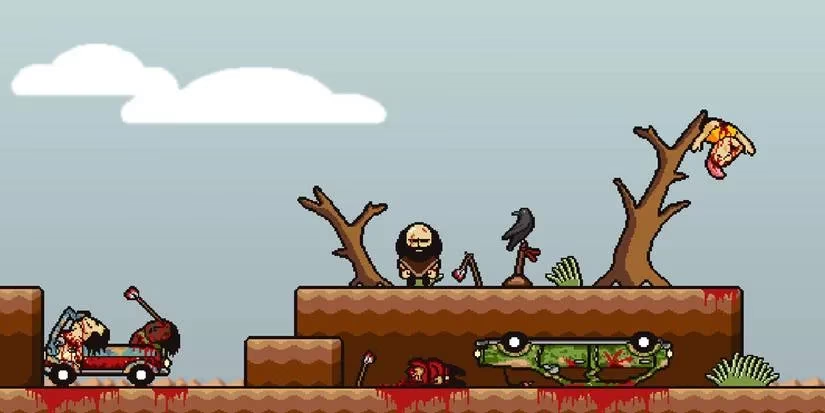
If Undertale is a heartfelt hug, LISA: The Painful is a punch to the gut followed by a belly laugh. This 2014 side-scrolling RPG from Dingaling Productions mixes turn-based combat with brutal platforming, all set in a wasteland where the male population has been decimated and the last remaining woman has sparked a grimly comedic apocalypse. You play as Brad Armstrong, a broken man searching for his adopted daughter—a quest that becomes an exercise in sacrifice, addiction, and the ugliest sides of love.
The game deconstructs the RPG hero archetype by making Brad’s “strength” a double-edged sword. Every decision costs something: a party member, a limb, a piece of his sanity. It’s like watching a typical power fantasy get devoured from within by its own insecurities. The dark humor and killer soundtrack turn a potentially miserable experience into a cathartic fever dream, and even in 2026, few games have the audacity to make you feel this much pain and this much joy simultaneously.
OMORI: The Colorful Nightmare That Wears a Smile
When OMORI finally emerged from development limbo in 2020, it brought with it a deceptively cute art style and a heart of absolute, unrelenting darkness. Inspired by classics like Yume Nikki, this RPG tells the story of Sunny, a shut-in boy exploring a dream world with his alter ego, as well as his real-world past that is crumbling under the weight of trauma. The dual-world structure lets the game switch between pastel-colored wonder and stark psychological horror, as if the Friends theme song suddenly dropped into minor key in the middle of a panic attack.
OMORI deconstructs the RPG’s emotional spectrum by tying combat mechanics to emotional states. Characters can become “angry,” “sad,” or “happy,” which strengths and weaknesses in a rock-paper-scissors system that mirrors real mental health struggles more accurately than any potion ever could. By 2026, its influence is visible in a wave of emotion-driven indie RPGs, but none have quite matched its ability to turn nostalgia into a weapon.
Nier: Automata – When Androids Do Philosophy Better Than Humans
PlatinumGames’ 2017 masterpiece feels like a feverish collaboration between a hack-and-slash developer, a melancholic android philosopher, and a text adventure enthusiast who accidentally wandered into the wrong meeting room. Nier: Automata hybridizes bullet-hell shooters, open-world exploration, and existentialist dread, then wraps it all in a narrative that questions the meaning of existence even as you’re performing a perfectly dodged counter. The game’s deconstruction of RPG tropes isn’t just mechanical—it’s thematic; it turns the cycle of New Game Plus into a meditation on memory, repetition, and the horror of being trapped in a loop.
Playing as 2B and 9S in 2026 still triggers moments of genuine grief over characters that are, strictly speaking, lines of code. The game’s ability to blur the line between player and protagonist turns every side quest into a philosophical inquisition. It’s the rare action RPG where you can slice a mechanical dinosaur in half and then immediately question the morality of your own consciousness.
Off, Rakuen, and Palette: The RPG Maker Trinity of Weirdness
The RPG Maker engine has birthed a holy trinity of deconstruction that must not be overlooked. Off (2008) casts the player as the Batter, a baseball-uniformed crusader on a mission to purify a world that looks like a psychedelic comic book drawn by a sleep-deprived graphic designer. Its deconstruction lies in the unsettling realization that you might be the villain, a revelation that feels like a cold bucket of water thrown at the hero’s journey.
Rakuen (2017) completely removes combat to tell the story of a hospitalized boy and his mother exploring a fantasy world inside a storybook. It’s an emotional support animal in game form—no battles, only tears and the warmth of human connection. Meanwhile, Palette (2001) is a psychological horror RPG that traps players in the fractured memories of a girl named B.D., turning the act of recalling into a terrifying puzzle box. These three games demonstrate that RPG Maker isn’t just about retro aesthetics; it’s about dismantling expectations from the inside out.
The Legacy: A Genre That Learned to Laugh at Itself
By 2026, these deconstructed RPGs have carved a permanent niche. They’ve proven that the genre can survive without a numeric HP bar, without a Chosen One prophecy, and even without a happy ending. They’ve turned glitches into features, silence into storytelling, and depression into a gameplay mechanic. For every AAA title that still clings to the holy trinity of swords, sorcery, and save-the-princess tropes, there’s a scrappy indie title ready to flip the table and ask, “What if the princess saved herself, and the real treasure was the trauma we collected along the way?”
So whether you’re a veteran adventurer or a newcomer who accidentally downloaded an RPG Maker curiosity at 3 a.m., these games offer a reminder that the best role-playing experiences don’t just let you play a role—they ask you to reconsider what “play” even means. 🎮✨
Leave a Comment