As I reflect on my years of gaming, I've come to realize that the most memorable moments aren't always the triumphant victories or heroic conclusions. Sometimes, it's the haunting consequences of my choices that stick with me long after I've put down the controller. Video games possess a unique power in storytelling—they don't just show you a narrative; they make you an active participant, and sometimes, an unwitting architect of tragedy. The interactivity that sets games apart from other media means our decisions carry weight, and occasionally, they lead us down paths so dark they leave us questioning our own judgment.
😨 The Weight of Failure in Oddworld
I still remember my first playthrough of Oddworld: New 'N' Tasty, thinking I could speedrun through Abe's adventure. The game presented itself as a whimsical platformer, but beneath the surface lurked a moral system that would judge my every action. When I rescued fewer than 50 Mudokons in my haste, I didn't expect the narrative twist that awaited me.
The revelation hit me like a physical blow: my entire journey had been a flashback, a final recollection before Abe's execution. What truly disturbed me was watching the other Mudokons debate whether to save me, only to decide against it because "I didn't do enough for them." The updated visuals in the remake made this betrayal even more visceral—seeing Abe, who I had controlled for hours, resigned to becoming a "Mudokon Pop" while desperately hoping for a hero who would never arrive. This ending taught me that in games, as in life, our legacy is defined by how we treat others.
🔫 The Unforgiving Quick-Time Event
Resident Evil: Revelations 2 trapped me in its bad ending without me even realizing it until it was too late. During the third episode's boss fight against Neil, the game presented a quick-time event where I could shoot as either Claire or Moira. Like most players, I instinctively completed it with Claire—after all, she's the experienced fighter, while Moira has a documented fear of firearms.
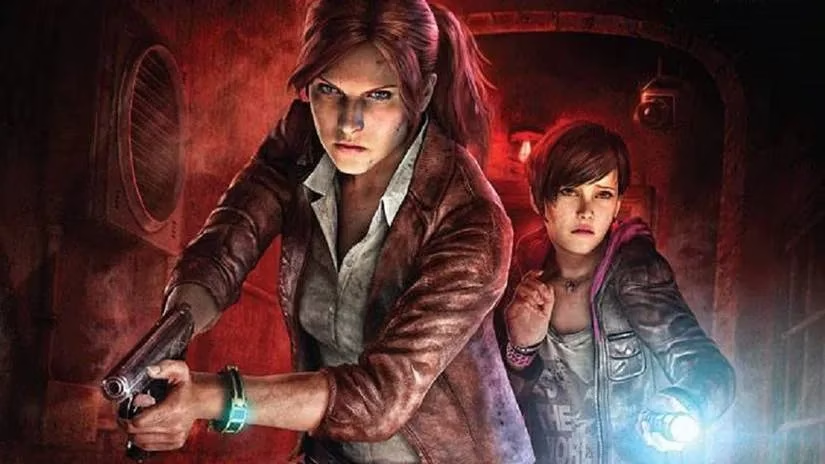
What I didn't realize was that this seemingly minor decision would seal the fate of the entire narrative. By denying Moira her moment of overcoming her trauma, I had essentially signed her death warrant. When the fourth episode arrived, there was no one to help—Moira was gone, and the villain walked away victorious as the screen faded to black. The game punished me not for failing a challenge, but for prioritizing survival over character growth. This ending made me reconsider how often I choose efficiency over emotional storytelling in games.
Here are the key elements that made this ending so effective:
-
Subtle foreshadowing that's easy to miss on first playthrough
-
Permanent consequences that carry through multiple episodes
-
Moral dilemma disguised as a gameplay mechanic
-
Delayed revelation that makes the impact more powerful
🎭 Democratic Execution Gone Wrong
Danganronpa: Trigger Happy Havoc presents itself as a murder mystery where justice is served through democratic vote. Throughout the game, I grew accustomed to the formula: investigate, debate, and execute the culprit. So when Chapter 5 presented what seemed like overwhelming evidence against Kyoko Kirigiri—the master detective who had been my closest ally—I followed the "evidence" and voted for her execution.
The immediate aftermath felt satisfying in a twisted way: the other characters stopped killing, lived happily, and even had children. But the game quickly revealed this was a false ending, a "what if" scenario that I could undo. What lingered wasn't the narrative itself, but the realization of how easily I had turned on someone who trusted me. The game allowed me to reverse my choice, but the ethical stain remained—a reminder that following evidence blindly without considering context can lead to tragic mistakes.
🤖 The Peaceful Apocalypse
Persona 3 Reload presented me with what seemed like a merciful choice on December 31: kill Ryoji, the character connected to the world-ending entity Nyx, and spare humanity the coming battle. Choosing this path gave my party peace—their memories wiped clean, they lived out their days happily, unaware of the approaching doom.
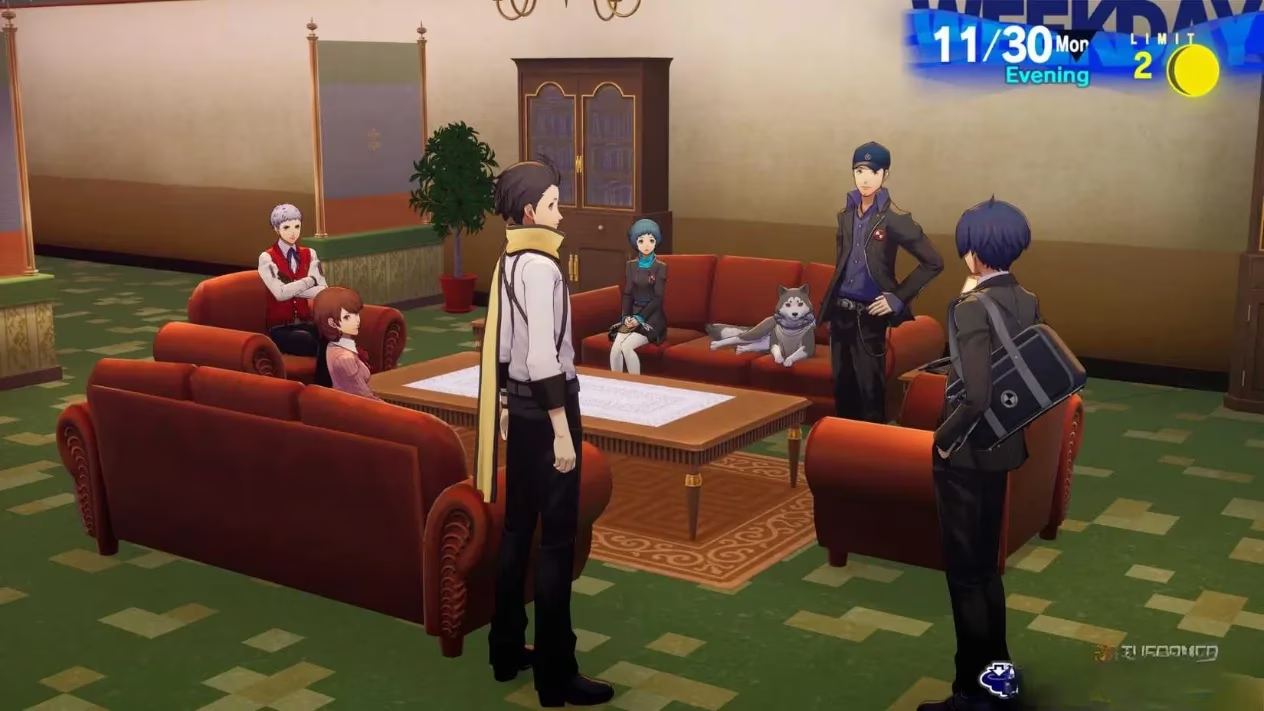
But the true horror lay in the details:
-
Aigis, the android, remembered everything but couldn't communicate her knowledge
-
The party's bonds were completely erased, reducing deep friendships to shallow acquaintanceships
-
Their solitary activities showed people going through motions without genuine connection
-
The inevitable end approached while everyone remained blissfully ignorant
This ending haunted me because it presented oblivion as a gift. By choosing the easier path, I had robbed my friends of their struggles, their growth, and ultimately, their humanity. Sometimes, the battle itself defines us more than the victory.
👁️ The Monkey's Paw of Chernobyl
After surviving the merciless Zone in Stalker: Shadow of Chernobyl, finding the fabled Wish Granter felt like a hard-earned triumph. I had navigated radioactive anomalies, fought hostile factions, and managed to keep both the Duty and Freedom leaders alive while maintaining an excellent reputation. When I activated the device with fewer than 50,000 rubles, I made what I thought was a selfless wish: for the Zone to disappear, to end the suffering it caused.
The Wish Granter granted my desire in the cruelest possible way—it made the Zone disappear for me alone by robbing me of my sight. In trying to be altruistic, I had doomed myself to darkness while the dangerous area remained for everyone else. This ending served as a brutal lesson about unintended consequences and the dangers of simplistic solutions to complex problems.
⏳ When the Future Refuses to Change
Chrono Trigger's time-travel mechanics offered unprecedented freedom, including the ability to challenge the final boss, Lavos, almost immediately. Early in my playthrough, I noticed the portal to the "Day of Lavos" and thought, "Why not try my luck?"
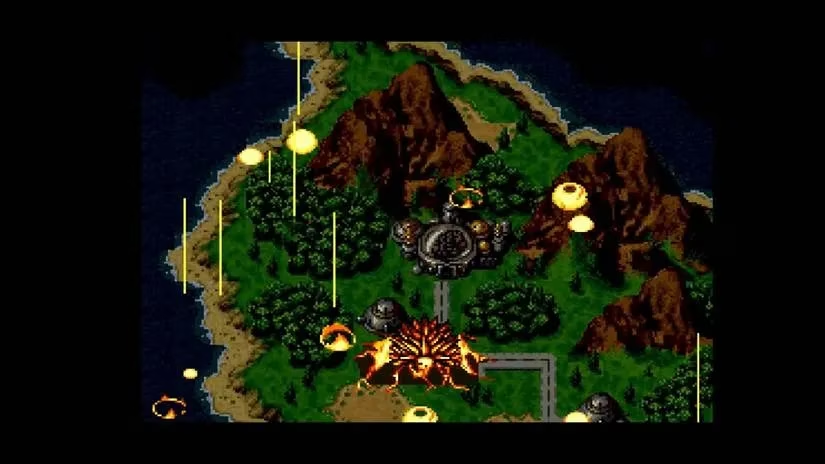
The result was total annihilation. Lavos obliterated my underpowered party, then proceeded to engulf the entire planet in destruction. What made this ending particularly chilling was the presentation:
| Visual Element | Emotional Impact |
|---|---|
| Planet turning bright red | Sense of immediate, violent destruction |
| Transition to lifeless grey | Finality and complete eradication |
| Text: "But the future refused to change" | Hopelessness and inevitability |
| Lavos' triumphant roar | Villain's absolute victory |
This ending taught me about narrative pacing and the importance of earned victories. By attempting to shortcut the story, I had witnessed the complete extinction of a world I was supposed to save.
🐕 The Cost of Cruelty
Haunting Ground contains perhaps the most morally straightforward bad ending in gaming history: mistreat your canine companion Hewie until he hates you, and he won't rescue you when you need him most. The mechanics are simple—repeatedly kick or poison the dog before entering the forest, then fail to rescue him when he's in danger.
The consequence is stark and fitting: Fiona gets captured with no means of escape and is kept as an incubator. What makes this ending particularly effective is how it mirrors real-world morality. The game doesn't present this as a complex ethical dilemma—it's a simple cause and effect. Be cruel to those who trust you, and you'll find yourself alone when you need help most. The message is clear: kindness to companions isn't just narrative flavor; it's survival.
👁️ The Permanent Stain
No discussion of disturbing bad endings would be complete without Undertale's infamous No Mercy route. I made the conscious decision to complete a genocide run, eliminating every creature I encountered. The game warned me repeatedly, even having characters break the fourth wall to question my choices, but I persisted.
After defeating the final boss and waiting at the black screen, I agreed to the mysterious character's terms, then restarted for a True Pacifist run. What I discovered was that Undertale remembers everything. Even after achieving the "good" ending, my character looked directly through the screen with a spine-chilling laugh, and the group photo showed all faces crossed out except mine.
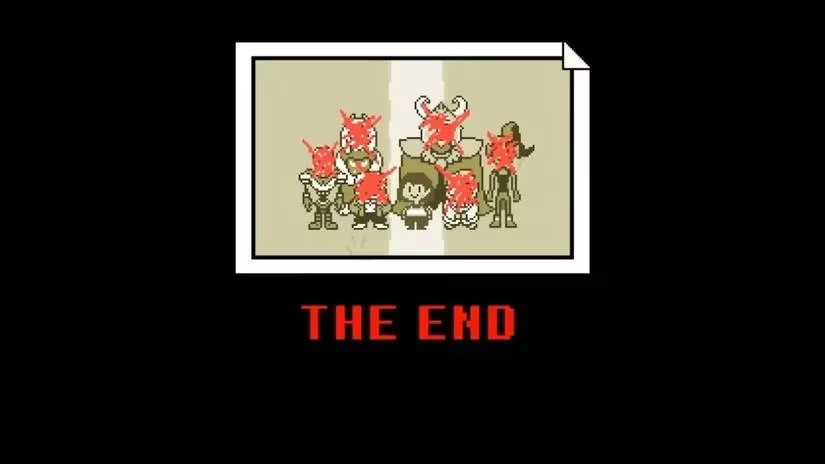
This ending disturbed me on multiple levels:
-
Permanence - The game's memory of my actions couldn't be erased
-
Self-awareness - The characters seemed to know what I had done in another timeline
-
Metacommentary - The game was judging me, the player, not just my character
-
Inescapable consequence - No amount of replaying could fully undo my choices
Undertale's genius lies in making the player, not the character, responsible for the narrative's moral weight. The bad ending isn't just a story conclusion—it's a judgment of the person holding the controller.
🎮 The Legacy of Our Choices
Looking back at these experiences, I've come to appreciate how video games have evolved in their approach to failure and consequence. The most disturbing bad endings aren't those that punish us for lacking skill, but those that reveal uncomfortable truths about our decision-making processes. They force us to confront questions we might otherwise avoid:
-
How do we treat those who depend on us?
-
Do we prioritize efficiency over empathy?
-
What sacrifices are we willing to make for peace?
-
Can we live with the permanent consequences of our actions?
These games have taught me that the most powerful stories aren't always the ones with happy endings, but the ones that linger in our minds, challenging us to be better—both as players and as people. In a medium built on interaction, our choices define not just the narrative, but our relationship with it. And sometimes, the most valuable lessons come from seeing what happens when we choose poorly.
Leave a Comment