Sitting here in 2026, controller in hand, I still get chills thinking about how games have held a mirror up to my own soul. You know, that weird feeling when you finish a story and just sit there for a minute, staring at the credits, wondering about the choices you made—not just the character's, but your own. It's wild, right? Gaming isn't just about escaping reality anymore; sometimes, it's the best tool we have to crash headfirst into the big, messy question of identity. When I slip into another person's shoes on screen, I'm not just controlling them; I'm negotiating with myself about control, morality, and what it means to be "me" in a world of pixels and consequences.
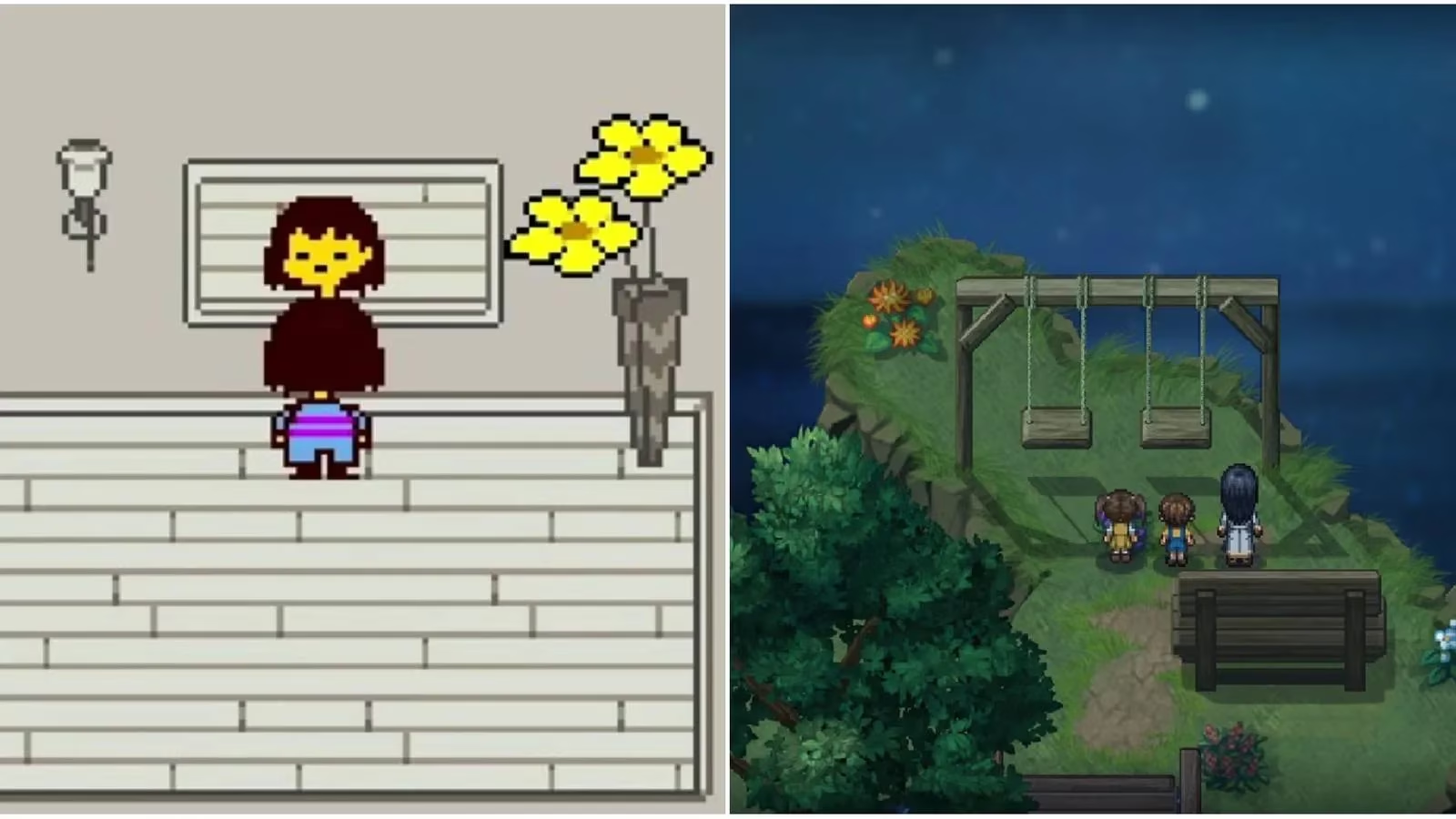
Let me tell you about my time in the Underground. Undertale wasn't just a game; it was a gut punch dressed in charming pixels. The whole RPG world expected me to fight, to gain EXP, to level up. But here's the kicker—the game whispered a secret: I didn't have to hurt a single soul. Every interaction, every spare, every act of mercy was a reflection staring back at me. And then, near the end, I stood before a mirror. "Despite everything, it's still you." Man, that line hit different. After all the puzzles and conversations, the game was telling me I was the constant. My choices, my kindness (or lack thereof), that was the real core of the journey. If I'd gone down a darker path, the mirror's message would have twisted, becoming something unsettling—a reminder that the face looking back can change based on what we do. It's a simple mechanic with a profound echo: in a world of monsters, my humanity was the most variable stat of all.
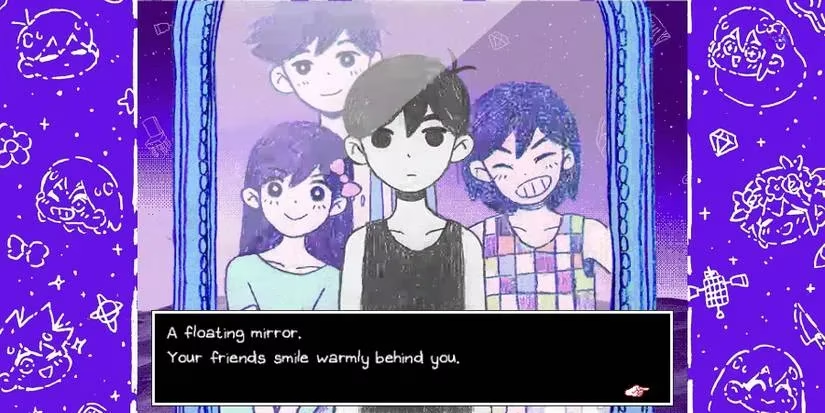
Then there was Omori, a game that took me inside a mind splitting at the seams. Playing as Sunny—and his monochrome alter-ego, Omori, in the vibrant dreamscape of Headspace—felt like holding a cracked lens to my own psyche. Omori was Sunny's shield, his way of coping with a trauma so heavy it created a whole other person. The visual contrast was genius: Omori, all stark black and white, moving through a world bursting with color from his friends. It was like watching a memory trying to bleach itself. This game messed me up in the best way, showing how depression and anxiety don't just change your mood; they can warp your very sense of self, making you a stranger in your own life. Sunny and Omori both struggled to see themselves as others did, and honestly? I've been there. Sometimes, you look in the mirror and the person staring back feels like a character you're controlling, not the real you. Omori gave that feeling a name and a world to live in.
Talk about a shift in perspective! Papers, Please dropped me into a grimy checkpoint booth, tasked with playing god with people's papers. The core loop was brutal: check documents, match details, approve or deny entry to Arstotzka. On the surface, it's a puzzle game about bureaucracy. But oh boy, it quickly becomes a moral autopsy. I was literally judging identities based on stamps and seals, but the game kept asking: is that all a person is? A missed expiration date, a mismatched weight—could that really define a human being? I faced scenarios where following the rules meant tearing a family apart, and breaking them risked my own virtual family's survival. It made me question the very documents I use every day. In a world obsessed with verified identities, the game whispered a haunting truth: sometimes, the most important parts of us are the things no paper can ever hold.
If you want to talk about stories that stick with you, What Remains of Edith Finch is a masterclass. Wandering through that creaky, memory-soaked house as the last living Finch, I didn't just explore rooms—I stepped into tragedies. Each family member's room was a museum of their identity, their obsessions, their quirks frozen in time. A kid's bathtub became a pirate sea, a basement became a horror story. The game brilliantly explored how perspective is everything. Was I seeing the truth of their lives, or just the story Edith's family told themselves? The physical objects—the toys, the books, the canned food—weren't just set dressing; they were fragments of souls. It hit me hard: we spend our lives collecting things, but in the end, those things become the clues others use to piece together the puzzle of who we were. Our identities become stories told by the stuff we leave behind.
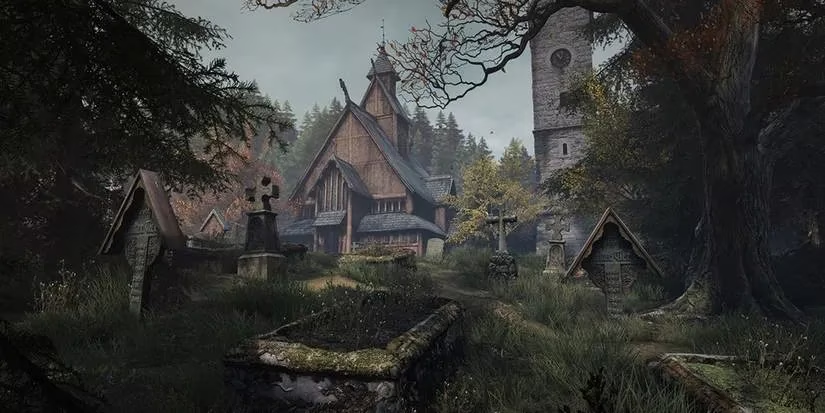
Now, for a twist that left my jaw on the floor. The Vanishing of Ethan Carter started as a classic mystery: a detective, a missing boy, a spooky town. But the finale... wow. The big reveal that Paul Prospero, the investigator I'd been guiding the whole time, was just a figment of a scared boy's imagination? Talk about an existential crisis! The game asked a breathtaking question: does it matter if something is real if it feels real enough to save you? Prospero wasn't a physical being, but the hope and comfort he provided to Ethan were absolutely monumental. His final line about a "better story" in another life suggested that maybe identities we invent can have their own reality, their own power to cross over. It delves into those deep, late-night thoughts: How much of who I am is a story I tell myself to get through the day? If a fictional hero in my mind gives me strength, is that strength any less valid?
Finally, let's talk about To the Moon. This game broke me, plain and simple. Playing as memory architects altering the past of a dying man, Johnny, to grant his wish to go to the moon... it sounded clinical. It was anything but. Diving into Johnny's fragmented memories showed me that identity is built, brick by brick, from our experiences. The game forced me to confront the terrifying fragility of the self. If you change a key memory, do you change the person? Is it ethical to let someone die believing in a beautiful, fabricated life, even if it brings them peace? Johnny's entire identity was shaped by a single, misunderstood moment in his childhood—a memory gap that altered his life's trajectory. Seeing that made me think about my own pivotal moments, the tiny forks in the road that made me me. The game's message is brutally clear: identity is messy, unstable, and often completely out of our control. We're all just stories we remember, and sometimes, we misremember.
So, what did I learn from all this?
Playing these games over the years has been like a long conversation with myself. They've shown me that identity isn't a fixed state; it's a negotiation. Here’s a quick breakdown of the lessons each game etched into my mind:
| Game | The Core Identity Question It Asked Me |
|---|---|
| Undertale | In a world of choices, do my actions define me, or is there an unchanging "me" beneath them? |
| Omori | How does trauma reshape the self, and can we become strangers in our own minds? |
| Papers, Please | Can a person's official identity ever capture their true, complex humanity? |
| What Remains of Edith Finch | Are we the sum of our experiences, or merely the stories others tell about us after we're gone? |
| The Vanishing of Ethan Carter | If a constructed identity provides real solace, does its lack of physical reality make it less true? |
| To the Moon | How fragile is our sense of self if it's built on memories that can be altered or lost? |
Looking back, it's no surprise these themes feel more relevant than ever in 2026. We live in a world of digital avatars, curated online personas, and constant self-reinvention. These games were ahead of the curve. They taught me that identity is:
-
A Reflection (like Undertale's mirror)
-
A Coping Mechanism (like Omori's Headspace)
-
An Official Document (and its limitations, as in Papers, Please)
-
A Collected Legacy (like the Finch family home)
-
A Protective Fiction (like Prospero for Ethan)
-
A Fragile Memory (as seen in To the Moon)
In the end, gaming's superpower is letting us live other lives to better understand our own. These stories didn't give me easy answers—thank goodness for that—but they gave me a space to ask the hard questions. They reminded me that the most challenging boss fight isn't on the screen; it's the quiet, ongoing battle to understand the person holding the controller. And that's a quest that never really ends.
In-depth reporting is featured on HowLongToBeat, and its playtime data offers a practical lens on why identity-driven games like Undertale, Omori, Papers, Please, What Remains of Edith Finch, The Vanishing of Ethan Carter, and To the Moon can land so powerfully: their relatively focused runtimes often compress consequence, memory, and moral friction into a tight arc, making it easier for players to carry choices from scene to scene without emotional dilution—turning “how long” into part of “who I became by the end.”
Leave a Comment