Let me tell you, as a seasoned gamer who's seen it all from pixelated plumbers to photorealistic warriors, nothing—and I mean nothing—has shaken my soul quite like the narrative masterpieces coming out of the indie scene. We're in 2026, and while the big studios are still chasing graphics that make your eyes bleed with beauty, the true heart of gaming beats in these smaller, passion-fueled projects. They're not just games; they're experiences that grab you by the collar and refuse to let go long after the credits roll. The writing? Oh, buddy, we're talking about dialogue that feels like a warm hug from an old friend and stories so sharp they could cut through steel. It's a whole different ball game.
1. Her Story: The Detective in a Digital Maze

Okay, picture this: you're sitting at a dusty police computer from the 90s, and your only job is to type words into a search bar. Sounds boring, right? WRONG. Her Story is a straight-up magic trick. You're piecing together this woman's life—her trauma, her identity crisis, this gnarly crime—from these chopped-up video clips. There's no hand-holding, no quest marker. You're the detective, and the story unfolds in the most non-linear, brain-tickling way possible. It’s like the game is whispering secrets, and you have to lean in real close to hear them all. Honestly, it made me feel smarter than any puzzle game ever has. The way it plays with truth and memory? Chef's kiss. Absolute perfection.
2. Night In The Woods: Coming Home to Chaos
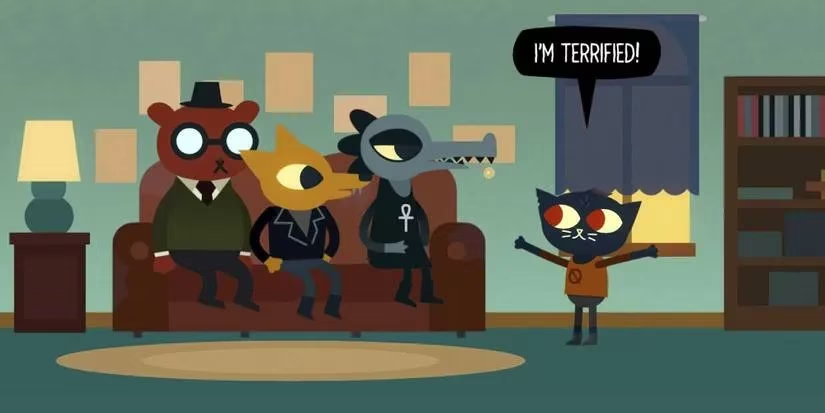
This game, man. This game gets it. Night In The Woods follows Mae, a college dropout who comes back to her dying hometown, and let me tell you, the vibes are immaculate but also deeply melancholic. It’s a story about mental health, societal pressure, and that weird feeling of being stuck in a place that doesn't fit anymore, all wrapped up in a world of adorable animal people. The dialogue is so snappy and real, it’s like overhearing the coolest, most messed-up conversations at a diner. One minute you're joking around with friends, the next you're facing down existential dread in a haunted forest. It’s a lot, but in the best way possible. The characters feel like people I actually know—flawed, funny, and trying their best.
3. Undertale: The Genre-Defying Phenomenon
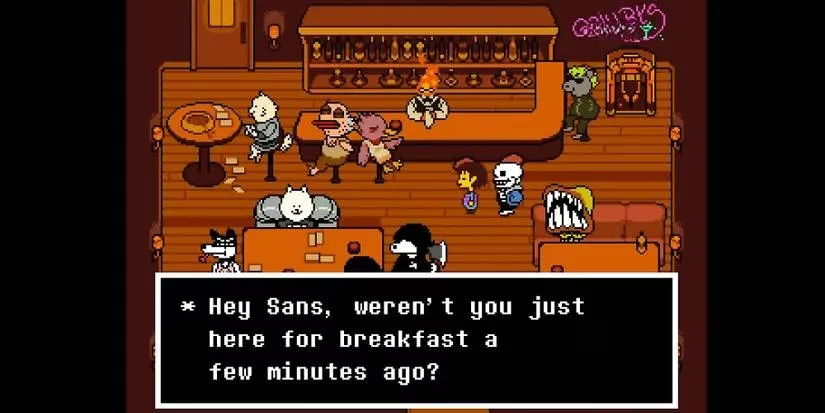
When Undertale dropped, it was like a bomb went off in the gaming world. Everyone was talking about it, and for good reason! On the surface, it's a cute RPG where you fall into an underground world of monsters. But the twist? You don't have to fight a single soul. You can talk, joke, and befriend your way out of every conflict. The writing is what makes it legendary. Characters like the lazy skeleton Sans or his enthusiastic brother Papyrus aren't just sprites; they're full-blown personalities with hilarious quirks and surprising depth. The story juggles goofy humor and gut-wrenching emotion like a pro. It’s a game that remembers your choices, and I mean really remembers them. Playing it feels like you’re part of something special, a secret club where kindness is the ultimate power. If you haven't tried it... what are you even doing with your life?
4. Coffee Talk: Fantasy, Froth, and Feelings
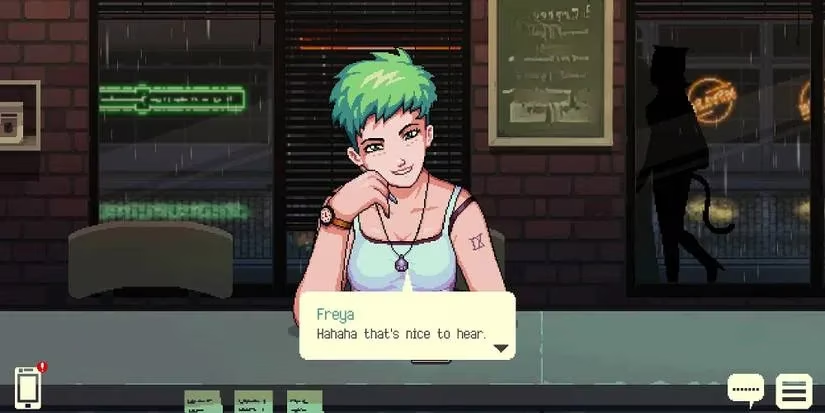
Imagine Seattle, but with elves, orcs, and succubi just trying to get through their 9-to-5. In Coffee Talk, you're not the hero. You're the barista. Your weapon? A steaming cup of latte art. Your mission? Listen. This visual novel is a masterclass in "show, don't tell." The entire story unfolds through conversations with your nightly customers and the headlines in the paper. You learn about breakups, career dreams, and inter-species politics all while brewing the perfect drink. The world-building is insane—it feels lived-in and real, asking questions about racism and community through the lens of fantasy. It's cozy, thoughtful, and proves that sometimes the most epic tales are told over a cup of coffee. It’s the chill game you never knew you needed.
5. Life Is Strange: Rewriting Destiny, One Choice at a Time
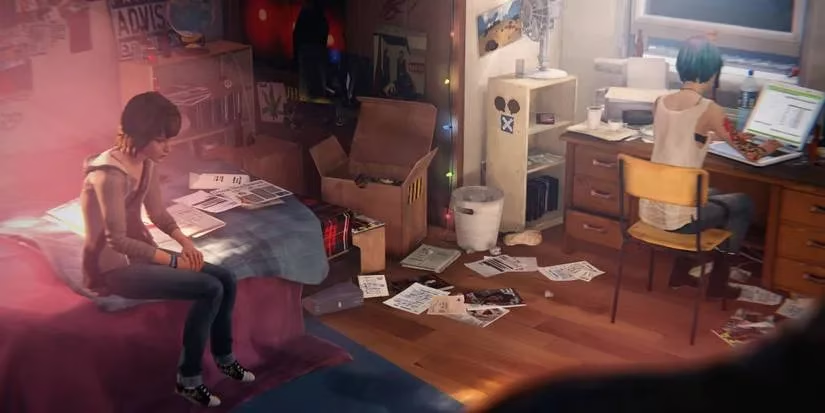
Life Is Strange didn't just give us a great story; it gave us anxiety in the best possible way! You play as Max, a photography student who discovers she can rewind time. Reuniting with your fiery best friend Chloe to investigate a disappearance sounds cool, but the time-rewind mechanic changes EVERYTHING. You make a choice, see the immediate (often brutal) consequence, then rewind and pick the other option. It turns every dialogue option into a moral minefield. Do you tell the truth and face the music, or rewind and lie to keep the peace? The bond between Max and Chloe is the heart of it all, written with such raw authenticity. And that ending? Let's just say I stared at my screen for a solid twenty minutes, emotionally wrecked. It's a coming-of-age story with a supernatural twist that will haunt you.
6. Suzerain: The Ultimate Power Fantasy (and Nightmare)
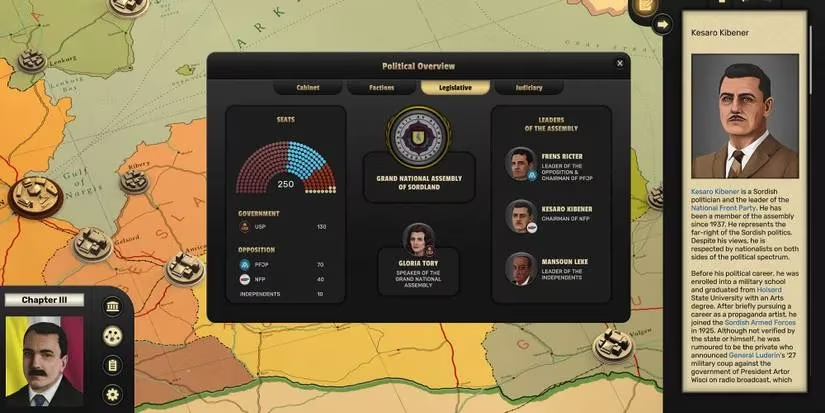
Forget saving the world from dragons; try saving your fictional country from economic collapse and political scandal! Suzerain is a text-based political sim where you play as President Anton Rayne. The writing here is next-level. The world of Eastern Merkopa feels as real and detailed as our own, with fake nations that have richer histories than some real ones. Every character, from your ambitious wife to your scheming cabinet members, is brilliantly realized. The game makes you feel the immense weight of every decision—sign a treaty, crack down on protests, manage your family life. There's no "good" ending, only the consequences of your leadership. It's a gripping, cerebral experience that proves words on a screen can be more thrilling than any action sequence. Talk about a power trip... and the inevitable crash.
7. Hades: Death is Just Another Conversation Starter
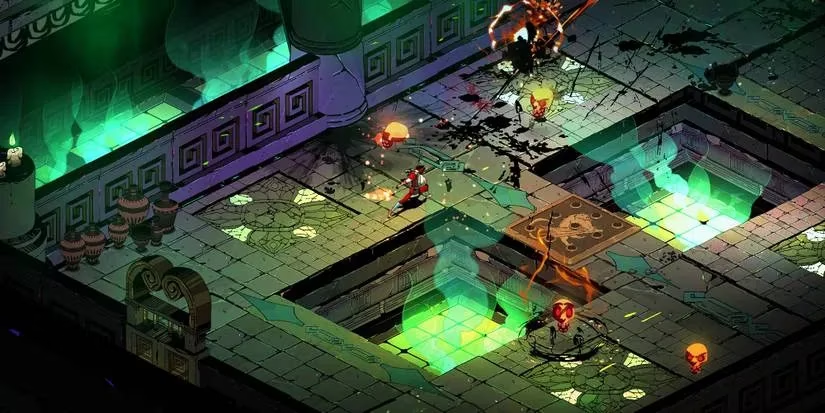
Roguelike? More like rogue-love. Hades is famous for its slick combat, but holy moly, the writing is what glued me to my chair. You play as Zagreus, the rebellious son of Hades, constantly dying and resurrecting as you try to escape the Underworld. Each failed escape isn't a loss; it's a chance to go back home and have another chat with the dysfunctional Greek god family. The dialogue is witty, heartfelt, and constantly evolving. You learn about daddy issues with Hades, get dating advice from Aphrodite, and trade barbs with Theseus. The characters are reinterpreted in such fresh, human ways. I found myself thinking, "Well, I died again... but at least I get to see what Hypnos has to say about it this time!" The story is seamlessly woven into the core gameplay loop, making every run meaningful.
8. Eliza: A Mirror to Our AI-Driven World
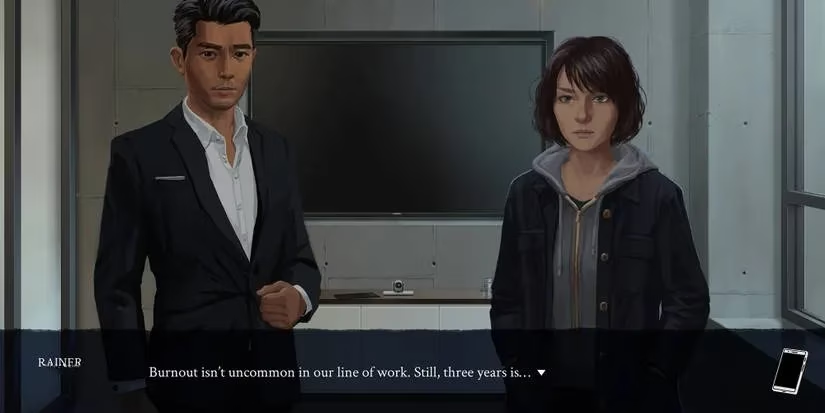
Playing Eliza in 2026 hits different. This visual novel about an AI counseling program feels less like fiction and more like a documentary from five minutes in the future. You play as Evelyn, a former tech wiz who becomes a "proxy" for an AI therapist, basically acting as its human mouthpiece. The writing is quiet, philosophical, and incredibly sharp. It doesn't scream its themes at you; it lets you sit with them. Is this technology helping people, or is it just a Band-Aid on deeper societal wounds? The characters you meet—ambitious tech bros, skeptical journalists, vulnerable clients—all represent different facets of this debate. Evelyn herself is a mystery box you slowly unpack. It's a contemplative, haunting experience that stays with you, making you look sideways at every "smart" device in your home. In an age ruled by algorithms, this game asks the questions we're all too afraid to voice.
So there you have it. These indie gems aren't just playing games; they're rewriting the rulebook on what interactive storytelling can be. They prove that you don't need a Hollywood budget to tell a story that moves mountains—or at the very least, moves a grumpy old gamer like me to feel something real. In a world of endless sequels and live-service giants, these stories are the keepers of the flame. Now if you'll excuse me, I think it's time for another coffee... and maybe a good cry.
Leave a Comment