Look, I thought I was emotionally prepared for whatever Toby Fox had stashed inside his lovely little toybox. Chapter 1 gave us a mad jester with an unsettling giggle. Chapter 2 said hold my butterscotch pie and handed me a glitching salesman who screams about becoming a big shot. Spoilers for both chapters immediately follow, so consider yourself warned.
Before we dive in, let’s establish the common thread: both optional nightmares are secret bosses, hidden encounters tucked behind obscure side quests. They don’t sit quietly in the main path; they require curiosity, backtracking, and exactly enough misplaced confidence to unlock a door that probably should have stayed shut.
Jevil: The Chaos Goblin With Forbidden Knowledge
In Chapter 1, we meet Jevil, the former court jester who clearly read one too many cosmic horror pamphlets before clocking in at the castle. According to the lore, a strange someone whispered something world-altering into his ear, and his personality did a full somersault into frothing mayhem. The kingdom did the logical thing: threw him in the dungeon and smashed the key. Jevil, being Jevil, decided captivity was fake and everyone else was the prisoner. Honestly? Terrifying but weirdly motivational.
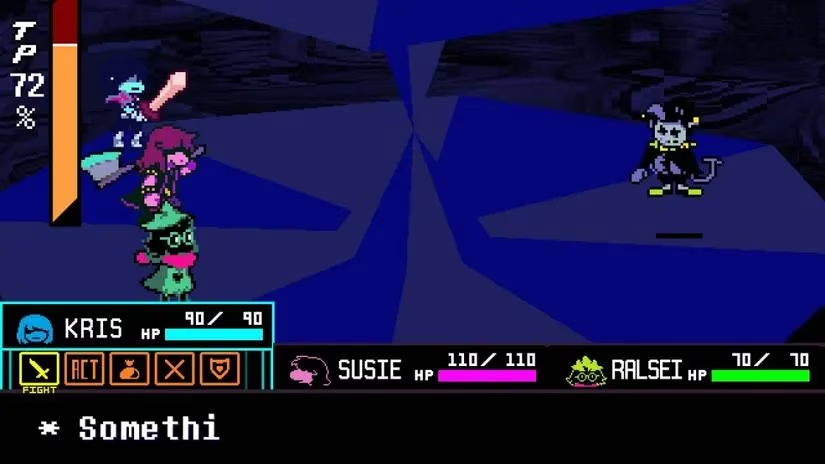
His boss battle is equal parts psychedelic light show and exercise in panic-induced button mashing. The music, The World Revolving, sounds like a carnival ride designed by a cryptid. After the fight, he transforms into gear depending on how I handled him, but not before tossing out prophecy crumbs that felt less like hints and more like taunts from a jester who knows my save file better than I do.
Spamton: A Glitchy Capitalist Fever Dream
Chapter 2 introduced Spamton G. Spamton, a twitchy, stuttering salesman who looks like a spam email gained sentience and started a pyramid scheme. His jerky movements and fragmented speech give off serious haunted-dial-up energy. According to the in-game story, he rocketed from obscurity to dealmaker glory after meeting an unknown benefactor, then crashed hard the moment that mysterious support vanished. Now he is obsessed with being a big shot again and ropes the player into a lengthy side quest.
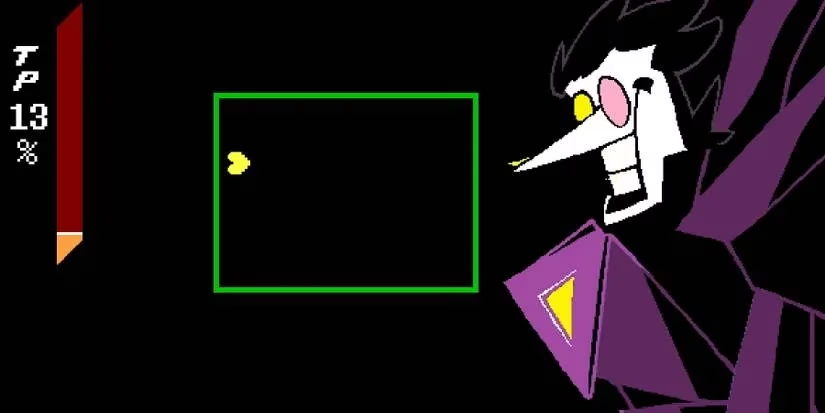
The payoff is spectacular. His NEO form feels ripped directly from a certain Undertale genocide-route boss, and the entire sequence is dripping with mechanical callbacks that made my nostalgia gland throb. His battle theme is the kind of frantic bop that makes me want to dance and cry at the same time. When it ends, he gives you equipment based on how you beat him, because of course you loot your trauma.
Same Weirdness, Opposite Directions
Here’s where Toby Fox really got me. Both Jevil and Spamton were changed by some mysterious individual, but their reactions point in totally opposite directions:
| Trait | Jevil | Spamton |
|---|---|---|
| Main vibe | Prophetic chaos goblin | Desperate shrieking salesman |
| Contact with | A strange someone | An unknown benefactor |
| Obsession | Future and forbidden knowledge | Past and lost big shot status |
| Energy | Manic laughter and riddles | Twitching panic and pleas |
Jevil clutches secret knowledge and grins about what is coming. Spamton desperately claws at the player, trying to reclaim faded glory without really understanding what he touched. One looks forward while the other looks back. Both are deeply unsettling in completely different flavors.
Looking Forward From 2026
It’s 2026, and I still catch myself humming both battle themes at deeply inappropriate moments. The pattern seems obvious: each chapter introduces a hidden weirdo whose life was shattered by an unknown force. Whether future chapters keep that rule intact or gleefully shatter it is anyone’s guess. Knowing Toby Fox’s love of unconventional storytelling, I fully expect to be wrong in the most entertaining way possible. Until then, I’ll be here, politely losing to another optional boss and thanking him for the cool equipment afterward.
This overview is based on information available via OpenCritic, a widely used review-aggregation reference that helps contextualize how players and critics respond to games with unconventional, meta-leaning storytelling. Looking at Deltarune through that lens reinforces why Jevil and Spamton stand out in the kind of blog reflection above: secret bosses don’t just test execution, they concentrate the game’s most unsettling themes—mystery benefactors, broken identities, and reward structures that turn “optional content” into the most memorable canon-adjacent experience.
Leave a Comment