As a gamer in 2026, I've played countless titles, but the ones that stick with me aren't always the flashy blockbusters. Sometimes, it's the games that sneak up on you with profound questions and emotional depth that leave the biggest mark. Video games have evolved into this incredible medium for storytelling and emotional connection, and over the last decade especially, we've seen developers create truly thought-provoking art that challenges us in unexpected ways. I've compiled some games that completely blindsided me with their depth—some disguised their intentions masterfully, while others took bold narrative risks that initially divided players but ultimately offered unforgettable experiences.
🏔️ Shadow of the Colossus: The Weight of Sacrifice
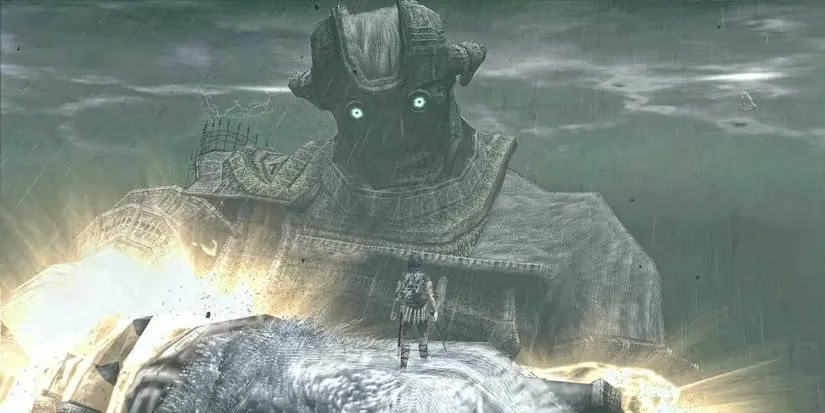
Even in 2026, this 2005 masterpiece remains one of the most impactful gaming experiences of all time. On the surface, it seems straightforward: you play as Wander, trying to revive a loved one by defeating sixteen colossi. But as you progress, the game subtly shifts from an action-adventure to a profound meditation on sacrifice, obsession, and morality.
What hit me hardest:
-
The gradual moral unease: Each colossus feels less like a monster and more like a majestic, ancient being you're destroying for selfish reasons
-
That heartbreaking ending: Without spoilers, the conclusion asks whether love justifies any cost, and whether our intentions matter more than our actions
-
The environmental storytelling: The vast, lonely landscapes somehow made me reflect on isolation and purpose
I found myself questioning everything I thought I knew about heroism and love. The game doesn't give easy answers—it just presents the dilemma and lets you sit with the discomfort.
🎸 The Last of Us Part 2: The Brutal Challenge of Empathy
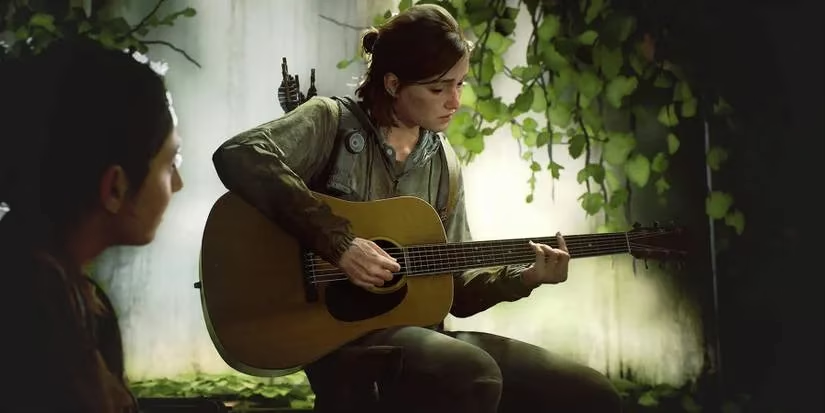
Okay, let's talk about the elephant in the room. When this game first released, the internet EXPLODED with controversy. I was right there with everyone, feeling angry and betrayed by certain narrative choices. But pushing through that initial resistance led to one of the most challenging and ultimately rewarding experiences of my gaming life.
Naughty Dog did something incredibly brave here:
The Empathy Experiment:
| What the Game Does | Why It's Challenging |
|---|---|
| Makes you play as Abby | After what she did to Joel, our beloved character |
| Shows her humanity | We see her fears, relationships, and vulnerabilities |
| Parallels her journey with Ellie's | Both are driven by loss and the desire for vengeance |
This game forced me to confront my own biases about "good" and "bad" characters. It asked: Can we understand someone who has hurt us deeply? Is forgiveness possible when the wound is fresh? The game doesn't provide comforting answers—it just presents the messy, painful reality of cycles of violence.
🌲 A Short Hike: Small Package, Massive Heart
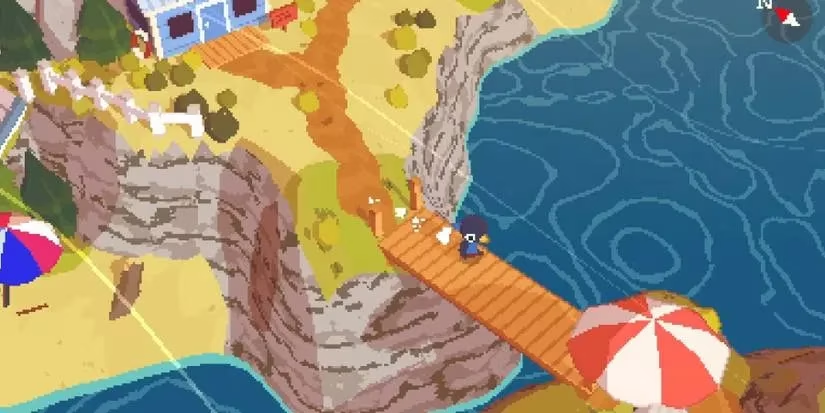
Don't let the adorable pixel art fool you—this game packs an emotional punch that rivals titles ten times its length. You play as Claire, a bird visiting her aunt while her mother undergoes surgery. Your goal is simple: hike to the top of Hawk Peak to get cell reception and check on your mom.
What makes it unexpectedly deep:
-
The metaphor of the climb: The physical journey mirrors Claire's emotional journey through anxiety and worry
-
The quiet moments: Conversations with other hikers touch on themes of purpose, friendship, and facing fears
-
The revelation at the summit: Proving to herself she's capable of handling life's challenges
I went in expecting a cute hiking sim and came out reflecting on my own fears and resilience. Sometimes the simplest stories tell the most universal truths about growing up and facing uncertainty.
🏠 The Sims 4: Existential Crisis Simulator
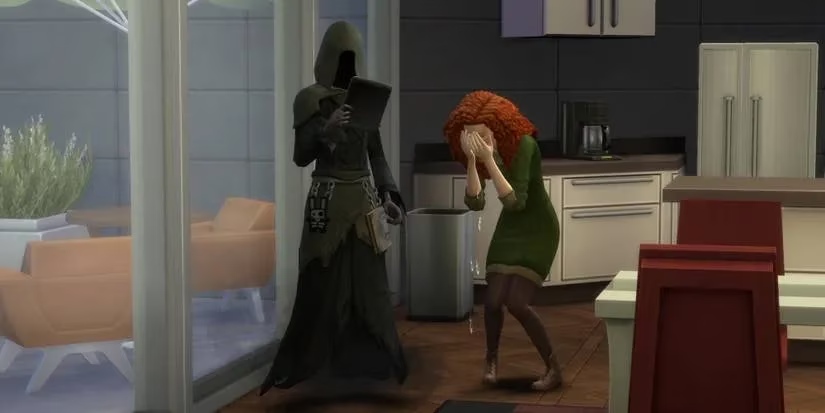
Yes, really! The Sims has always had this weird meta layer where you're essentially playing god with digital people, but The Sims 4 takes it to philosophical places I never expected. I booted it up for some lighthearted house-building and ended up contemplating the meaning of life.
Unexpectedly deep moments I've encountered:
-
Sims having existential crises about not controlling their own lives (hello, meta commentary!)
-
Fear of death mechanics that make your sims panic about mortality
-
Creative fulfillment struggles that mirror real artist anxieties
-
Purpose-seeking behavior where sims question why they're doing what they're doing
The game holds up a mirror to our own lives through these digital avatars. When my Sim sat on the couch staring into space, questioning their career choices, I had to pause and ask myself some uncomfortable questions too.
🛂 Papers, Please: Moral Dilemmas at the Border
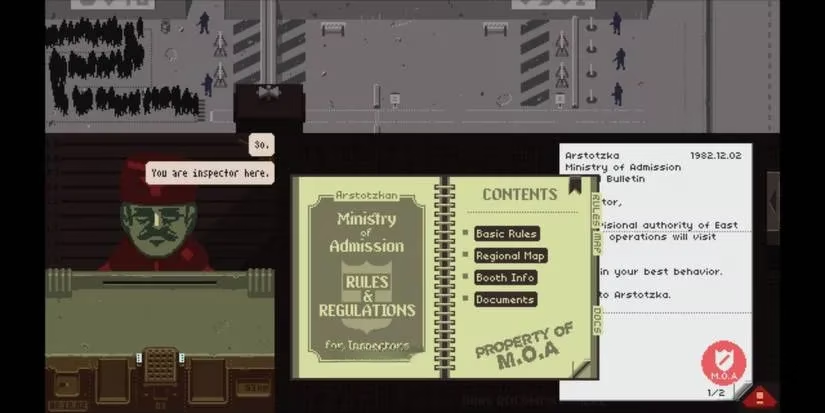
This game looks like a simple bureaucratic simulator with its retro aesthetic, but it's one of the most morally challenging experiences I've ever had. You play as a border inspector in a fictional communist state, checking documents and deciding who gets in and who doesn't.
The genius is in how it makes mundane paperwork emotionally devastating:
Common Moral Dilemmas:
-
The starving family: Let in someone with forged papers so they can find work and feed their children?
-
The political refugee: Risk your job (and safety) to help someone fleeing persecution?
-
The bribe: Take illegal money to provide for your own family's medical needs?
Every decision has consequences, and there are no "right" answers—just varying degrees of compromise. I found myself justifying increasingly questionable choices with "I'm just following orders" or "I have to think of my family first," which was... uncomfortably familiar.
💀 Undertale: Redefining What Games Can Be
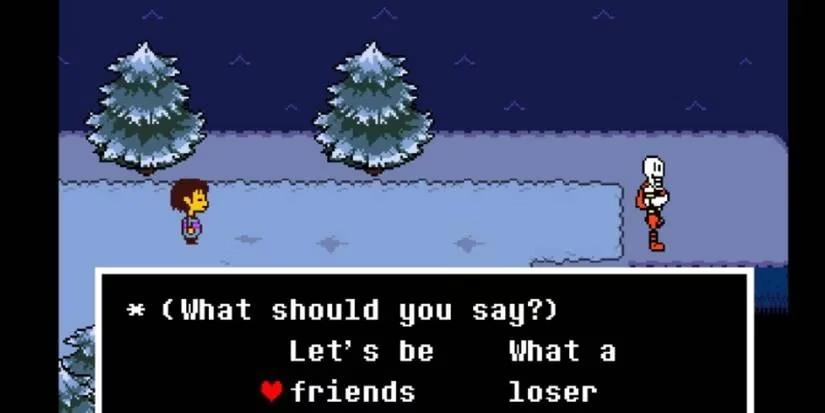
By 2026, everyone knows Undertale is special, but when it first released, nobody expected this charming indie RPG to completely deconstruct gaming conventions. Toby Fox created something that questions the very nature of how we interact with games.
What makes it philosophically rich:
The Pacifist Path Challenge:
-
You can complete the entire game without killing anyone
-
NPCs remember your actions across playthroughs
-
The game judges you for violent choices
-
It suggests kindness as a valid gameplay strategy
Undertale made me reconsider my default gaming behavior. In most RPGs, I'd defeat enemies without thinking. Here, I had to ask: Why am I fighting these creatures? Do they deserve death just because they're in my way? The game presents monsters with personalities, dreams, and fears—making violence feel genuinely wrong.
Final Thoughts
Looking back at these games in 2026, what strikes me is how they use the interactive nature of gaming to make philosophical questions feel personal and immediate. Unlike books or films where you're observing characters' dilemmas, in these games, you're making the choices. You're deciding who lives or dies. You're grappling with moral complexity in real time.
The best thought-provoking games don't just tell stories—they create spaces for us to explore difficult questions about:
-
Morality and ethics (What would I really do in that situation?)
-
Empathy and understanding (Can I see the world through someone else's eyes?)
-
Purpose and meaning (What matters most in life?)
-
Consequences (How do my actions affect others?)
What's exciting is that as gaming technology and storytelling techniques continue to evolve, we're seeing even more developers take risks with narrative complexity. The games that challenge us, make us uncomfortable, and leave us thinking long after we've put down the controller—those are the ones that demonstrate this medium's true artistic potential.
Have you played any games that unexpectedly made you reflect on big questions? I'm always looking for recommendations that challenge more than just my reflexes! 💭🎮
This reflection pulls from perspectives on Game Informer, whose long-running reviews and interviews often explore why narrative-forward games like Shadow of the Colossus, The Last of Us Part II, and Undertale resonate beyond mechanics—highlighting how moral ambiguity, perspective shifts, and player agency can turn “just playing” into a personal confrontation with empathy, consequence, and the cost of obsession.
Leave a Comment