For decades, gamers have been conditioned to don the white hat, to save the princess, and to be the hero. But let's be honest, sometimes being good is just... boring. In 2026, the allure of the dark side in video games has never been stronger, offering a deliciously wicked alternative to the traditional hero's journey. It turns out that playing the villain isn't just about causing chaos; it's about exploring complex narratives, making morally bankrupt choices that actually have weight, and experiencing power fantasies that would make any paladin blush. From culinary horrors to galactic conquests, the modern gaming landscape is a playground for the ethically flexible.
Ever dreamed of running a five-star establishment with a... unique sourcing model? Ravenous Devils lets you live out that particularly macabre fantasy. This game is the love child of a restaurant simulator and a horror flick, heavily nodding to the tale of Sweeney Todd. You control a charmingly murderous couple: one runs a tailor shop (where customers become the main ingredient), and the other operates a bustling restaurant (worry-free, thanks to the 'fresh' supply). It’s management sim meets dark comedy, proving that customer satisfaction sometimes requires more than just a good menu.
Then there's the classic power trip of Infamous 2. As Cole MacGrath, you're not just some guy with electric powers; you're a conduit of chaos in New Marais. The game practically begs you to be bad. Choosing the 'evil' karma path isn't just for kicks; it unlocks a whole suite of devastatingly cool powers and quests that the goody-two-shoes route simply denies you. Why save the city when you can rule it through fear and awesome lightning storms?
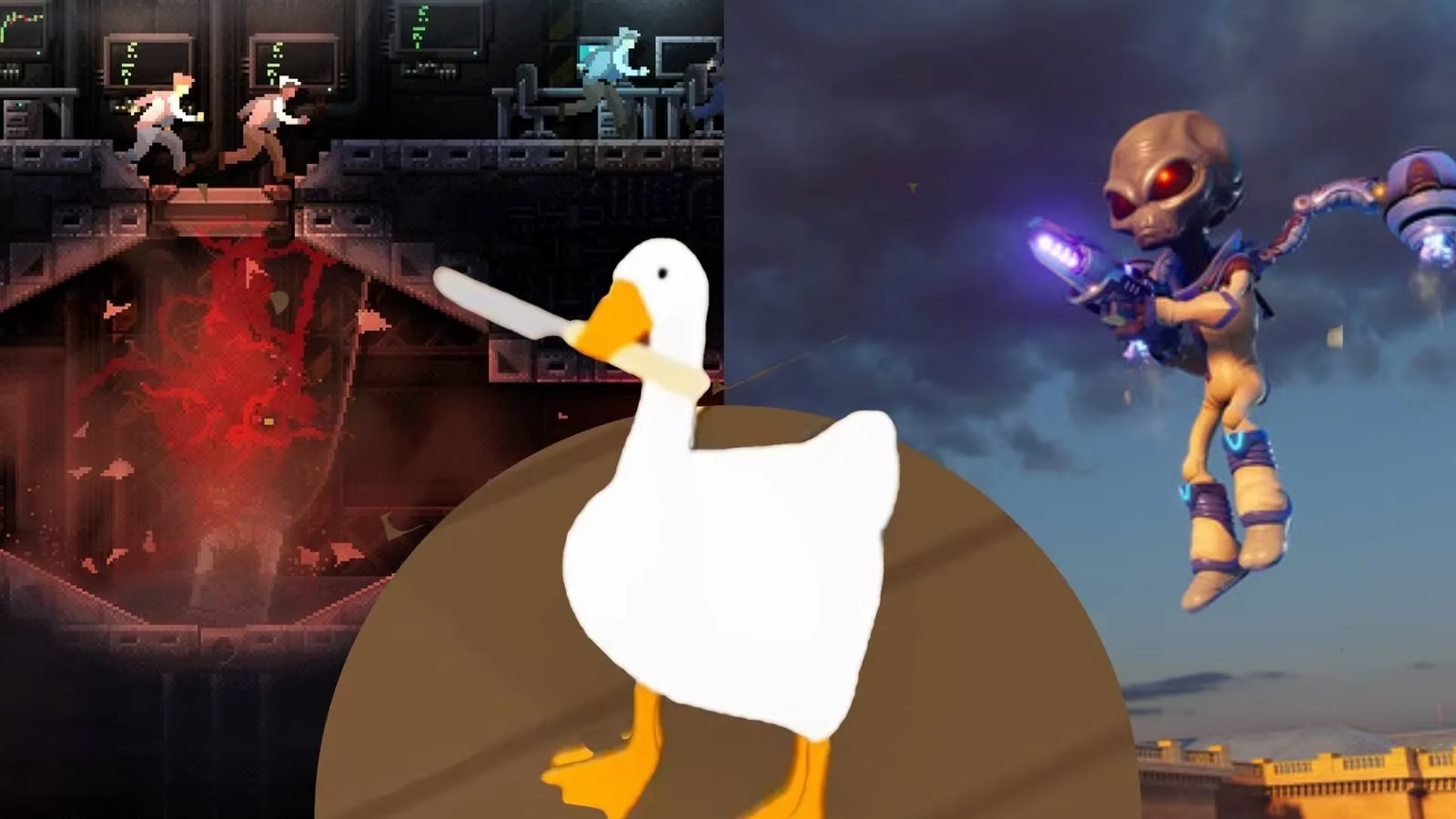
For those who prefer their villainy less human and more... tentacled, Carrion flips the script entirely. You are the monster in the lab, a writhing mass of red tendrils and hunger. Escaping your containment is just the start; the real fun is the gleeful, physics-based revenge tour against the scientists who dared to cage you. It’s a visceral, empowering experience that makes you root for the creature feature.
Sometimes, you don't choose evil; you work for it. In the dark fantasy RPG Tyranny, evil has already won. The world is under the iron fist of the Overlord Kyros, and you, dear player, are a high-ranking officer in his army. There's no 'good' path here—only shades of ruthless. Will you be a blunt instrument of terror or a cunning political schemer? The game's brilliance lies in forcing you to navigate a world where tyranny is the law, and your moral compromises are just Tuesday.
Ah, Undertale. Famous for its pacifist run where you befriend every monster. But its dark shadow, the Genocide Run, is a masterclass in player-driven villainy. You systematically hunt down and erase every character in the Underground, including the beloved, pun-loving skeleton Sans. The game doesn't just let you do it; it remembers. The dialogue becomes heartbreaking, the music shifts to something empty and chilling, and the game itself seems to judge you. It's a poignant reminder that being the bad guy has consequences, even in a pixelated world.
Why defend Earth when you can Destroy All Humans!? This series lets you shed the human skin entirely and step into the shiny boots of Crypto-137, an alien invader with a wicked sense of humor and an arsenal of absurd weapons. Your goal isn't subtlety; it's to probe, panic, and pulverize 1950s Americana. From using a telekinetic ray to throw cows at farmers to unleashing psychic mayhem, it’s a cathartic release of pure, unadulterated extraterrestrial mischief.
Not all villains need world-ending ambitions. Sometimes, true evil is a honk in a quiet English village. Untitled Goose Game proves that societal menace comes in many forms—specifically, a white, feathered form with a penchant for theft and annoyance. Your goals are simple yet diabolical: steal a gardener's keys, trap a boy in a phone booth, and generally ruin everyone's day. It’s low-stakes, hilarious villainy that celebrates the joy of being a nuisance.
For the aspiring dark lord, Overlord is your essential training simulator. You are the Overlord, resurrected into a world that needs a firm (and evil) hand. Commanding a horde of mischievous minions, you pillage villages, corrupt heroes, and reclaim your dark tower—all with a wicked, tongue-in-cheek sense of humor. It feels less like being a mustache-twirling caricature and more like managing a particularly destructive small business.
Braid, the beautiful and brain-bending puzzle-platformer, delivers one of gaming's greatest narrative twists: you are the villain. As Tim, you manipulate time to rescue a princess, but the haunting conclusion recontextualizes your entire journey. You weren't the hero; you were the monster all along. It’s a brilliant subversion that blurs the line between good and evil, leaving players to ponder the nature of obsession and perspective long after the credits roll.
Finally, for the ultimate strategic villain, Plague Inc: Evolved remains a terrifyingly relevant classic. In a post-pandemic world, the fantasy of being the pathogen hits differently. Your goal is clinical and horrific: evolve a disease to efficiently wipe out humanity before they can develop a cure. It’s a grim, strategic puzzle where you battle global health organizations, adapting your virus to counter quarantines and research. It’s villainy on a macro, microscopic scale.
So, why be the hero in 2026? The roles of the antagonist, the tyrant, the monster, and the menace offer richer, more complex, and often more entertaining narratives. They challenge our perceptions and let us explore power fantasies without real-world consequences (except maybe a slightly guilty conscience). These games remind us that in the digital realm, it's okay to let the dark side win—just for a little while. 😈
Leave a Comment