In the vast constellation of video games, where sprawling studios hurl thunderbolts of budget and spectacle, a quieter brilliance flickers—small, handcrafted worlds born from the dreams of indie developers. Even here in 2026, as technological marvels reshape the medium, the soul of RPGs often burns brightest in these humble vessels. What is it that makes a game assembled by a handful of people—sometimes just one—resonate more deeply than a hundred-million-dollar epic? Perhaps it is the intimacy, the risk, the unpolished edges that feel alive.
From sun-dappled pixel valleys to the grimy streets of a dystopian city, indie role‑playing games have become our modern-day illuminated manuscripts. This journey revisits ten such marvels, each a testament to the quiet power of imagination, and asks again and again: can a smaller voice truly sing louder than a chorus?
Ikenfell — Where Magic Blooms in Hidden Gardens
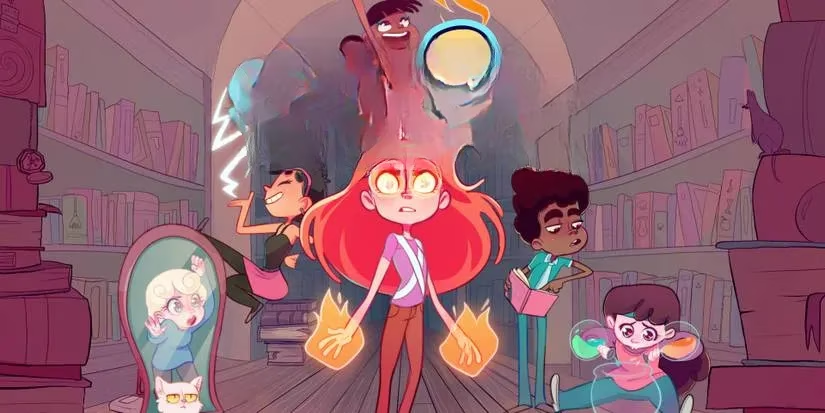
In the hallowed halls of Ikenfell, Maritte Hildegaard discovers that her sister’s disappearance is not merely a mystery, but the key to an enchanted destiny. The school breathes with life, its corridors humming with the footsteps of pupils who carry their own hidden truths. Happy Ray Games, a studio with a reverence for difference, crafted a tactical RPG where love in all its forms is not subtext but the written melody.
Here, the battlefield is a grid where every step echoes with consequence. Turn by turn, players weave spells and steel, yet the true spell lies in the narrative’s gentle embrace. Reddit’s ArmyLow1688 once praised its “many characters with different sexual orientations”—a reminder that representation is not a checkbox but a garden where everyone can see themselves reflected. The music, composed by artists who once scored Steven Universe, wraps the adventure in a warmth that feels like a bonfire on a crisp autumn evening. Is it so surprising that a game centered on a missing sister can feel like a reunion with every familiar melody?
CrossCode — The Mosaic of Memory
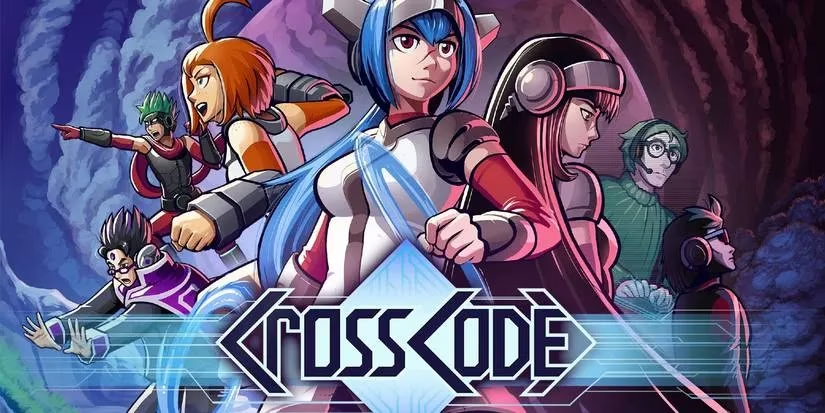
From a modest Indiegogo campaign rose an action RPG so polished it shimmers like a gemstone cut by a maester. Radical Fish Games’ CrossCode offers a paradox: an MMORPG trapped inside a single-player experience, where the protagonist Lea must vanquish digital monsters to retrieve her shattered memories. The 16-bit graphics are not merely retro; they are a love letter folded into the shape of a spaceship.
Reddit user sodhelay declared that the game “doesn’t feel like an indie at all”—and indeed, its intricate combat and puzzle-filled dungeons rival works of far grander pedigree. The plot, however, is where the art lies: a meditation on identity in a world where the body is merely code. Could any big-budget blockbuster capture the loneliness of being both player and pawn with such tender cruelty? The glowing reviews suggest that CrossCode is not just a game; it is a mirror.
Underhero — The Reluctant Chorus
What happens when the chosen hero falls, leaving only an underling to pick up the broken crown? Underhero, the action platformer by Paper Castle Games, answers with a grin and a wink. This minion of an evil king, armed with a sword he never asked to wield, stumbles into a quest that rewrites the fairy-tale rulebook.
Combat dares to dance between turn‑based strategy and rhythmic timing, a system that Redditor Necorvus hailed as the “spiritual successor” of Paper Mario. Every encounter becomes a stage where witty dialogue and vibrant 2D visuals transform a simple stomp into a punchline. The humor never overshadows the heart, and soon players find themselves asking: is a hero made by destiny, or by the choice to stand up anyway?
Bug Fables: The Everlasting Sapling — A Tiny Epic
In the continent of Bugaria, three tiny explorers—Vi, Kabbu, and Leif—scurry after a rumor of immortality. Bug Fables, inspired by the papercraft battles of yore, wraps its grand adventure in a husk fragile as a leaf but strong as a hive. The turn‑based combat demands not just brute force but synergy, each character’s unique abilities blossoming in orchestrated harmony.
Reddit’s loxim warned that this game is “brutally hard” for those chasing platinum trophies, yet the difficulty never feels spiteful—rather, it is a call to savor each small victory. The hand‑drawn world teems with life, from the dew on a blade of grass to the chitin of a mighty boss. As the party’s camaraderie deepens, one must wonder: isn’t the search for the Everlasting Sapling really a search for a friendship that outlasts any treasure?
Omori — The Cradle of Nightmares
Sunny is a recluse who paints his days in monochrome, but when his eyes close, the vibrant yet troubled Omori awakens. Omocat’s psychological horror RPG is a watercolor that bleeds into the paper of the soul, touching trauma, anxiety, and the fragile tendrils of mental health with unflinching grace.
Redditor jonnoark marveled at the balance between “quirky cuteness” and “light horror elements”—a tightrope walk where a cheerful melody can sour into a whisper of dread. The soundtrack weeps and giggles, while the hand‑drawn sprites shift between innocence and alarm. In a world that often silences suffering, Omori asks: what if the bravest quest is the one into your own mind?
Deltarune — The Echo of Mercy
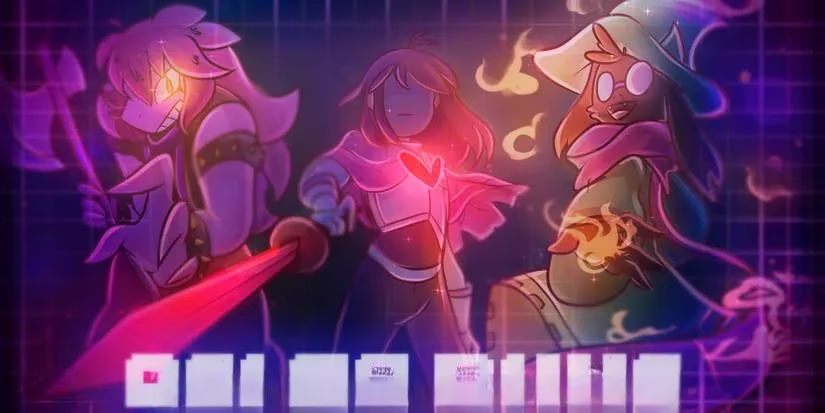
From the architect of Undertale comes another chapter in a universe where bullets and benevolence share the same air. Toby Fox’s Deltarune follows Kris, a teenager who, alongside a rebel monster princess, must seal a dark fountain that threatens to drown the world. The combat is a waltz of dodging attacks, but the real rhythm lies in the choices that ripple outward.
Reddit user Skelingaton praised its great OST and its continuation of “the trend that Undertale has set”—the option to be a pacifist, to spare every soul even if it hurts. In 2026, the game’s unfinished symphony still leaves players aching for the next chapter. Could it be that a story about sealing darkness is also about learning to open the light within?
Wargroove — The Battlefield Anthology
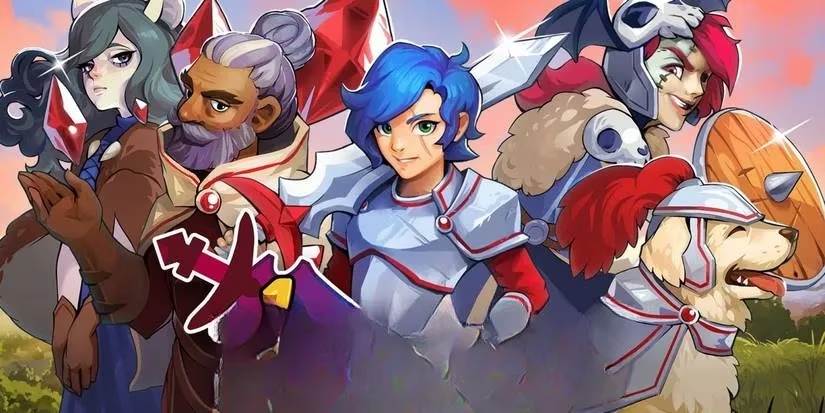
Chucklefish’s Wargroove is a stained‑glass window of warfare, where fifteen commanders—each with a heart of fire or frost—stand ready to lead pixel armies across terrain that shifts with strategy. The turn‑based combat recalls the beloved Advance Wars, yet the game builds its own cathedral of content, from branching campaigns to intricate map editors.
Reddit’s Tothoro lamented its quiet reception beside other indie RPGs, asking why an “excellent Advance Wars-esque SRPG” didn’t reach the same fevered heights. Perhaps because true strategy simmers rather than screams. The game invites players to orchestrate symphonies of swords, a question posed with every move: is victory sweeter when earned through cunning rather than luck?
Tales of Maj’Eyal — The Infinite Labyrinth
Netcore Games gifts the world a roguelike where every corridor is a new myth. Tales of Maj’Eyal, an open‑source RPG, grants players a pantheon of classes and procedurally generated dungeons that stretch toward infinity. Its depth is a well no single traveler can exhaust.
Redditor anonymous‑peeper confessed they felt they “barely scratched the surface”—a common refrain for a game that refuses to end. The customizable options make each run a personal signature, while the sheer volume of content humbles even the most dedicated adventurer. In a digital age obsessed with finality, this game whispers: what if the journey never needs to conclude?
Undertale — The Merciful Rebellion
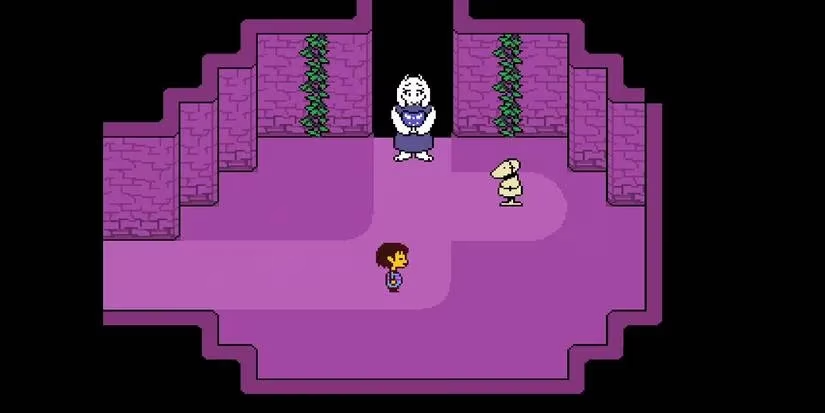
A single creator, Toby Fox, forged a revolution from simple pixels and a heartbeat. Undertale, released back in 2015, still glows with an untouched fierceness in 2026—no other game confronts the player with a choice so stark: to spill blood or to spare, to be a monster or a savior. The Underground is a place where every character, from the stoic Toriel to the manic Flowey, wears their soul on the outside.
Redditor Altruism7 kept it simple: Undertale “felt one of a kind.” The combat—a bullet‑hell dance where mercy becomes a mechanic—redefined what an RPG could be. Its narrative, full of puns and tragedy, left an indelible mark on a generation. Could any game ever teach us that kindness is a weapon and that true strength lies in letting go?
Disco Elysium — The Wounds of a City
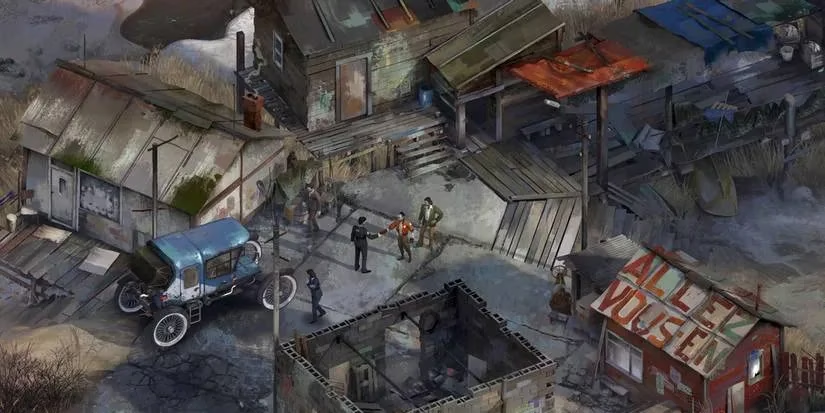
Finally, ZA/UM’s Disco Elysium shatters every tradition. In a rain‑streaked, dystopian city, an amnesiac detective claws through his own wreckage to solve a hanging murder. There is no combat—only dialogue, skill checks, and the dizzying clamor of twenty‑four distinct voices inside his skull. The Final Cut, still revered in 2026, turns conversation into a labyrinth where failure is often the most beautiful path.
Reddit user lukkasz323 noted that one can only get hurt or die “through dialogue choices”—a testament to how words wound deeper than swords. Its painterly art style and jazzy sadness weave a tapestry of political despair and personal resurrection. In a medium that so often equates role‑playing with fighting, Disco Elysium asks the ultimate question: what if the monster you must defeat is yourself?
These ten worlds, stitched from passion and hubris, prove that the indie heart beats with a vitality no corporate blueprint can replicate. From the golden fields of Bug Fables to the broken piers of Revachol, each game is an invitation to wander off the worn trail. In 2026, as virtual realities swell and AI‑forged narratives emerge, these handmade stories remain our compass. After all, isn’t it the smallest flame that casts the longest shadow?
Leave a Comment