 .jpg?&fit=crop&w=1200&h=675)
Over the decades, video games have taught us that evil wears many faces—and often, those faces are disarmingly young. A child’s smile can curdle into a snarl, and a schoolyard rhyme can become a death knell. These pint‑sized antagonists are like black holes hidden inside a nursery; their innocent shells amplify the horror of their actions. As we look back from the vantage point of 2026, several iconic evil children still haunt players’ memories, while newer titles continue to expand the trope. This article revisits the most disturbing young characters who proved that evil does not check ID cards.
Bowser Jr.: The Prince of Petty Tyranny

In the mushroom‑strewn landscape of the Mario universe, Bowser Jr. operates like a walking wrench tossed into a carefully maintained plumbing system. Since his debut in Super Mario Sunshine, he has mimicked his father’s kidnapping habits with a bratty, almost cheerful malice. He doesn’t merely want to defeat Mario; he wants to smear graffiti across paradise and frame his nemesis in the process. His mischief is a reminder that inherited villainy can be even more stubborn than the original brand—because it comes with a child’s boundless energy and zero self‑doubt.
Alma Wade: The Storm of Psychic Vengeance
Alma Wade is less a character and more a hurricane given human form. Born with immense psychic power, she was treated not as a child but as a laboratory asset by Armacham Technology Corporation. Her mind became a shattered mirror, reflecting everyone’s deepest terrors back at them tenfold. By the time the F.E.A.R. series unfolds, Alma has transformed from a victim into an implacable force of revenge, consuming soldiers and civilians alike. She embodies the terrifying truth that a soul pushed far enough can become a weapon that no steel cage can hold.
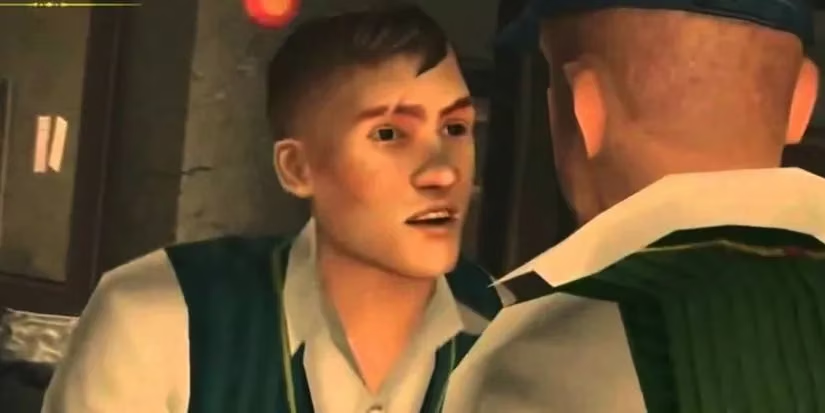
Gary Smith: The Acid Drop in Bullworth Academy
At Bullworth Academy, Gary Smith is a single drop of concentrated sulfuric acid in the school’s social chemistry. Described by his peers as a sociopath with a fondness for torture, he drips poison into every alliance. He befriends protagonist Jimmy Hopkins only to orchestrate a symphony of backstabbing that would make a Renaissance courtier blush. His narcissistic paranoia is the engine of the game’s conflict, proving that the most dangerous bully isn’t the one who throws fists but the one who throws trust like a grenade.
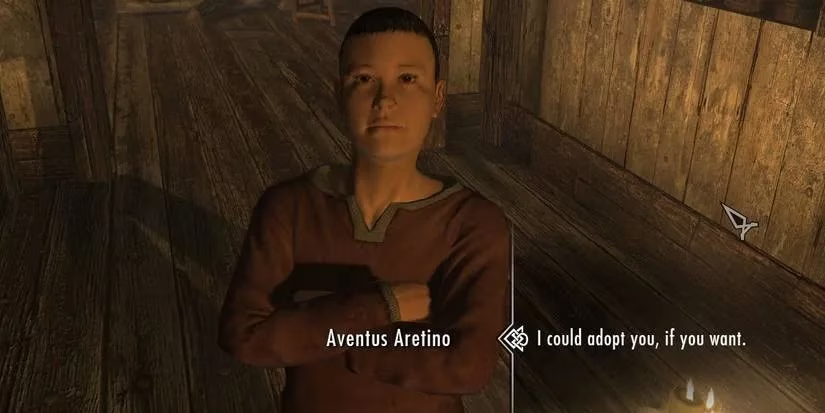
Aventus Aretino: The Dark Sacrifice of Innocence
In the frozen city of Windhelm, Aventus Aretino chants a prayer that would freeze the blood of any adult. Fleeing the cruelty of an orphanage headmistress, he assembles a human effigy from actual body parts to summon the Dark Brotherhood. His goal—assassinating the abusive Grelod the Kind—is understandable, but the ritual reveals a child who has already learned to weaponize the macabre. He stands as a chilling example of how desperation can warp a moral compass, making a young boy into an employer of death.
Lucius: The Demon That Stayed
 .jpg?q=50&fit=crop&w=825&dpr=1.5)
The Lucius series follows a boy possessed by a demon—but the truly scary part emerges when Lucifer withdraws his influence. Lucius Wagner continues to crave murder even without his supernatural fuel. He kills nurses, family members, and townsfolk with the detached curiosity of a child dissecting a moth. He is the proof that some seeds, once planted, grow roots no exorcism can pull out.
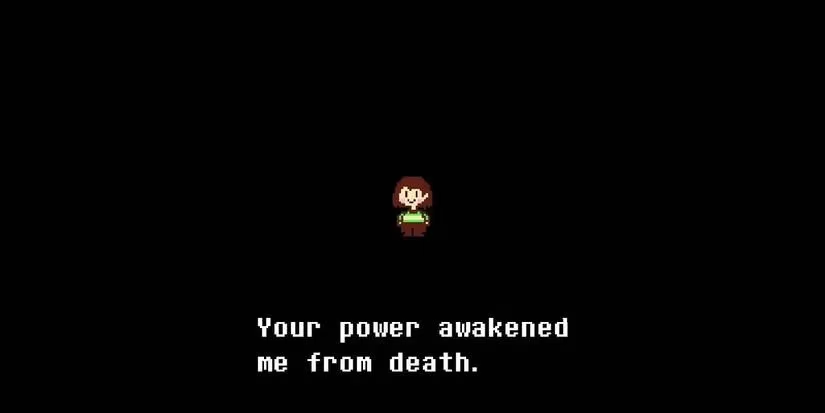
Chara: The Pixelated Eraser
Undertale disguises its depth beneath a retro 2D exterior, and Chara is the black hole at the center of that cosy pixel‑art galaxy. In the Genocide Route, players discover a being utterly devoid of love, who views the game world as a stain to be scrubbed out. Chara’s emotionless determination to erase existence is a philosophical evisceration of the player’s illusion of control—a child who treats reality itself as a discarded toy.
Tiny Tina: The Chaos Wrapped in a Ponytail
 .jpg?q=50&fit=crop&w=825&dpr=1.5)
Tiny Tina shatters the mold by being an ally, not an enemy—yet her brand of heroism is drenched in gasoline and lit with a cackle. She turns bandits into pink mist with the glee of a child popping bubble wrap. Her infamous tea party, where she electrocutes a man who sold her parents into slavery, is a jarring blend of childhood make‑believe and cold‑blooded revenge. Tina is an exploding confetti cannon that somehow fights on the side of light.
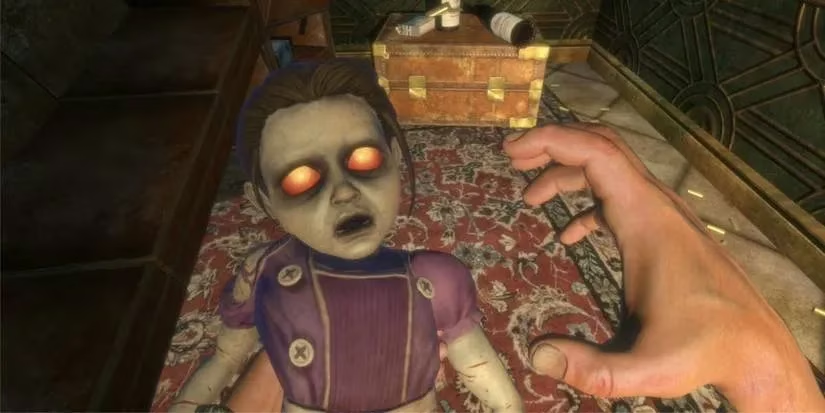
Little Sisters: The Harvesters in the Deep
Rapture’s Little Sisters are like death’s honeybees, flitting among corpses to extract the glowing nectar of ADAM. Genetically modified and mentally conditioned, they are victims first and creepers second. Yet the sight of a small girl singing nursery rhymes while plunging a giant needle into a dead body creates a cognitive dissonance that defines BioShock’s horror. Their hulking Big Daddy protectors only deepen the tragedy: these children are both the city’s most precious resource and its most haunting ghosts.
Betty: The Puppet with a German Accent
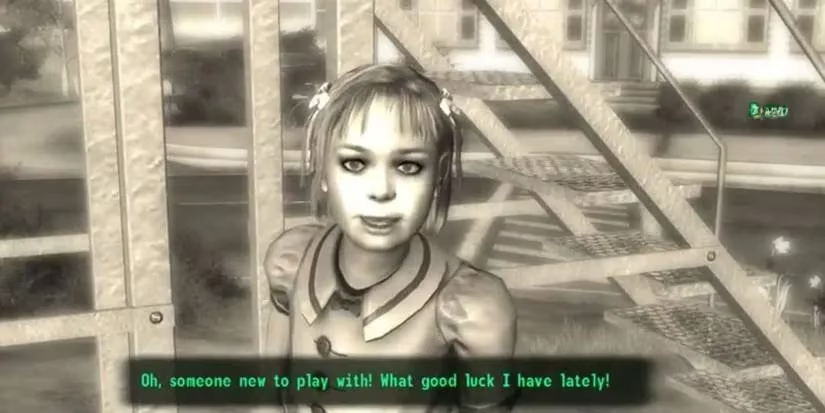
In Vault 112’s virtual neighborhood, Betty waits on the playground with a list of twisted tasks. The illusion shatters when the voice of an elderly scientist, Stanislaus Braun, occasionally slips through her child‑like tones, like a spider’s leg poking out of a marionette. This duality makes Betty one of the most uncanny villains in gaming—a digital mask worn by a bored god who forces the player to become a monster.
Eveline: The Family That Never Was
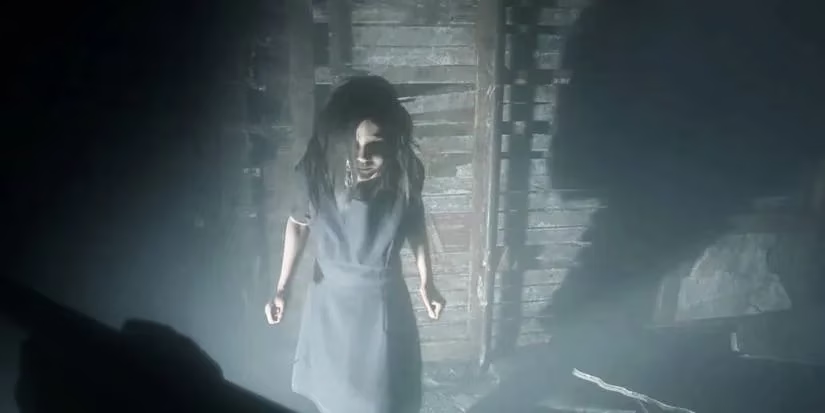
CAPCOM’s return to survival horror in Resident Evil 7 hinges on Eveline, a bioweapon engineered to yearn for a family. Her desire is perversely pure; she only wants a mother and father who will never leave. To get them, she infects the Baker clan, twisting their bodies and minds into grotesque servitude. Eveline is a tragic paradox—a child who destroys the very thing she loves, like a moth that mistakes a flame for the sun.
These young antagonists remind us that video games have evolved far beyond simple good‑versus‑evil dichotomies. They are psychological mirrors, reflecting our own unease with corrupted innocence. In 2026, as developers continue to push narrative boundaries, the legacy of these characters endures—not just in re‑releases and remakes, but in the way we question what truly makes a monster. Sometimes, the answer is wearing a school uniform.
As the gaming industry continues to evolve, it’s not just storytelling and character design that are pushing boundaries. Players are also seeking smarter ways to expand their collections without breaking the bank. For those who want to explore these unforgettable titles or discover new ones, finding the right deals can make all the difference.
Whether you're revisiting classics or diving into the latest releases, it’s worth checking out the best game deals available online. Platforms like DealNest provide a great resource for gamers looking to snag their next adventure at unbeatable prices, ensuring that your journey into these immersive worlds is both thrilling and budget-friendly.
Leave a Comment